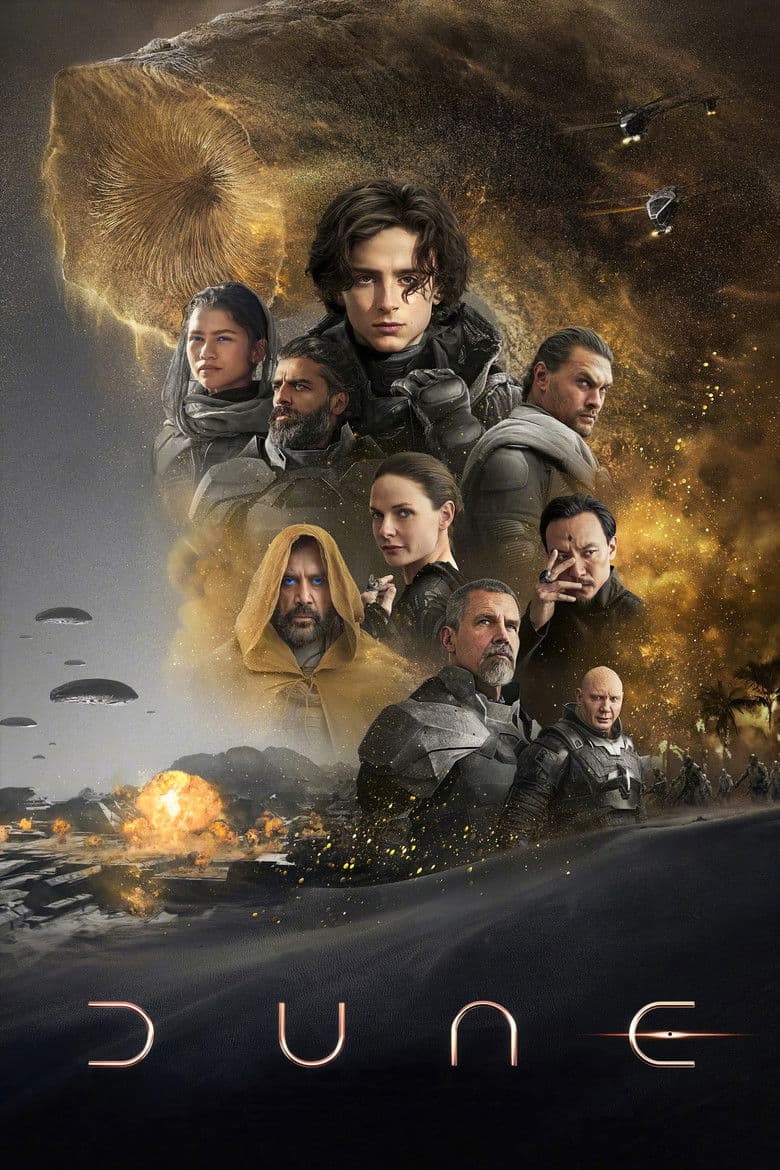
Paul Atreides is a young man from a noble family who must travel to a dangerous desert planet named Arrakis. His family is caught in a trap set by their rivals to control the galaxy's most valuable resource. In the movie, some of the characters are cast to add female representation, including a prominent male scientist from the book who was changed into a black woman. Additionally, the film highlights themes of anti-colonial struggle and the fight for environmental preservation.
Community feedback
Was our 39% Woke rating accurate?
Breakdown
These are the editorial factors and ratings behind our score for Dune.
Woke representation / casting
The film features deliberate identity-focused casting choices to increase modern representation. Most notably, the character of Dr. Liet Kynes, who was a man in the original book, was gender-swapped and race-swapped to be played by black actress Sharon Duncan-Brewster. Additionally, the native Fremen characters are portrayed by a highly diverse, ethnically varied cast. While the setting is a futuristic galaxy where diverse demographics make sense, the creators openly acknowledged that these casting choices were driven by a desire to boost female representation and inject modern diversity into a historically masculine story.
35%
Woke political dialogue
The film mostly avoids explicit modern activist dialogue or social justice lecturing. The characters speak in ways that match the fictional sci-fi setting and the politics of the warring houses. Some minor dialogue, such as Chani's opening voiceover about foreign rulers exploiting her planet's resources, leans into themes of colonial occupation. However, this remains strictly framed within the lore of Arrakis rather than breaking the fourth wall with present-day political jargon.
5%
Identity-driven story themes
The primary narrative remains faithful to Paul Atreides' hero's journey and messianic rise. However, the writers intentionally amplified certain identity-driven themes. This includes framing the story with what the director called "seeds of feminism" by emphasizing the soft power of Lady Jessica and the Bene Gesserit sisterhood. The changing of Liet Kynes into a woman also shifts her thematic role from a paternal figure to a maternal, protective guardian of Arrakis. Still, these elements are integrated into the plot and do not overshadow the core sci-fi narrative.
20%
Western institutional / cultural critique
The film features strong anti-colonial and environmentalist themes, portraying the native Fremen as oppressed people fighting against foreign, resource-exploiting empires (the Harkonnens and Atreides). This critiques colonial greed and resource extraction, which can mirror modern critiques of Western imperialism. However, these themes are deeply baked into Frank Herbert's 1965 novel and are not heavily reframed into modern activist jargon or present-day identity politics. The focus remains on a classic sci-fi critique of absolute power and the corruption of ruling classes.
10%
Woke character or canon changes
A major change was made to the established canon by turning Dr. Liet Kynes into a woman. In the original book, Kynes is a male Imperial ecologist and the father of Chani. By changing Kynes to a black woman, the filmmakers broke with the source material's family lineage—severing the explicit father-daughter link with Chani in this movie—and changed the character's dynamic. The creators openly stated this change was made for ideological reasons, specifically to bring more female voices and modern diversity into what they perceived as a male-dominated story world.
25%
Anti-woke backlash and complaints
There was noticeable online backlash from book purists and anti-woke commentators who objected to the gender-swapping and race-swapping of Liet Kynes. Critics argued that changing Kynes was a forced concession to modern DEI standards that altered the lore and disrupted the established family connections. Some also criticized the casting of Zendaya as Chani, fearing she would become a "girlboss" vehicle, and complained about the general push for modern representation. However, the backlash did not dominate the film's overall reception, as many viewers and critics praised the film's visual scale and faithfulness.
20%
Creator track record context
The key creative team has a mixed track record with some progressive leanings. Writer Jon Spaihts has actively championed DEI and modern representation in his screenwriting, while writer Denis Villeneuve has expressed support for progressive causes but generally prefers nuanced storytelling over blatant activism. Other major contributors, such as Frank Herbert and Mary Parent, have low scores, keeping the overall creative context moderate rather than heavily activist-driven.
25%
Production

Movie · 2014
The adventures of a group of explorers who make use of a newly discovered wormhole to surpass the limitations on human space travel and conquer the vast distances involved in an…

Movie · 2018
As the Avengers and their allies have continued to protect the world from threats too large for any one hero to handle, a new danger has emerged from the cosmic shadows: Thanos.

Movie · 2016
Through a technology that unlocks the genetic memories of his ancestor in 15th century Spain, Callum Lynch discovers he is a descendant of an ancient line of Assassins and amasses…

Movie · 2026
Science teacher Ryland Grace wakes up on a spaceship light years from home with no recollection of who he is or how he got there.

Movie · 2022
On a mission to make Christmas unforgettable for Quill, the Guardians head to Earth in search of the perfect present.

Movie · 2026
The evil Empire has fallen, and Imperial warlords remain scattered throughout the galaxy. As the fledgling New Republic works to protect everything the Rebellion fought for, they…

Movie · 2026
Having found the safety of the Greenland bunker after the comet Clarke decimated the Earth, the Garrity family must now risk everything to embark on a perilous journey across the…
Movie · 2017
A group of students become trapped inside a mysterious cave where they discover time passes differently underground than on the surface.
