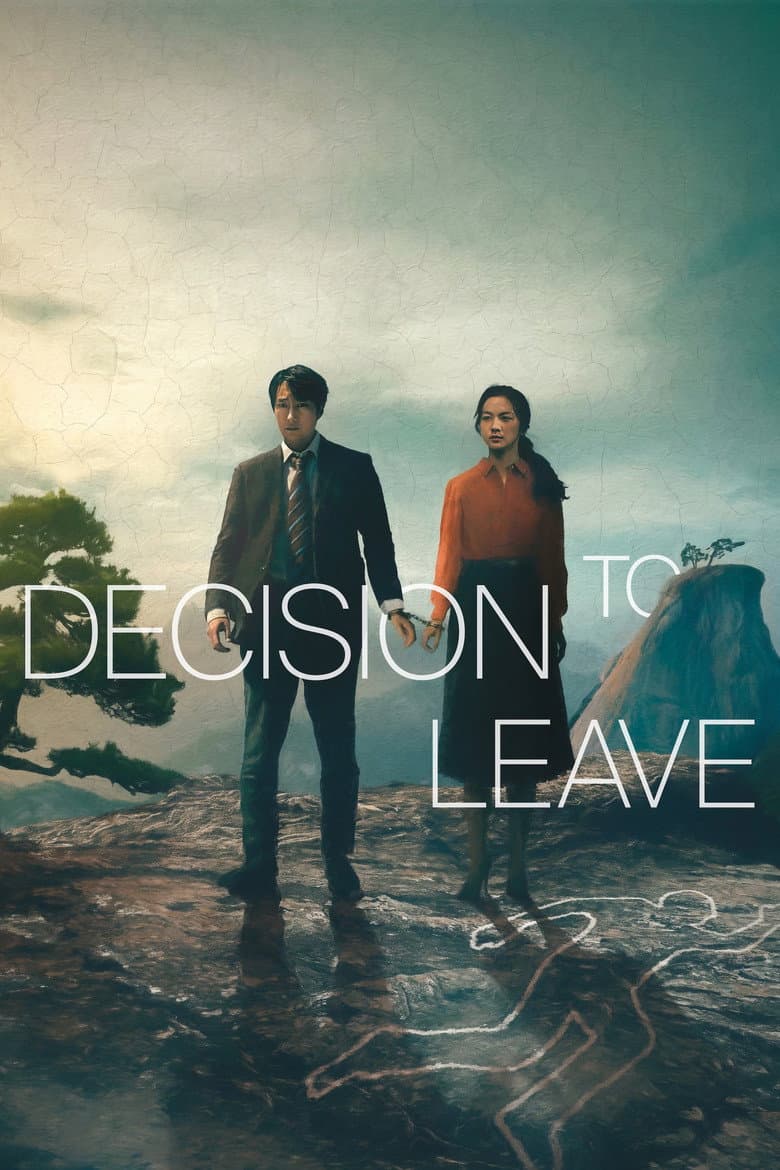
Decision to Leave follows Jang Hae-joon, a careful police detective in South Korea. A climber dies after falling from a mountain, and Hae-joon questions the dead man’s Chinese widow, Seo-rae. His close watch of her turns into desire, and the case begins to damage his judgment and marriage. A second case moves the story to a seaside town, where love, guilt, and grief grow harder to separate from the search for truth.
Seo-rae is a major force in the story, not just a suspect waiting for the detective to solve her. The film gives her a Chinese immigrant history, a language barrier, a past of abuse, and the power to watch, mislead, and choose her own path. The plot repeatedly turns the detective’s watching back on him and questions the old image of the helpless woman or the dangerous mystery woman. These gender and identity ideas shape the romance and mystery, but the film presents them through quiet crime scenes, tense talks, dark humor, and sad romantic choices instead of political speeches.
Community feedback
Was our 50% Woke rating accurate?
Breakdown
These are the editorial factors and ratings behind our score for Decision to Leave.
Woke representation / casting
The film centers a Chinese immigrant woman in a South Korean setting. Her language, family history, and place in the case are tied to the plot, so the identity choice has a story reason. The film also includes a female police detective in a meaningful supporting role, and its marketing highlighted that choice. The cast does not show a broad, quota-like mix of identities.
18%
Woke political dialogue
Not present. The dialogue focuses on murder, desire, marriage, language, and grief. It does not deliver modern identity, DEI, or activist ideas as a spoken message.
0%
Identity-driven story themes
Seo-rae is a Chinese immigrant whose past, abuse, and struggle with Korean shape the main mystery. The story gives her strong control over what Hae-joon sees, believes, and learns. The film replaces the usual helpless or dangerous crime-film woman with a character who is more active and hard to judge. Women make key choices while Hae-joon loses control of his work, marriage, and emotions. These ideas fill the romance and mystery, but the film does not present them through activist speeches.
54%
Western institutional / cultural critique
The film presents Hae-joon’s watching of Seo-rae as both intimate and intrusive, and it ties that watching to his loss of judgment. The story reverses that watching when Seo-rae studies him and controls what he can know. His work and marriage suffer because he cannot manage his desire or give enough attention to his wife. This questions male power and traditional relationship roles, but it does not attack Christianity or Western institutions.
29%
Woke character or canon changes
Not relevant. The film is an original murder romance, not a franchise or a retelling of a real historical story. It does not change an established character or real historical figure.
0%
Anti-woke backlash and complaints
Not present. No anti-woke backlash, boycott, or review-bombing appears in the searched news, audience threads, or supplied X report. Audience complaints focus on pace, subtitles, plot confusion, and the ending.
0%
Creator track record context
Park Chan-wook has a history of left-wing activism and identity-focused films such as The Handmaiden. Writer Chung Seo-kyung has a long pattern of giving women strong desires, flaws, and control over their choices. Producer Miky Lee has newer work supporting Asian and underrepresented creators. The other listed producers and the script supervisor have little public identity-politics context.
63%
Production

Movie · 2025
Violet, a widowed mother on her first date in years, arrives at an upscale restaurant where she is relieved that her date, Henry, is more charming and handsome than she expected.

Movie · 2017
Two planes almost collide after a blinding flash of light paralyzes air traffic controller Dylan Branson for a few seconds.
Movie · 2021
A psychiatrist, whose client commits suicide, finds his family life disrupted after introducing her surviving brother to his wife and daughter.
Movie · 2018
Over the course of 12 years, and three stages of life, Sidney Hall falls in love, writes the book of a generation and then disappears without a trace.
Movie · 2022
When the CIA discovers one of its agents leaked information that cost more than 100 people their lives, veteran operative Henry Pelham is assigned to root out the mole with his…
Movie · 2025
Two highly trained operatives grow close from a distance after being sent to guard opposite sides of a mysterious gorge.
Movie · 2020
A fur trapper leaves his wife and daughter behind to kill a rogue wolf in the remote wilderness, but they soon become increasingly worried when their peaceful existence is…
Movie · 2019
Three lighthouse keepers on an uninhabited island off the coast of Scotland discover something that isn't theirs to keep.
