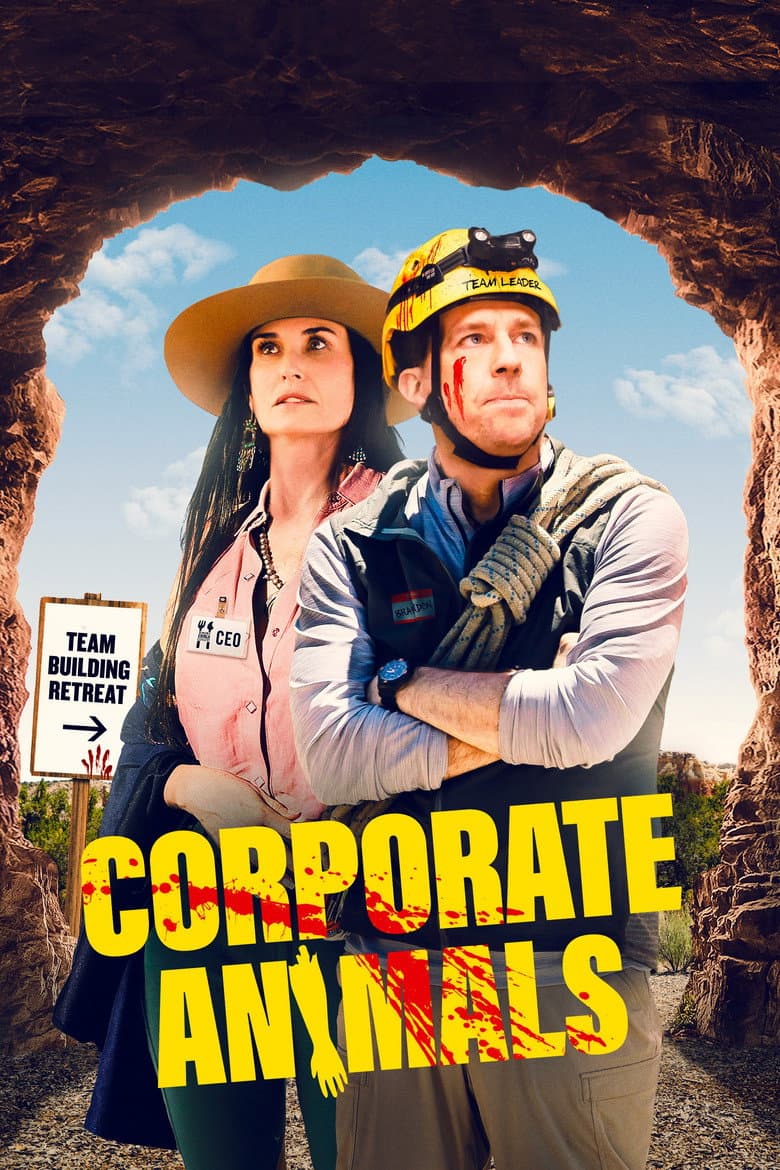
Corporate Animals follows Lucy Vanderton, the proud and cruel boss of a small company that makes spoons, forks, and knives people can eat. She takes her workers to New Mexico for a team-building trip and forces them into a dangerous cave after ignoring the guide's advice. A rockslide traps the group underground, where hunger, fear, sex, and old anger turn coworkers against one another. The film uses dark jokes, gross body humor, and horror to show a workplace falling apart under a selfish boss.
The film gives its clearest identity focus to Lucy's fake feminism and her claim that race and gender helped her choose staff. Lucy talks about affirmative action, calls Jess a quota queen, and asks who Jess is when she is not black or a woman. The story treats Lucy's talk as a cover for taking credit, using workers, and sexually controlling Freddie, while Jess pushes back and helps lead the escape effort. The film also includes a same-sex sexual moment and a brief kiss between two men, but those moments are not central. The movie spends more time on workplace cruelty, cannibalism, and survival than on identity politics.
Community feedback
Was our 57% Woke rating accurate?
Breakdown
These are the editorial factors and ratings behind our score for Corporate Animals.
Woke representation / casting
Corporate Animals gives several minority employees prominent roles in one modern American office. A diverse company can look like this, so the mix alone does not make the casting woke. The film makes the mix part of the story when Lucy says race and gender helped her hire Jess and the others. Lucy also links the workers to minority grant money and uses that claim to belittle Jess. Bain said the casting led the team to explore white feminism and white hypocrisy, which adds a clear identity signal.
46%
Woke political dialogue
Lucy brings up affirmative action, minority grant money, race, and gender. Lucy also argues that feminism should let women be as horrible as men, which turns a workplace power dispute into a modern gender joke. Jess rejects Lucy's claims and calls her part of the problem. These lines are concentrated in a few scenes, while most of the dialogue concerns survival and workplace insults.
43%
Identity-driven story themes
The story makes white feminism and white hypocrisy part of the main boss-worker conflict. Lucy treats Jess's race and gender as company assets, then uses that claim to deny Jess's skill and effort. Jess fights back against Lucy, while Lucy's sexual control of Freddie links gender power to workplace abuse. The identity themes matter to the final conflict, but survival, cannibalism, and general office cruelty occupy more of the movie.
52%
Western institutional / cultural critique
The film attacks a company that claims to help the planet while its boss steals ideas, controls workers, and risks their lives. The story mocks corporate slogans, profit pressure, workplace rank, sexual harassment, and diversity language used as a public image. Lucy's company is treated as part of a wider culture that values money and control over people. The critique is clear, but the movie stays a broad dark comedy and does not offer a full political program.
48%
Woke character or canon changes
Not relevant. The film is an original workplace story. It does not change an established character, source, or historical event.
0%
Anti-woke backlash and complaints
Not present. No anti-woke complaints were found in the reviewed news, reviews, social results, or Reddit results. The supplied X research also found no anti-woke reaction. Coverage that discussed white feminism or diversity was describing the film or criticizing its execution, not attacking it from the right.
0%
Creator track record context
Sam Bain has a cached score of 58/100 because he has supported more gender and racial inclusion in comedy and has backed female-led and gender-swapped projects. Patrick Brice has a cached score of 16/100, with no strong public activist pattern. Ed Helms and the other cached producers have low to modest scores and some links to representation-focused comedy. Bain's history supports this film's identity themes, but the full creative team does not show a dominant activist record.
42%
Production
Movie · 2023
Having grown sick and tired of his centuries as Dracula's lackey, Renfield finds a new lease on life — and maybe even redemption — when he falls for feisty, perennially angry…
Movie · 2022
Legendary rock band Foo Fighters move into an Encino mansion steeped in grisly rock and roll history to record their much anticipated 10th album.
Movie · 2025
After escaping from a mental hospital, a violent sociopath named Paul begins a dangerous rampage targeting Sofia, a world-famous pop star.
Movie · 2019
Columbus, Tallahassee, Wichita, and Little Rock move to the American heartland as they face off against evolved zombies, fellow survivors, and the growing pains of the snarky…
Movie · 2024
A live broadcast of a late-night talk show in 1977 goes horribly wrong, unleashing evil into the nation's living rooms.
Movie · 2018
The compound of an arms manufacturer turns into a zombie nightmare when its workers are given the wrong formula.
Movie · 2024
A family's vacation to a remote getaway takes an unexpected turn when they discover the present-day implications of the island's cannibalistic past.
Movie · 2016
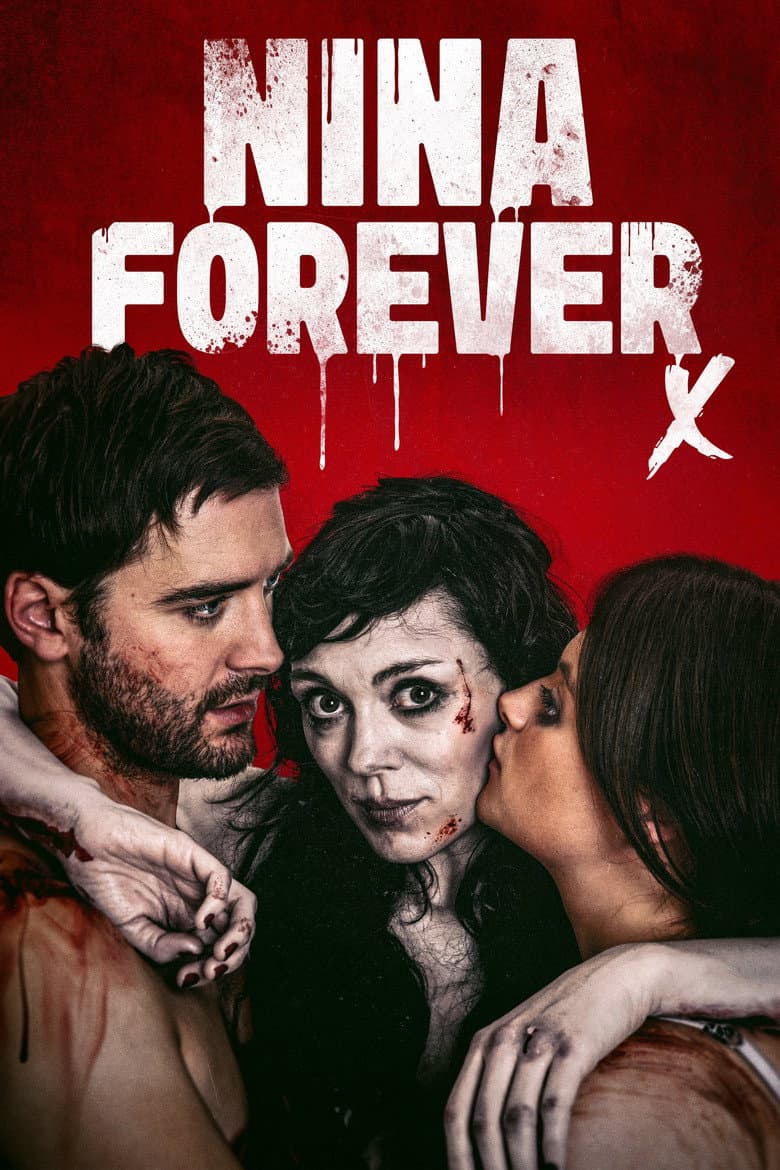
Rob is grief-stricken following the death of his girlfriend Nina, but after a failed suicide attempt he begins to move on from the tragedy and falls for his colleague Holly.
