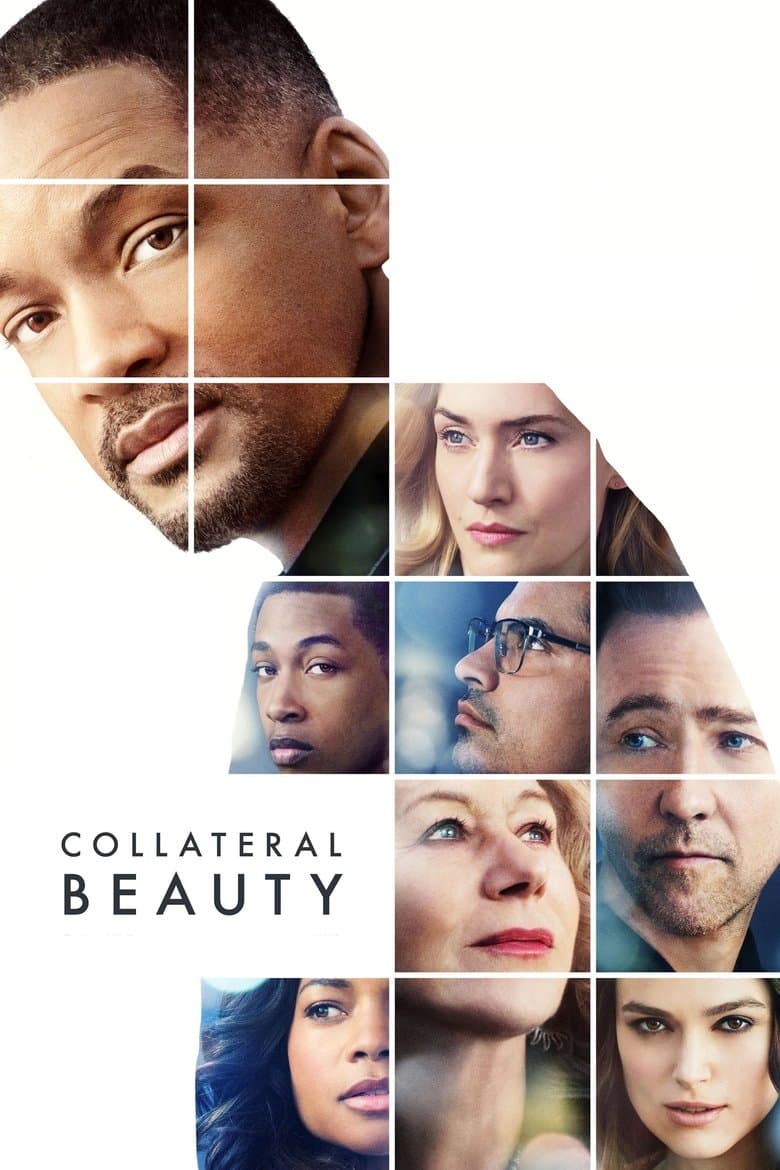
Howard Inlet is a successful New York ad executive who falls into deep depression after his young daughter dies. He writes letters to Love, Time, and Death as if they were real people. His business partners hire actors to pretend to be those three ideas so they can catch him on camera and push a company sale. The story also follows the partners’ private struggles and Howard’s bond with Madeleine at a grief group. A late reveal ties the arcs together around love, loss, and the idea of collateral beauty.
The film is not built around identity politics or activist messaging. Its focus is grief, friendship, parenthood, and abstract figures of Love, Time, and Death. Casting reflects a modern city ensemble more than a diversity sales pitch, and interracial marriage is not the story’s main frame. There is no confirmed queer plot, and the dialogue stays on loss and human connection. Mild work pressure and a scheme to force a sale appear as personal ethics, not as a broad attack on Western institutions.
Community feedback
Was our 9% Woke rating accurate?
Breakdown
These are the editorial factors and ratings behind our score for Collateral Beauty.
Woke representation / casting
The film has a modern New York cast with a black lead and other multi-ethnic stars. The roles fit a city workplace story and a star vehicle. They do not play as identity-first or mismatch casting. Diversity was not sold as the main reason to see the movie.
12%
Woke political dialogue
Not present. Characters talk about grief, love, time, death, and being connected. There is no activist identity speech. There is no DEI or modern social-justice dialogue.
0%
Identity-driven story themes
Not present. The main story is a parent’s grief and coming to terms with love, time, and death. Side plots cover cancer, a father and daughter repairing their bond, and the parenthood clock. Race, gender ideology, and queer identity are not the engine of the plot.
0%
Western institutional / cultural critique
Partners scheme to force a company sale and feel mild work-life pressure. That stays personal ethics and self-help. It is not an activist attack on Western institutions, toxic masculinity ideology, or Christianity.
3%
Woke character or canon changes
Not relevant. This is an original screenplay. There is no identity-driven rewrite of established characters, canon, or historical figures.
0%
Anti-woke backlash and complaints
Not present. Viewers and critics mainly attacked the film for being sappy and forced. They did not treat it as a woke or DEI identity-politics movie. No sustained anti-woke campaign showed up.
0%
Creator track record context
Key creatives mostly score low for activist patterns. Frankel is low, Loeb is zero, and most producers are low. Alberti is higher as progressive-doc-adjacent craft, and Mnuchin is conservative. No activist creative pattern drives this title.
10%
Production
Movie · 2022
A young couple's relationship clashes with the harsh realities of the California Gold Rush of 1850. Angel, experiencing love for the first time and facing demons unsurmountable…
Movie · 2017
The story of four characters whose lives intertwine amid the hustle and bustle of the Coney Island amusement park in the 1950s: Ginny, an emotionally volatile former actress now…
Movie · 2018
Katie, a 17-year-old, has been sheltered since childhood and confined to her house during the day by a rare disease that makes even the smallest amount of sunlight deadly.

Movie · 2025
Two artistic souls find harmony through music despite their contrasting worlds. As feelings deepen, age and circumstances challenge their undeniable bond.
Movie · 2025
Morgan Grant and her daughter Clara explore what's left behind after a devastating accident reveals a shocking betrayal and forces them to confront family secrets, redefine love…
Movie · 2025
18-year-old Noah moves from America to London, with her mother who's recently fallen in love with William, a wealthy British businessman.
Movie · 2020
Young musician Zach Sobiech discovers his cancer has spread, leaving him just a few months to live. With limited time, he follows his dream and makes an album, unaware that it…

Movie · 2020
When illness strikes two people who are polar opposites, life and death bring them together in surprising ways.
