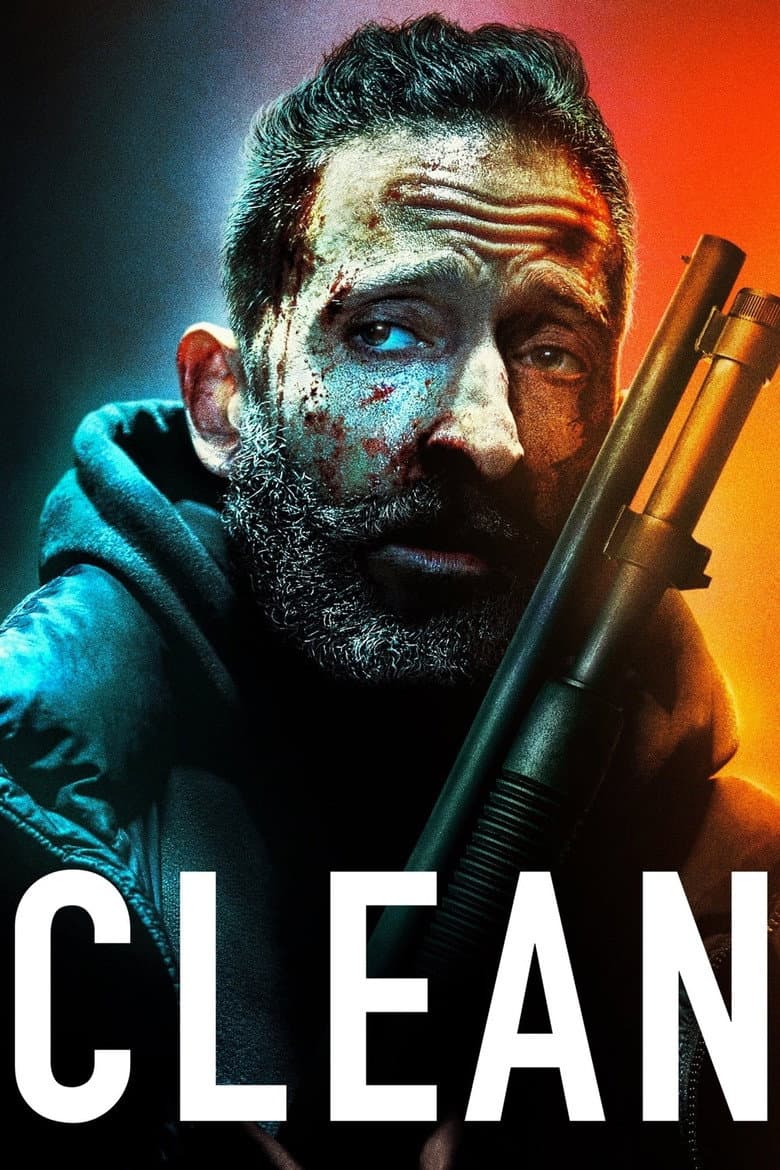
Clean is a former criminal and recovering addict who works as a garbage collector in snowy Utica, New York. He lives alone, repairs useful items from the trash, and tries to make up for the harm he caused in the past. He watches over Dianda, a teenage girl who lives with her grandmother, after losing his own daughter. When a local drug boss targets the girl, Clean returns to the violent skills he has tried to bury. The movie is grim, slow, and very bloody, with a quiet first half and a harsh revenge story in the second.
The film places a white male lead beside Black neighbors, including Dianda, her grandmother Ethel, and Clean’s helpful friends. That visible cast pattern is part of the neighborhood picture, while the characters face problems tied to survival, family, and crime. The neighborhood’s poverty, broken services, drugs, and violence shape the danger around them. Clean’s bond with Dianda gives him a reason to face his guilt, while his meetings and acts of kindness show his wish to live without violence. The main themes are grief, addiction, fatherhood, personal responsibility, and the hope that a damaged person can still protect someone else.
Community feedback
Was our 15% Woke rating accurate?
Breakdown
These are the editorial factors and ratings behind our score for Clean.
Woke representation / casting
Clean is a white man who becomes the protector of Dianda, a black teenager, and her Black grandmother. The film also gives visible supporting roles to black characters such as Clean’s sponsor, a pawnshop owner, and a paint-shop owner. This creates a mild audience-visible representation pattern around the lead. The story presents these people as neighbors in a crime drama, not as part of an identity campaign.
18%
Woke political dialogue
Clean opens with a voice-over that attacks consumer trash and says it poisons minds and water. The film also includes a news report about fentanyl and talks about prescription pills feeding addiction. These are brief, broad social comments rather than recurring identity or DEI arguments. The political signal is therefore weak.
8%
Identity-driven story themes
Not present. The story follows grief, addiction, violence, fatherhood, and personal redemption. Race, sex, gender, and sexuality do not drive the conflict or the character arcs.
0%
Western institutional / cultural critique
Clean shows a neighborhood losing families, public bus service, and safety. It also links the drug crisis to medical pills and a wider fentanyl problem. These details give the film a mild message about social problems and public failure. The story does not turn that setting into a broad attack on Western culture, Christianity, family life, or men as a group.
12%
Woke character or canon changes
Not relevant. Clean is an original crime story with no established character, source canon, or historical figure being changed.
0%
Anti-woke backlash and complaints
Not present. The supplied X research found no anti-woke posts or specific complaints. Other audience reactions focused on pace, violence, the familiar revenge plot, and Brody’s performance rather than woke or identity politics.
0%
Creator track record context
Paul Solet has a cached score of 16/100, and Adrien Brody has a cached score of 11/100. Their records show genre work and some broad concern about social problems, but no strong pattern of activist or identity-focused projects. Daniel Sollinger and Elliot Brody are both cached at 0/100 with no clear activist profile. The creator context is therefore weak.
9%
Production

Movie · 2023
When his aging mob boss is whacked, Charlie Swift, a loyal friend and hired gun, will stop at nothing to destroy the upcoming crew that took him out.
Movie · 2023
Ex-con Russell Gaines is attempting to rebuild his life with the help of his father, Mitchell. However, the arrival of Maben sends his new life into chaos, leading the pair to go…
Movie · 2022
A noir thriller set in Miami, the film follows an enforcer who discovers his femme fatale boss has branched out into cyber sex trafficking, putting a young runaway he’s befriended…

Movie · 2020
David Cuevas is a family man who works as a gangland tax collector for high ranking Los Angeles gang members.

Movie · 2016
In the fourth installment of the fighting franchise, Boyka is shooting for the big leagues when an accidental death in the ring makes him question everything he stands for.

Movie · 2023
A tormented father witnesses his young son die when caught in a gang's crossfire on Christmas Eve. While recovering from a wound that costs him his voice, he makes vengeance his…

Movie · 2023
The hardened son of a powerful industrialist returns home after years abroad and vows to take bloody revenge on those threatening his father's life.
Movie · 2023
Set in the fictional dystopian city-state of Khansaar, the film follows the friendship between Deva, a tribesman, and Varadha, the prince of Khansaar.
