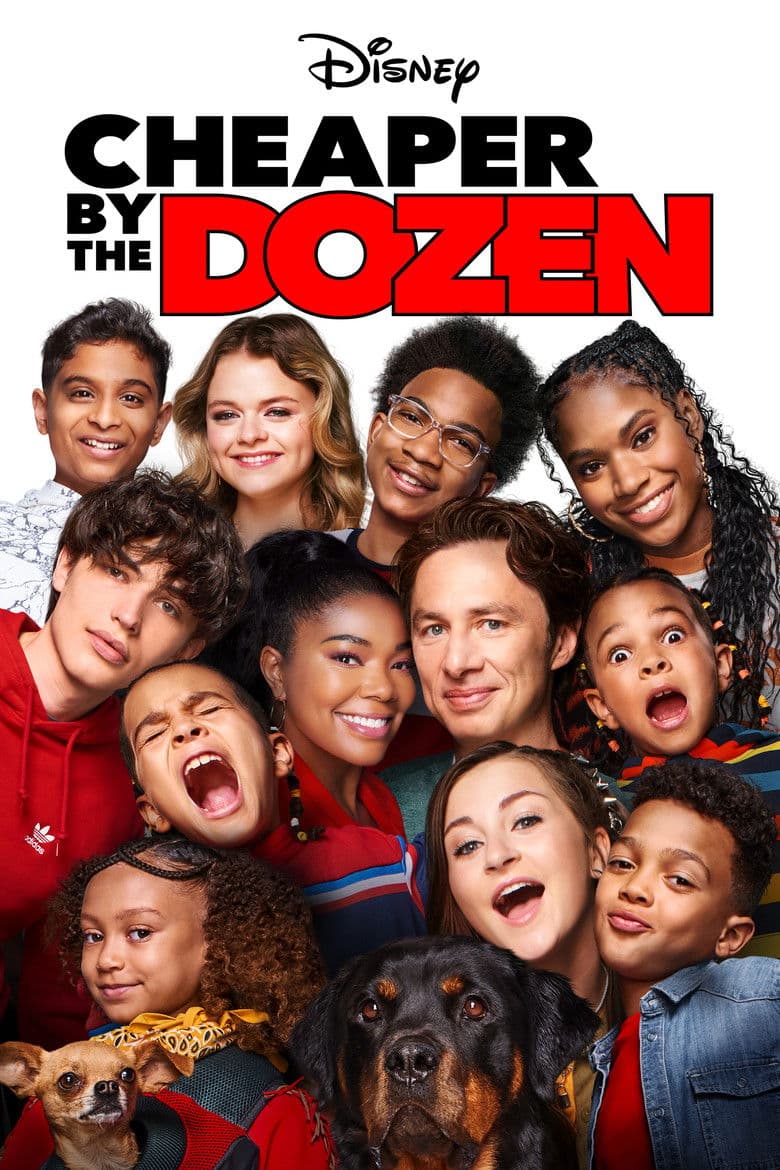
Paul and Zoey Baker run a busy breakfast restaurant in Los Angeles while raising a large blended family. Paul wants to sell his special sauce, grow the business, and move everyone from Echo Park to a rich gated area in Calabasas. The move brings a huge house and a private school, but the children feel lonely, watched, bullied, and pushed aside as Paul spends more time away. The movie uses loud family jokes and fast chaos before turning toward a warm lesson about home, love, and choosing family over status.
The family’s mixed race makeup becomes a clear part of the story instead of staying in the background. Zoey is mistaken for a nanny, Haresh faces racial bullying, and a black basketball player is benched at a private school because the rival player’s family donated to the gym. Dom tells Paul that a white parent cannot fully understand police profiling or prepare black children for the danger of being seen as a threat. The film also treats the wealthy, mostly white neighborhood as a place that judges outsiders and presents acceptance of different family forms as the right answer.
Community feedback
Was our 81% Woke rating accurate?
Breakdown
These are the editorial factors and ratings behind our score for Cheaper by the Dozen.
Woke representation / casting
The film centers a deliberately multiracial blended family. The parents are a black woman and a white man, and the children include Black, white, mixed-race, and South Asian family members. A disabled daughter and multiple involved ex-partners add more identity and family-structure signaling. Union and Braff described the family as a showcase for many races, cultures, abilities, and forms of co-parenting.
45%
Woke political dialogue
The adults repeatedly discuss privilege, race, racial profiling, and the danger black boys face when others see them as threats. Zoey tells Paul that he cannot assume he belongs everywhere, and Dom says Paul cannot prepare black children for police stops. The children also name racial stereotypes and call out racist bullying at school. These talks appear in several family and school scenes, but they remain part of a wider business and parenting plot.
47%
Identity-driven story themes
The film makes the family’s racial mix, blended parenting, disability, and belonging central to the move to Calabasas. Zoey faces assumptions that she is a nanny, Haresh is bullied for being Indian, and the family is treated as strange by wealthy neighbors. Deja’s school story links race and social status to a black athlete being pushed aside for a donor’s daughter. The story resolves these conflicts by rejecting status and affirming a family built from different races, homes, and parents.
52%
Western institutional / cultural critique
The film portrays a wealthy, mostly white gated neighborhood as suspicious, shallow, and hostile to outsiders. A neighbor mistakes Zoey for a nanny, security follows her, and the same neighbor suspects the Black teenage cousin of theft. A private school benches Black basketball player Deja while favoring a donor’s daughter, which links status to unfair power. The family leaves Calabasas after deciding that its schools and social world are not right for them.
44%
Woke character or canon changes
The 2022 remake changes the earlier Cheaper by the Dozen family from a mostly white household into a multiracial blended family. The new version adds a black mother, a black ex-husband, mixed-race children, an adopted South Asian child, and a disabled daughter. The filmmakers openly tied those changes to diversity, inclusion, and modern family representation. Those identity changes shape the main family and school conflicts, while other updates mainly serve the new setting and comedy.
50%
Anti-woke backlash and complaints
Some IMDb and Reddit users called the film woke, political messaging, propaganda, or diversity pandering. Those complaints focused on the multiracial remake, the Black Lives Matter sign, race-focused scenes, and the dog names Bark Obama and Joe Bitin’. Conservative family-review site Movieguide also called the race and family material woke and politically correct. Other viewers defended the diverse family or said the political material was limited, so the backlash was visible but mixed and mostly user-level.
46%
Creator track record context
The strongest creator context comes from Gail Lerner, Kenya Barris, Jenifer Rice-Genzuk Henry, and Gabrielle Union, whose documented work includes representation, social-justice, and LGBTQ advocacy themes. Lerner and Barris are tied to black-ish, while Union publicly framed this film around diverse families and inclusion. Union said the project should promote diversity in front of and behind the camera. Shawn Levy and the other producers add little activist context, so the strongest creator signals come from the director, writers, and lead producer.
62%
Production

Movie · 2026
A small goat with big dreams gets a once-in-a-lifetime shot to join the pros and play roarball, a high-intensity, co-ed, full-contact sport dominated by the fastest, fiercest…

Movie · 2016
A harried prehistoric bird mother entrusts her precious, soon-to-hatch egg to Sid. When she recommends him to her neighbours, business booms at his new egg-sitting service.

Movie · 2024
The Herdman kids are undeniably the worst kids in the history of the world. They lie, steal, cheat, bully and overall terrorize their small community.
Movie · 2026
George Hardy is a shepherd who reads detective novels to his beloved sheep every night, assuming they can't possibly understand.
Movie · 2020
Peter is thrilled that his Grandpa is coming to live with his family. That is, until Grandpa moves into Peter's room, forcing him upstairs into the creepy attic.

Movie · 2017
In 1843, despite the fact that Dickens is a successful writer, the failure of his latest book puts his career at a crossroads, until the moment when, struggling with inspiration…

Movie · 2023
Jaded 74-year-old lizard Leo has been stuck in the same Florida classroom for decades with his terrarium-mate turtle.
Movie · 2016
A koala named Buster recruits his best friend to help him drum up business for his theater by hosting a singing competition.
