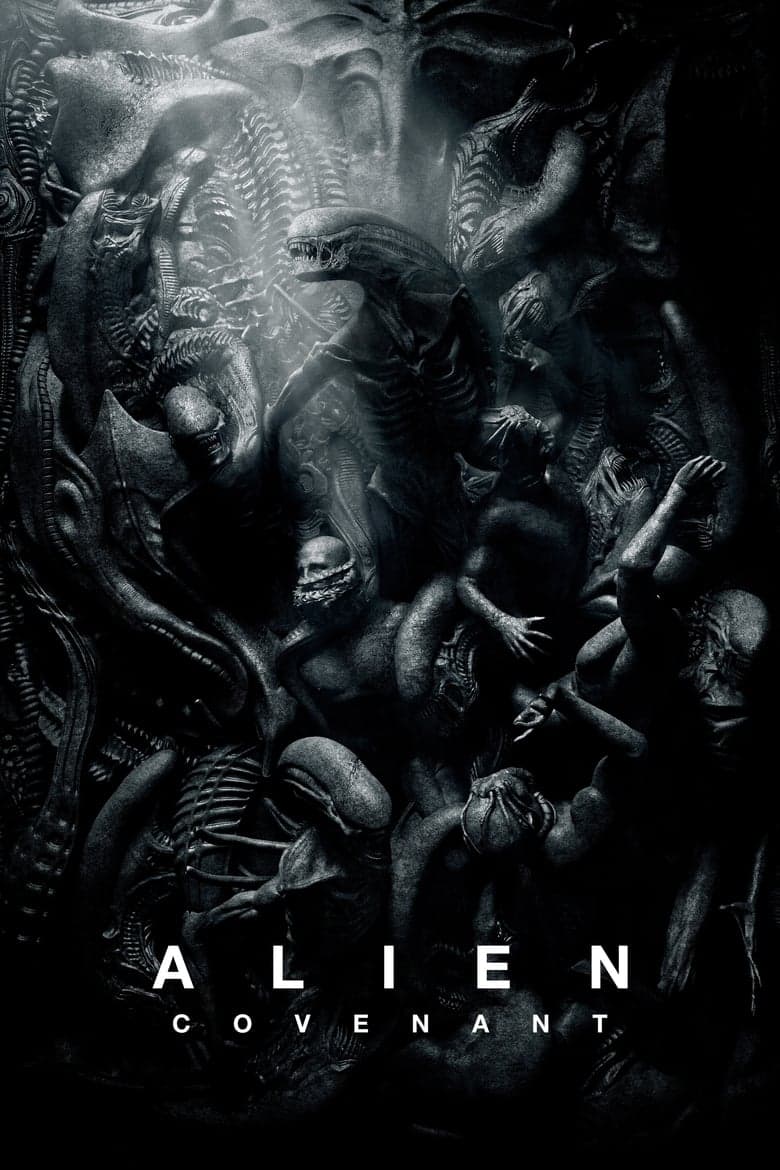
Alien: Covenant follows Daniels, a terraforming worker and widow on a colony ship carrying thousands of sleeping settlers. A deadly space storm wakes the crew early and kills their captain. The crew follows a radio message to a nearby planet that looks safe, but the world holds deadly spores, monsters, and David, an android from the earlier Prometheus mission. David wants to create a perfect life form, and his plan turns the crew into test subjects. The movie mixes bleak space travel, graphic body horror, and questions about God, machines, and human pride. Viewers can see a mixed-race future crew, several married couples, and a married male couple among the colonists. The official Last Supper prologue shows the two men arm wrestling and kissing, while the movie gives their relationship only a short moment after one man dies. David also kisses Walter, the android who looks like him, in a strange scene about control and identity. Daniels is a capable woman who becomes the main human survivor, which continues the series' older heroine pattern. These choices are easy to notice, but the story mainly follows David's creator obsession and the crew's fight to stay alive.
Community feedback
Was our 44% Woke rating accurate?
Breakdown
These are the editorial factors and ratings behind our score for Alien: Covenant.
Woke representation / casting
The future crew is visibly mixed in race and includes a married male couple. Fox and the actors presented the couple as part of a future with gay and straight couples. Daniels is the main human survivor, but the series already had female leads in Ripley and Shaw. The choices are easy to notice, while the story does not make representation its main subject.
43%
Woke political dialogue
Not present. The dialogue discusses faith, science, creation, and survival, but it does not push modern identity, DEI, or activist ideas.
0%
Identity-driven story themes
The main conflict follows David's wish to create a perfect life form and replace humanity. The film shows Lope and Hallet as a married male couple, and the prologue makes their relationship clearer. David also kisses Walter, but the scene shows control and danger rather than a queer love story. Daniels is a capable female survivor who continues an older Alien pattern. These identity elements color the story, but they do not drive the main plot.
30%
Western institutional / cultural critique
The film presents Captain Oram's Christian faith as a reason some crew members doubt him. Oram then makes a foolish choice and dies after trusting David, so faith is given little power or respect. The film also distrusts the Weyland company and human science, but that is a long-standing Alien idea about power and greed. The religious material supports the creator story more than a modern activist attack.
19%
Woke character or canon changes
Not relevant. The film introduces new colony characters and a new android, but it does not change an established Alien character's identity or role.
0%
Anti-woke backlash and complaints
Most 2017 reviews and fan discussions focused on plot holes, gore, the Prometheus links, and the strange creation story. National Review and LifeSite News reviews, reported by Christian Post, attacked the film's anti-Christian message and its gay couple. Later forum posts and X posts show a handful of people calling the film woke or feminist, or asking for a male lead. The complaints reached several conservative outlets, but there was no organized boycott, review-bombing campaign, or broad news cycle.
30%
Creator track record context
Andrew Chan's public record is focused on film craft. Ridley Scott's Alien interviews focus on scares, entertainment, and creator questions, although he has spoken positively about feminist undertones and Daniels as Ripley's successor. John Logan and Michael Green have stronger identity and diversity links in their other work. Casting director Carmen Cuba has a record of seeking more diverse talent. The other credited writers and producers have little public activist record, so the context is mixed but leans low.
30%
Production
Movie · 2024
While scavenging the deep ends of a derelict space station, a group of young space colonizers come face to face with the most terrifying life form in the universe.
Movie · 2019
What if a child from another world crash-landed on Earth, but instead of becoming a hero to mankind, he proved to be something far more sinister?
Movie · 2019
Karen, a single mother, gifts her son Andy a Buddi doll for his birthday, unaware of its more sinister nature. A contemporary re-imagining of the 1988 horror classic.
Movie · 2017
The six-member crew of the International Space Station is tasked with studying a sample from Mars that may be the first proof of extra-terrestrial life, which proves more…
Movie · 2024
With his wife out sick, a struggling father brings home a lifelike AI, only to have his self-aware new help want everything her new family has to offer...
Movie · 2026
After breaking the mysterious "One Wish Willow" to win his crush's heart, a hopeless romantic finds himself getting exactly what he asked for but soon discovers that some desires…
Movie · 2019
A year after the mysterious disappearance of an 8 year-old girl, we meet her grieving family as they return home from her memorial service in their small town.
Movie · 2026
In a post-apocalyptic future where an event known as "The Quiet Rapture" caused all known stars and habitable planets in the universe to disappear, a convict is sent to search an…
