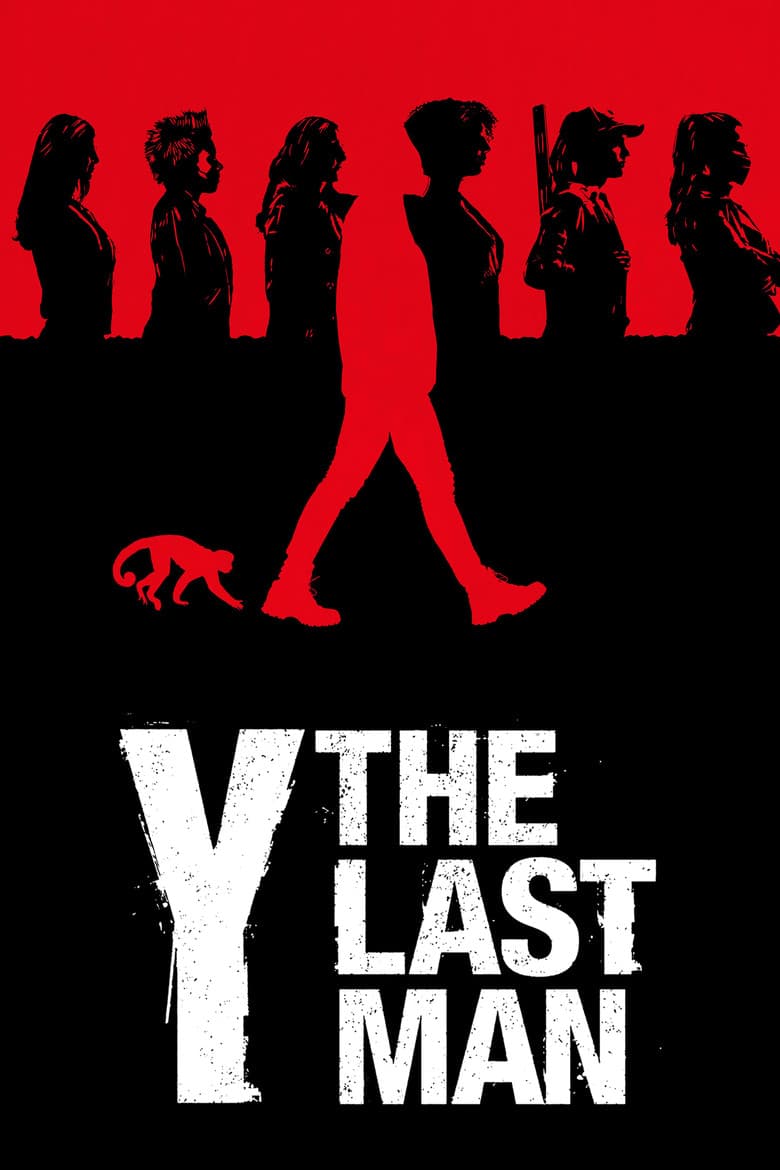
Started September 13, 2021 · Canceled · Based on 1 season, 10 episodes through November 1, 2021 · TV-MA · 54 min
Yorick Brown is the only cisgender man left alive after a sudden event kills every mammal with a Y chromosome. He travels through a broken United States with Agent 355 while his mother, President Jennifer Brown, tries to keep the government working. Yorick also searches for his sister Hero and his girlfriend Beth. The show mixes science fiction, family drama, political conflict, and survival.
The show makes gender identity a major part of its story. It adds trans men, discusses nonbinary people, and explains that chromosomes do not define gender. Female leaders, soldiers, scientists, and political figures drive much of the action. The story also presents some male-centered ideas as harmful while giving repeated attention to feminism, gender roles, and identity. These themes are central across the season rather than appearing in only one scene.
Community feedback
Was our 88% Woke rating accurate?
Breakdown
These are the editorial factors and ratings behind our score for Y: The Last Man.
Woke representation / casting
The show places women in many visible leadership, combat, science, and government roles. The cast also includes a black elite agent and an Asian female geneticist in important roles. The repeated focus on trans characters and a trans actor adds a stronger identity signal. The pattern is audience-visible, although the modern American setting makes much of the casting plausible.
42%
Woke political dialogue
Characters repeatedly discuss gender, trans identity, white privilege, cancel culture, and the future of men. The show presents right-wing women and politicians as threats or obstacles in several storylines. The dialogue often explains the show’s views instead of leaving them only in the background.
43%
Identity-driven story themes
Gender identity is one of the show’s main subjects. The story says that chromosomes do not define whether someone is a man or woman. Trans men, nonbinary people, and intersex conditions receive repeated attention. The show also explores women’s power, feminism, and changing gender roles across the season.
70%
Western institutional / cultural critique
The show often questions traditional male power and presents some men as entitled, careless, or dangerous. Female leaders try to rebuild the government while facing old ideas about who should hold power. Right-wing politics and fears about changing gender roles are treated mainly as problems. The show also criticizes abuse within female-led groups, which adds some balance.
48%
Woke character or canon changes
The series changes the comic’s gender-focused premise by clearly separating Y chromosomes from being male. It adds Sam, a trans man, and other gender-diverse ideas that were less developed in the source material. The showrunner publicly described these changes as a deliberate update for modern views of gender. These changes shape the season’s central mystery and conflicts.
58%
Anti-woke backlash and complaints
Right-leaning reviews called the series woke, feminist propaganda, or trans virtue signaling. Viewers complained that the show focused too much on trans issues and changed the comic to fit current politics. Other complaints targeted female-centered government plots and the treatment of men. The backlash was visible but remained mixed and mostly online.
46%
Creator track record context
Several key creators have strong links to diversity, queer storytelling, or social-justice themes. Charlie Jane Anders and Cheryl Dunye have especially strong identity-focused records. Nina Jacobson and Melina Matsoukas also have public histories tied to representation and political themes. Eliza Clark and other writers have more mixed or limited records.
64%
Production
TV Show · 2018
After 250 years on ice, a prisoner returns to life in a new body with one chance to win his freedom: by solving a mind-bending murder.
TV Show · 2023
Maggie and Negan travel to post-apocalyptic Manhattan - long ago cut off from the mainland. The crumbling city is filled with the dead and denizens who have made it a world full…
TV Show · 2023
Aster Calyx and Halan Kai Nielsen are inextricably drawn to Beacon 23. Navigating one threat after another, they unravel the beacon’s mysteries, just in time to face their most…
TV Show · 2021
A single mother enters a world of twisted mind games when she begins an affair with her psychiatrist boss while secretly befriending his mysterious wife.
TV Show · 2024
Rick and Michonne are thrown into another world, built on a war against the dead... And ultimately, a war against the living.
TV Show · 2021
Two federal agents from two different continents, and two different mindsets, must work together to investigate when wreckage from a destroyed alien spacecraft has mysterious…
TV Show · 2021
A year after a subglacial volcano erupts, mysterious elements from prehistoric times emerge from the melting ice, bringing unforeseen consequences.
TV Show · 2022
Irene and Franklin York, a retired couple, have a secret: a Chamber buried in their backyard that miraculously leads to a strange, deserted planet.
