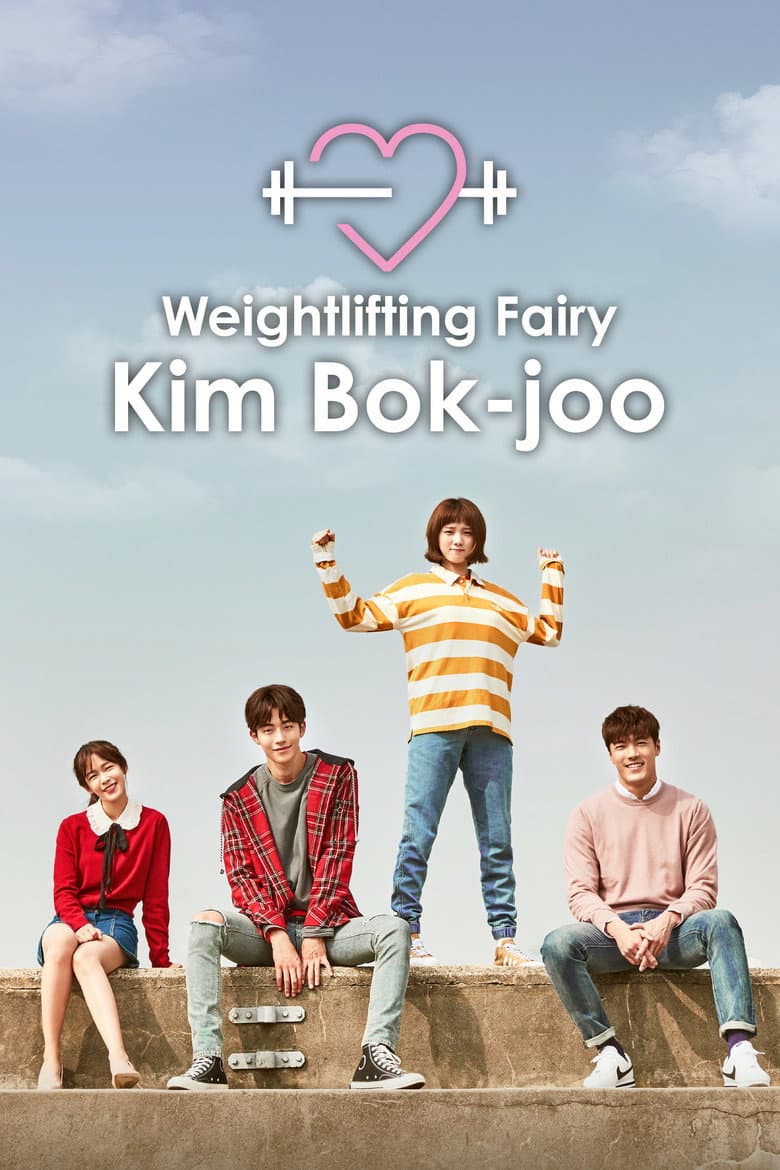
Started November 16, 2016 · Ended · Based on 1 season, 16 episodes through January 11, 2017 · TV-PG · 65 min · Korean
Kim Bok-joo is a strong college weightlifter who wants to win medals and make her father proud. She studies at a sports university with her two closest weightlifting friends, while a talented swimmer named Jung Joon-hyung trains on the same campus. Bok-joo first falls for Jung Joon-hyung’s older brother, a kind doctor, but she slowly learns that her teasing childhood friend understands her better. The show mixes silly campus comedy with first love, sports pressure, family troubles, and the pain of growing up.
The show repeatedly asks whether a girl can be powerful, hungry, sweaty, and still feel pretty and loved. Bok-joo hides her sport and joins a weight-loss clinic because she thinks a man will not like her strong body, while female gymnasts mock weightlifters for looking unfeminine. Her friends, family, and Joon-hyung help her reject that shame, and she returns to training without giving up romance or her goals. These gender and body-image ideas are important to her season-long struggle, but the story presents them through personal talks, jokes, friendship, and a soft romance rather than activist speeches.
Community feedback
Was our 36% Woke rating accurate?
Breakdown
These are the editorial factors and ratings behind our score for Weightlifting Fairy Kim Bok-joo.
Woke representation / casting
Not present. The cast is Korean and fits the Korean college sports setting. The female weightlifter lead is the story’s actual subject, and public coverage explains the role through the sport rather than a broader diversity campaign.
0%
Woke political dialogue
The show repeats short lines about whether a weightlifter can also be a woman. Bok-joo says she fears men will dislike her strong body, and her father first treats weightlifting and womanhood as separate. Friends and Joon-hyung push back during her crush and body-shame storyline. The dialogue stays personal and comic instead of becoming a political speech.
34%
Identity-driven story themes
Bok-joo spends much of the season trying to prove that a strong, hungry weightlifter can still be a woman. She hides her sport, joins a weight-loss clinic, and worries that a man will reject her body. Female gymnasts and other students often treat weightlifters as unfeminine, while Bok-joo’s friends and romance help her accept herself. The theme returns through training, friendship, eating, romance, and her final return to competition.
46%
Western institutional / cultural critique
The story questions the idea that women must be thin, delicate, and focused on looks. Coaches, classmates, and family members sometimes shame the girls’ bodies or treat strength as unfeminine. The show answers that pressure with friendship, romance, and female athletes who keep their own goals. It stays inside Korean campus, sports, and family life and does not make a broad attack on Western institutions or religion.
27%
Woke character or canon changes
Not relevant. The series uses fictional college athletes and is only inspired by the real weightlifter Jang Mi-ran. It does not change a known character’s race, sex, or sexuality.
0%
Anti-woke backlash and complaints
Not present. The supplied X research found no anti-woke reaction, and web coverage did not show credible complaints that the show pushes woke, DEI, or identity politics. Reported disputes were about same-agency casting and low ratings, not ideology.
0%
Creator track record context
Not present. The cached record describes mainstream romance, comedy, family, medical, and sports dramas. It contains no documented activist persona or sustained focus on DEI, identity politics, or social-justice causes.
0%
Production

TV Show · 2016
Ex-pro hockey player Matt Shade irrevocably changes his life when he teams up with fierce P.I. Angie Everett to form an unlikely investigative powerhouse.
TV Show · 2017
The early life of child genius Sheldon Cooper, later seen in The Big Bang Theory.

TV Show · 2016
In 1935, financially strapped widow Louisa Durrell, whose life has fallen apart, decides to move from England, with her four children (three sons, one daughter), to the island of…
TV Show · 2024
John Taylor lives in quiet solitude, designing puzzles for a living, under the nom-de-plume of 'Ludwig'. When his identical twin, James, disappears off the face of the earth, John…
