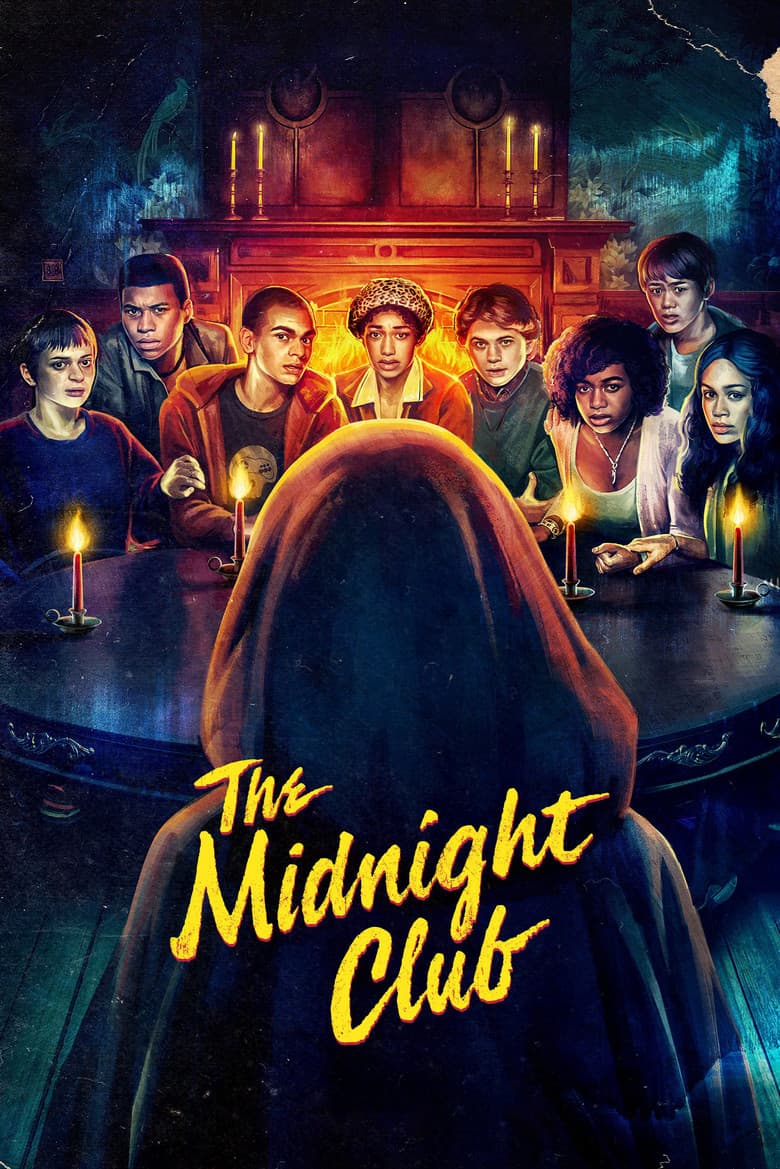
Started October 7, 2022 · Canceled · Based on 1 season, 10 episodes through October 7, 2022 · TV-MA
The Midnight Club follows Ilonka, an eighteen-year-old student whose plans for Stanford end after doctors find terminal thyroid cancer. She chooses Brightcliffe, a hospice for teenagers, because she believes the place may have cured another sick girl. Ilonka joins eight young patients who meet at midnight to tell scary stories and promise to send a sign after the first death. The season mixes ghostly mystery, sad drama, dark jokes, and stories that show how each teen faces death.
The clearest woke material comes from Spencer, a black teen with AIDS who is gay and was rejected by his religious parents. His story includes direct talk about homophobia, public fear of AIDS, the need for gay people to be visible, and a gay rights rally. The show also makes representation visible through a mixed cast, a disabled Irish girl played by an amputee, an Asian teen’s depression story, and a lead black girl whose cancer journey drives the plot. These elements matter in several episodes, but the main story remains about illness, grief, friendship, faith, and the search for hope.
Community feedback
Was our 56% Woke rating accurate?
Breakdown
These are the editorial factors and ratings behind our score for The Midnight Club.
Woke representation / casting
The show gives its central group a carefully mixed identity profile. Ilonka and Cheri are black girls, Spencer is a black gay boy, Natsuki is Asian, and Anya is an Irish amputee played by an amputee. Interviews openly call the cast diverse and inclusive, and the production presents authentic disability casting as a goal. The setting makes the mix possible, but the repeated focus on identity makes representation easy to notice.
38%
Woke political dialogue
The show gives Spencer direct lines about rejection by his religious family and about gay people needing to be visible. The show presents a gay rights rally and talks about AIDS fear, loss, and public indifference. The show returns to religious rejection in more than one episode, but most dialogue concerns illness, grief, and friendship. The political material is clear and recurring, but it does not drive the whole season.
35%
Identity-driven story themes
The show makes Spencer’s gay identity and HIV diagnosis a continuing part of the season. The show links his coming out to rejection by his parents, fear of AIDS, and a gay community that asks for visibility. The show also gives major space to disability, mental health, and chosen family. These themes appear in several episodes, but the season remains mainly a story about death, grief, and friendship.
46%
Western institutional / cultural critique
The show presents Spencer’s religious family as rejecting him because he is gay. The show lets Spencer call those beliefs harmful and mock the idea that Jesus deserves credit for a good outcome. The show also attacks a secret cult and a wellness business that sells false hope, but those plots target abuse and fraud rather than normal Western institutions. Sandra remains a sincere Christian whose faith helps her, so the criticism of religion is strong in parts but not one-sided.
34%
Woke character or canon changes
The show changes Pike’s “The Eternal Enemy” from a girl-centered story to a story about a gay teen boy and his male crush. The change gives Spencer a story that matches his own identity and becomes part of his coming-out arc. The show also changes or combines other Pike stories, but those changes are ordinary adaptation choices. This identity-based source change is clear but limited to one major story.
28%
Anti-woke backlash and complaints
Small right-leaning X accounts complained about a “big gay storyline,” “Catholic bashing,” and a “Satanic DEI Hospice Funtime” title joke. The posts had little reach and came from only a few small or anonymous accounts. No major right-leaning outlet, boycott, review-bomb push, or organized campaign was tied to the show. The evidence supports fringe backlash, not a broad controversy.
12%
Creator track record context
Mike Flanagan has a stored creator score of 45/100. His earlier work often includes LGBTQ+ characters, questions about religion, and social criticism. Leah Fong has a stored creator score of 19/100 and has mainly worked on emotional horror and ensemble stories. Their combined history supports a moderate context score, while this season is still mainly about death, grief, and friendship.
33%
Production
TV Show · 2021
The arrival of a charismatic young priest brings glorious miracles, ominous mysteries and renewed religious fervor to a dying town desperate to believe.
TV Show · 2022
When one of a group of friends downloads the mysterious Red Rose app, plans change. What starts innocently as a game of admiration rapidly descends into something much darker.
TV Show · 2025
In the vast expanse of Yosemite National Park, a woman's death draws a federal agent into lawless terrain — where nature obeys no rules but its own.
TV Show · 2022
When a man wakes up in the Australian outback with no memory, he must use the few clues he has to discover his identity before his past catches up with him.
TV Show · 2026
A desperate father searching for his runaway daughter gets caught up in a murder case — and stumbles upon secrets which could destroy his family for good.
TV Show · 2017
A war veteran turned private detective operates out of a tiny office in London’s Denmark Street. Although wounded both physically and psychologically, his unique insight and…
TV Show · 2020
Real cases of perplexing disappearances, shocking murders and paranormal encounters fuel this gripping revival of the iconic documentary series.
TV Show · 2024
When ex-soldier Maya sees her murdered husband on a secret nanny cam, she uncovers a deadly conspiracy that stretches deep into the past.
