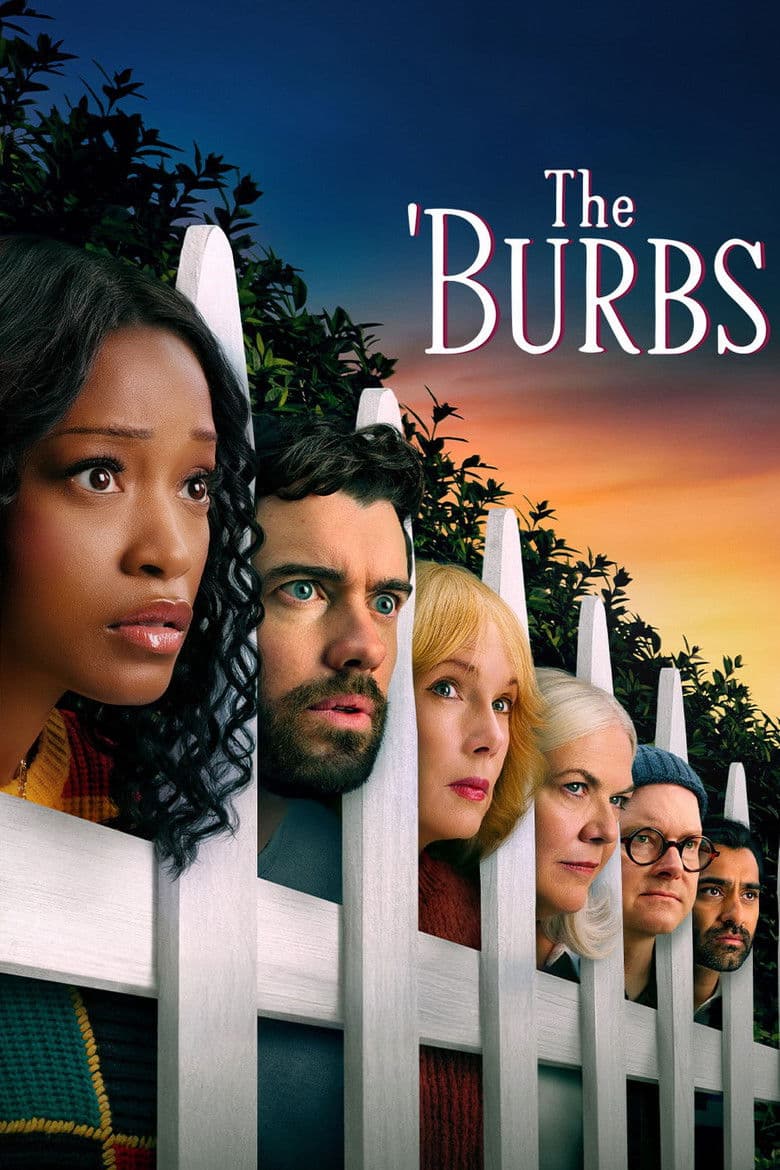
Started February 8, 2026 · Returning Series · Based on 1 season, 8 episodes through February 8, 2026 · TV-MA · 42 min
Samira Fisher is a sharp lawyer who is on maternity leave after moving with her husband, Rob, and their baby to his childhood home in Hinkley Hills. The quiet suburb looks safe, but a long-empty Victorian house across the street gets a strange new owner. Samira starts digging into the disappearance of a local girl, while Rob hides parts of his own past and the neighbors guard their secrets. The show mixes dark jokes, odd neighbors, family stress, and a slow mystery with a few scary turns.
Samira's life as a black woman in a mostly white suburb is a clear part of the story. The show includes jokes and arguments about microaggressions, racial profiling, white neighbors, and raising a black son. Dana is an openly lesbian former Marine, and Naveen talks about being one of the few non-white children in his old school. These ideas return across the season, but the later episodes give more space to the missing girl, the strange husband, animal-rights trouble, and a possible Homeowners Association cover-up.
Community feedback
Was our 90% Woke rating accurate?
Breakdown
These are the editorial factors and ratings behind our score for The 'Burbs.
Woke representation / casting
The series places a black woman at the center of a mostly white suburb. It also gives major roles to a South Asian man, an openly lesbian former Marine, and an interracial married couple. The lead group shows a clear pattern of identity choices beyond a random suburban cast, and interviews openly frame those choices around race and representation. Many supporting neighbors remain white, so the design is strong but not overwhelming.
67%
Woke political dialogue
Samira calls the neighborhood's fence “micro-aggressive” and says Hinkley Hills is Caucasian. Characters discuss being one of few non-white children, raising a black son, racial profiling, and whether an incident was a race thing. Samira also calls a neighbor racist when he tries to drive the family away. These lines return through jokes and arguments but do not take over every episode.
52%
Identity-driven story themes
The story repeatedly treats Samira's race and sense of belonging as part of life in the neighborhood. The mostly white suburb gives her microaggressions, racial profiling, and awkward comments about her baby. Dana's open lesbian identity also supports the show's theme of outsiders finding community together. The mystery remains the main engine, so identity themes share space with secrets, motherhood, trauma, and murder.
68%
Western institutional / cultural critique
The show presents the town's “safest town” image as hiding racial profiling, bullying, and a cover-up. Samira's treatment by police and white neighbors is part of that problem. The HOA uses rules and public image to control the neighborhood, while Dana's backstory attacks a drug-testing company and its lawyers. The story does not make a broad attack on Christianity, capitalism, or ordinary family life.
49%
Woke character or canon changes
The series replaces the film's white male lead, Ray Peterson, with Samira, a black woman and lawyer. It changes the old neighbor group by making Dana an openly lesbian former Marine and adding South Asian neighbor Naveen. The show uses new characters and a new mystery, so it is a loose reimagining rather than a close retelling. These identity changes shape the main cast and the new story.
78%
Anti-woke backlash and complaints
Some original-film fans called the series woke, DEI, or a box-checking exercise. Several comments objected to changing Tom Hanks's white male lead into a black woman and adding an openly lesbian neighbor. Other viewers liked Palmer and said the show was fun or worth watching. The complaints were visible in fan and culture-war forums but did not form a large mainstream scandal by February 8.
46%
Creator track record context
Celeste Hughey's cached profile shows a repeated focus on black women, belonging, race, class, and motherhood. Keke Palmer's cached profile includes Black Lives Matter and other statements about racial injustice. Amy Aniobi has a strong record of black-women-centered work, while Seth MacFarlane is linked mainly to progressive satire and donations. Most other listed directors and writers have little public activist history, so the overall context is mixed.
55%
Production
TV Show · 2026
The mayor of a New England town resolves to turn it into the next tourist hot spot, despite local warnings that it's cursed.
TV Show · 2022
An anniversary trip puts a marriage to the test when a couple finds themselves embroiled in one of Yucatan's most bizarre unsolved mysteries.

TV Show · 2024
The life of an American woman living in Kyoto, Japan, is upended when her husband and son disappear in a mysterious plane crash.
TV Show · 2023
A disgraced cop in debt is forced to return to his home state of Florida for a shady mission only to get swept up in a wild — and deadly — treasure hunt.
TV Show · 2019
When a novelist realizes her terrifying stories are coming true, she returns to her hometown to face the demons from her past that inspire her writing.
TV Show · 2021
Three strangers share an obsession with true crime and suddenly find themselves wrapped up in one.
TV Show · 2026
Ben Reilly, an aging and down on his luck private investigator in 1930s New York, is forced to grapple with his past life as the city's one and only superhero.
TV Show · 2022
For Anna, every day is the same. She sits with her wine, staring out the window, watching life go by without her.
