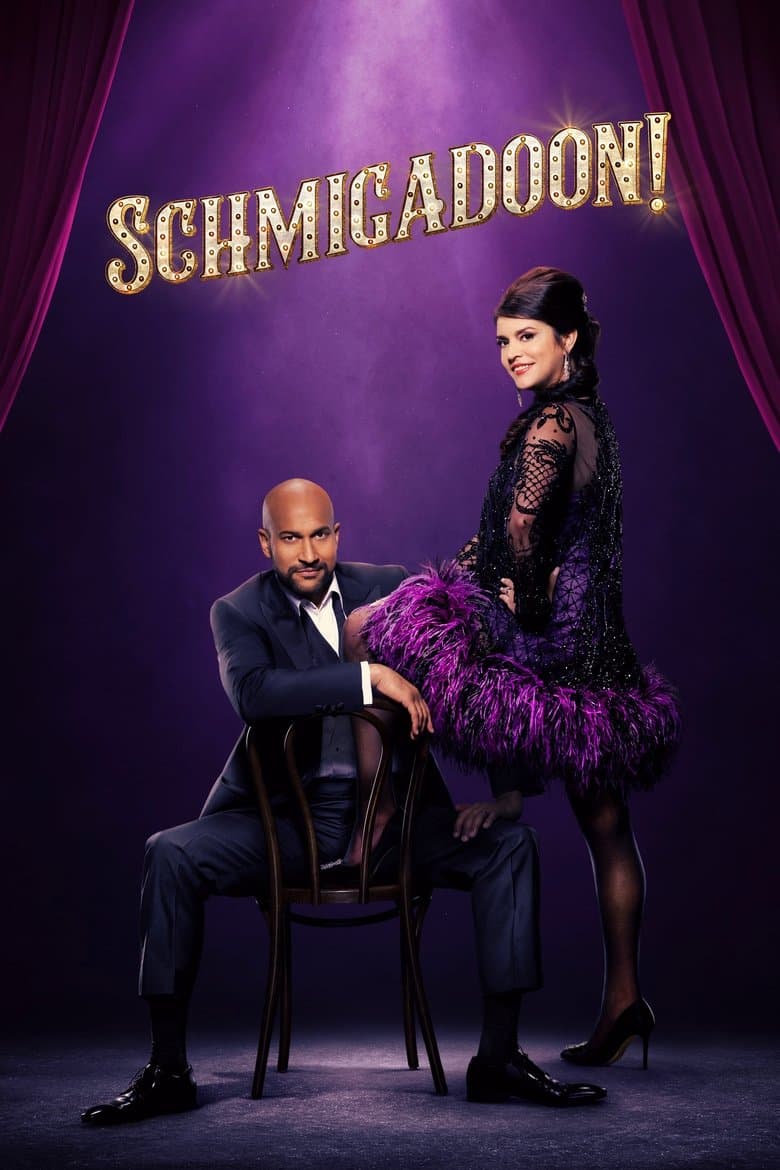
Started July 16, 2021 · Canceled · Based on 2 seasons, 12 episodes through May 2, 2023 · TV-14
Schmigadoon! follows New York doctors Melissa and Josh, whose marriage has lost its spark. A strange bridge takes them to Schmigadoon, a bright town where people sing like they live in a musical from the 1940s or 1950s. The couple learns that they cannot leave until they find true love, even though they believe they already have it. Season two takes the married pair to darker Schmicago, a city shaped by musicals from the 1960s and 1970s. Josh faces a murder charge while Melissa becomes involved in a nightclub power struggle. The first season feels silly and warm, while the second season feels sharper, stranger, and more adult.
The show uses modern ideas about identity as part of its parody of older musicals. The first season includes a mixed cast, a closeted gay mayor, a gay reverend, an interracial couple, and townspeople who learn to accept change. Mildred’s Bible-based defense of strict marriage, sexual rules, and old gender roles blocks that change. The second season includes a cabaret number about a man in a dress and attraction to boys and girls. It also includes hippies and women who challenge male power. These ideas appear in both seasons, but Melissa and Josh repairing their marriage remains the main story. The queer and political material matters, but it does not replace the central relationship plot.
Community feedback
Was our 53% Woke rating accurate?
Breakdown
These are the editorial factors and ratings behind our score for Schmigadoon!.
Woke representation / casting
Schmigadoon! uses a visibly mixed cast in a fantasy town styled after musicals from the 1940s and 1950s. Melissa and Josh are an interracial couple. Black, Asian, and Latino performers hold named roles such as teacher, mayor’s wife, doctor, and police sergeant. Melissa calls the town’s approach “color-blind casting,” and the cast describes the choice as moving past old racial limits. The show makes representation a clear production choice, although it does not center a race-based plot.
43%
Woke political dialogue
Melissa points out that women were often given weak roles in old musicals. Season one includes direct talk about being gay, being closeted, and changing old rules. Season two adds a cabaret song about a man in a dress, attraction to boys and girls, and shocking people through sexual freedom. The show presents these ideas in short comic scenes and songs instead of long political speeches.
31%
Identity-driven story themes
Season one gives Mayor Aloysius Menlove a continuing plot about hiding that he is gay and later coming out in public. The season also follows Howard, a married reverend who admits that he is gay and chooses a new relationship with Aloysius. The finale presents acceptance, self-honesty, and social change as answers to Mildred’s strict moral rules. Season two gives queer and sexually open ideas more space in its cabaret and hippie settings. Melissa and Josh’s marriage and a murder case remain the main plots.
46%
Western institutional / cultural critique
Season one makes Bible-carrying Mildred the main enemy of change. Mildred attacks unmarried sex, the interracial couple, and open gay identity. Melissa and the mayor push the town toward acceptance. The show also mocks the old idea that women should obey men and that men should hide softer or less traditional behavior. Season two adds a woman lawyer and a sexually bold cabaret. The main target remains old musical rules rather than a modern institution.
43%
Woke character or canon changes
Not relevant. The series creates original parody characters and songs inspired by classic musicals. It does not rewrite an established character or real historical figure.
0%
Anti-woke backlash and complaints
NewsBusters described the first-season ending as a “liberal utopian dream” and called the show liberal propaganda. A separate X review found a few small accounts calling it gay or socialist propaganda and “woke” Broadway. Another account said the show had no clear woke preaching. The reaction was fringe, and no coordinated boycott or review-bombing was found.
17%
Creator track record context
Cinco Paul and Ken Daurio have low cached scores and mainly write mainstream comedy. Bowen Yang has a stronger queer and identity-focused record. Julie Klausner has queer comedy credits. Cecily Strong has shared progressive views. The producers and directors are mostly known for comedy rather than activism. The creators’ records provide some context, but the main creators’ records remain mild.
32%
Production
TV Show · 2019
There is no such thing as an ordinary interaction in this offbeat sketch comedy series that features a deep roster of guest stars.
TV Show · 2020
David Tennant and Michael Sheen (playing themselves) were due to star in a production of 'Six Characters in Search of an Author' in the West End.
TV Show · 2020
All Nikki and Jason want is a baby—the one thing they can't have. So they decide to adopt. With their dysfunctional friends, screwball families, and chaotic lives, will the…
TV Show · 2018
Offbeat comic James Acaster covers the strange, the mundane and everything in between in this collection of four wide-ranging stand-up specials.
TV Show · 2020
A ghost-hunting duo team up to uncover and film paranormal sightings across the U.K. and share their adventures on an online channel.

TV Show · 2016
Jeremy Clarkson, Richard Hammond and James May are back with a show about adventure, excitement and friendship...
TV Show · 2016
After North Jackson High's long-time principal steps down to tend to his ailing wife, Neal Gamby and Lee Russell, the school's vice principals, are forced to put their mutual…
TV Show · 2025
Eight years after an unforgivable mistake nukes his promising college football career, hotshot quarterback Russ Holliday tries to resurrect his dreams by disguising himself as…
