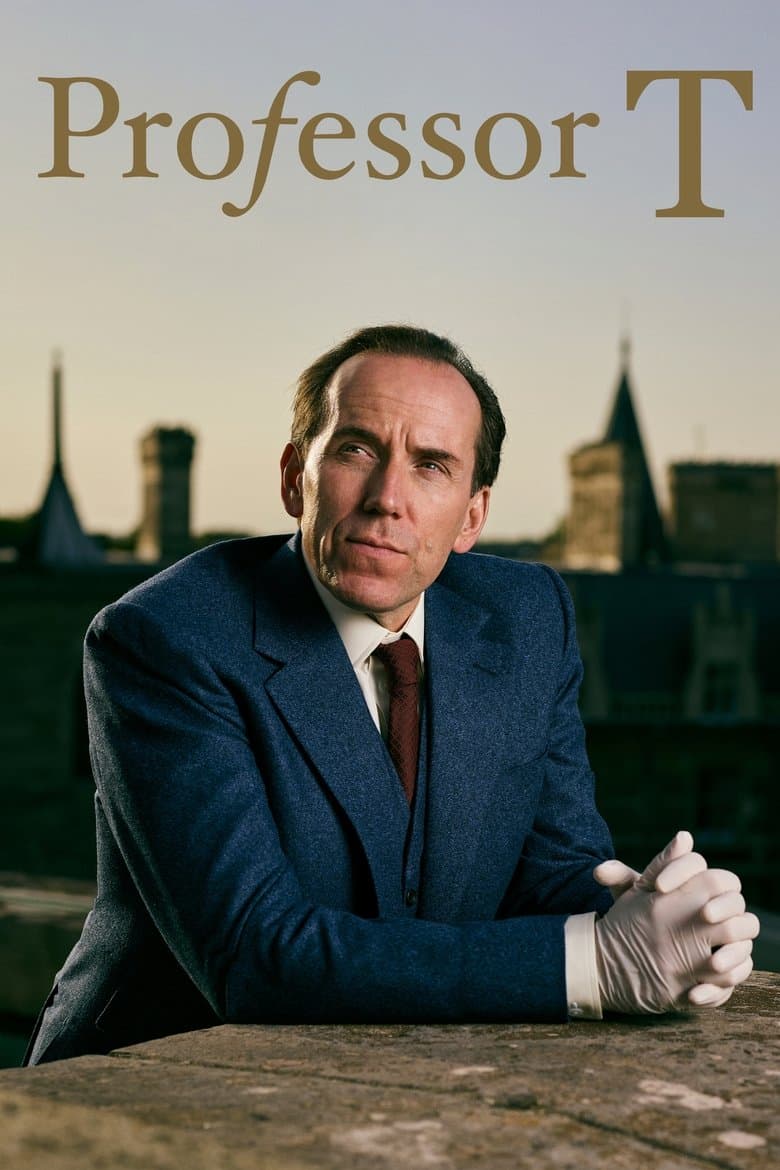
Started July 18, 2021 · Returning Series · Based on 4 seasons, 19 episodes through August 19, 2026 · NR
Professor Jasper Tempest is a brilliant criminology professor at Cambridge who helps the police solve strange crimes. He has OCD, strict routines, and a painful childhood that still controls much of his life. His former student Lisa Donckers first pulls him into police work, and DCI Christina Brand and later DCI Maiya Goswami lead the police team around him. By the fourth season opening, Jasper is grieving Lisa and is pulled back into a missing-person case. The show mixes murder puzzles with dry jokes, dream scenes, family trouble, grief, and slow personal change. The clearest woke elements are the show’s focus on disability and its repeated use of women in senior police roles. Jasper’s OCD and autistic traits shape his main story, while a first-season case follows Sophie, an autistic girl with Down syndrome whose evidence the police first doubt. Lisa is a black detective who earns promotion, and Maiya is a South Asian woman who takes charge of the team, while men often work beside them or answer to them. These choices are easy to notice, but the show treats them as parts of crime stories and personal drama rather than as speeches about politics.
Community feedback
Was our 49% Woke rating accurate?
Breakdown
These are the editorial factors and ratings behind our score for Professor T.
Woke representation / casting
The police team repeatedly puts women in senior roles. Christina Brand leads early cases, Lisa Donckers is promoted, and Maiya Goswami takes over as DCI. Lisa is a black detective in a prominent, capable role, and Maiya is a South Asian woman who commands the team. Cambridge is a modern setting, and Jasper remains the white male genius at the center, but the repeated pattern makes representation a visible choice.
45%
Woke political dialogue
Not present. The show does not use recurring lines about DEI, identity politics, or activist causes. Its lectures and police talk focus on crime, memory, evidence, and trauma.
0%
Identity-driven story themes
Jasper’s OCD and autistic traits shape his main character arc. The show links his behavior to childhood trauma and follows him through therapy, prison stress, grief, and attempts to connect with people. Sophie’s case centers on an autistic girl with Down syndrome whose evidence is first treated as unreliable. These disability themes drive major personal stories, but the show does not turn them into a broad political campaign.
38%
Western institutional / cultural critique
Not present. The police, courts, university, and family are used as normal parts of crime plots. The show does not repeatedly attack Western culture, traditional family life, or men as a class.
0%
Woke character or canon changes
The British remake changes the source series’ former student Annelies Donckers into Lisa Donckers. The original role was played by white Belgian actress Ella Leyers, while the remake gives the prominent detective role to black British actress Emma Naomi. The change is audience-visible and affects a central police character, although the setting and name changes are ordinary remake choices.
42%
Anti-woke backlash and complaints
One Reddit viewer called the show woke and complained that women and black women fill many police and court roles. A separate X search found only a few posts from one small account making similar claims. Those complaints had little reach and no clear pickup. No boycott, review-bombing, or sustained news cycle was found.
12%
Creator track record context
Kaat Beels has a repeated record of female-focused and inclusive stories. Robin Kerremans has backed projects about migration, race, and cultural conflict. Malin-Sarah Gozin and Paul Piedfort mainly make crime stories, and the other named writers and producers have no strong public activist record. The background adds a mild representation signal without showing a shared political campaign.
30%
Production
TV Show · 2026
Ben Reilly, an aging and down on his luck private investigator in 1930s New York, is forced to grapple with his past life as the city's one and only superhero.
TV Show · 2020
When an insidious supernatural force edges its way into a seemingly straightforward investigation into the gruesome murder of a young boy, it leads a seasoned cop and an…
TV Show · 2022
A prisoner on death row in the US, a vicar in a quiet English town, and a maths teacher trapped in a cellar cross paths in the most unexpected way.

TV Show · 2020
Zoe Walker leaves her quiet life behind to investigate her brother's disappearance in Ibiza, where she quickly heads down a decadent and dangerous path.
TV Show · 2020
Grace and Jonathan Fraser are living the only lives they ever wanted. Overnight a chasm opens in their lives: a violent death and a chain of terrible revelations.
TV Show · 2017
A war veteran turned private detective operates out of a tiny office in London’s Denmark Street. Although wounded both physically and psychologically, his unique insight and…
TV Show · 2021
When family man Nick Brewer is abducted in a crime with a sinister online twist, those closest to him race to uncover who is behind it and why.

TV Show · 2024
A rising politician and his mute wife's tense marriage begins to unravel after a call from a kidnapper turns their lives upside down.
