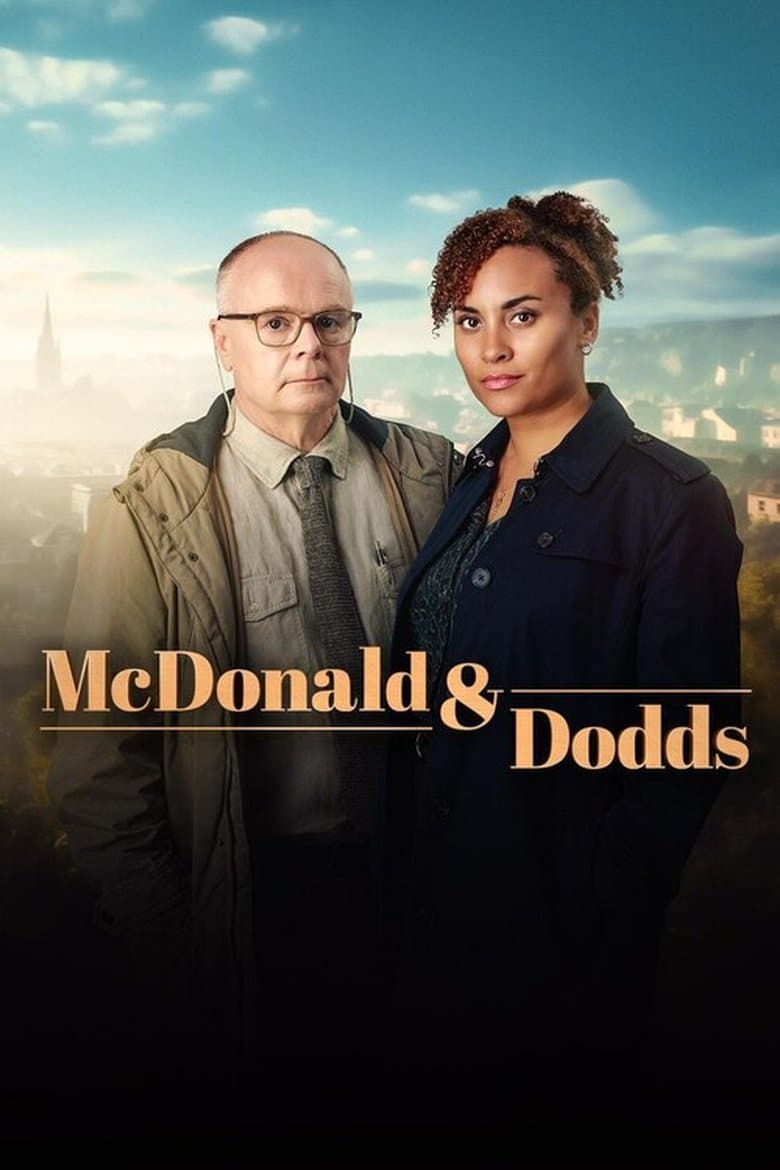
Started March 1, 2020 · Canceled · Based on 4 seasons, 11 episodes through August 4, 2024 · TV-PG · 90 min
McDonald & Dodds is a British crime show set in Bath. DCI Lauren McDonald is a fast, ambitious detective from London, while DS Dodds is a quiet, older local officer who has spent years at a desk. Their bosses put them together, and their different ways of thinking slowly become a strong friendship and police partnership. Each feature-length episode brings a new murder and a new group of suspects. The tone stays warm, funny, and mostly cozy. The clearest woke element is the lead pairing of a black woman who commands an older white man, with the show making her a confident and often forceful leader. Several cases use modern language about race, gender, diversity, and power, with season four giving the clearest discussion of white advantage and racism. Several episodes include same-sex relationships, including a gay married man and a woman whose mother objects to her marriage to another woman. These ideas are visible but usually sit inside a murder puzzle, so the show remains more focused on detective work and personal problems than on politics.
Community feedback
Was our 61% Woke rating accurate?
Breakdown
These are the editorial factors and ratings behind our score for McDonald & Dodds.
Woke representation / casting
Lauren McDonald is a black woman who leads the Bath crime team and outranks the older white DS Dodds. The show also uses minority police officers in recurring team roles. Tala Gouveia and Jason Watkins have described the pairing as a woman of colour in charge of a white man and as a deliberate diverse contrast. The modern British setting makes the casting possible, but the repeated focus on that identity pairing makes it more than a neutral casting detail.
58%
Woke political dialogue
Lauren McDonald jokes about “unconscious bias” in the first episode, and Max Crockett praises inclusion, diversity, and social responsibility. The second season uses “cancel culture,” “radical feminism,” “vampire capitalism,” and “privileged” language in a case about wealthy former stars. The third season includes a “toxic masculinity” claim, and season four links blues history to racism, white advantage, and class privilege. These lines recur across several episodes, but they do not drive every case.
54%
Identity-driven story themes
Lauren McDonald remains the confident boss while Dodds starts as a shy, overlooked man and often supplies the comic contrast. The show repeatedly gives women central authority as police leaders, business heirs, doctors, and major suspects. The cases include a closeted gay married man and women in a same-sex relationship, with the stories treating those lives as part of modern society. The show also makes race, gender, and class part of a few character conflicts, but the murder puzzles and friendship stay more important.
48%
Western institutional / cultural critique
The show mostly blames individual greed, family secrets, and criminal choices instead of attacking institutions. The first season questions a council plan to crack down on begging and vagrancy. The second season uses “privileged,” “radical feminism,” “vampire capitalism,” and a joke blaming Margaret Thatcher. Season four adds a direct argument about white advantage, entitlement, and the way white people consume Black music. These ideas are clear in a few episodes, but they do not become the show's main view of society.
42%
Woke character or canon changes
Not relevant. McDonald & Dodds is an original series, not an adaptation of a known character or real historical event. The show does not change an established canon figure.
0%
Anti-woke backlash and complaints
Some viewers called the show woke because Lauren McDonald is a black woman in charge. The Guardian reported those launch-era comments, but the original posts had little lasting reach. Small X accounts later objected to the lead pairing, the woman-in-charge pattern, and a line about white people. A 2026 post placed the show in a wider quota-casting complaint, but no boycott, review campaign, or sustained news cycle followed.
13%
Creator track record context
Robert Murphy has no clear public activist profile. Most of the key directors and writers have craft-focused public profiles. Isher Sahota has a stronger diversity-focused record, and Laura Scrivano has modest feminist industry comments. This mixed history supports a mild context signal rather than a strong activist pattern.
22%
Production
TV Show · 2024
John Taylor lives in quiet solitude, designing puzzles for a living, under the nom-de-plume of 'Ludwig'. When his identical twin, James, disappears off the face of the earth, John…
TV Show · 2016
Ex-pro hockey player Matt Shade irrevocably changes his life when he teams up with fierce P.I. Angie Everett to form an unlikely investigative powerhouse.
TV Show · 2016
When they were twelve years old, Mark, Pru, Danny and Slade were out together in the park. Mark’s five-year-old brother, Jesse, was annoying them.
