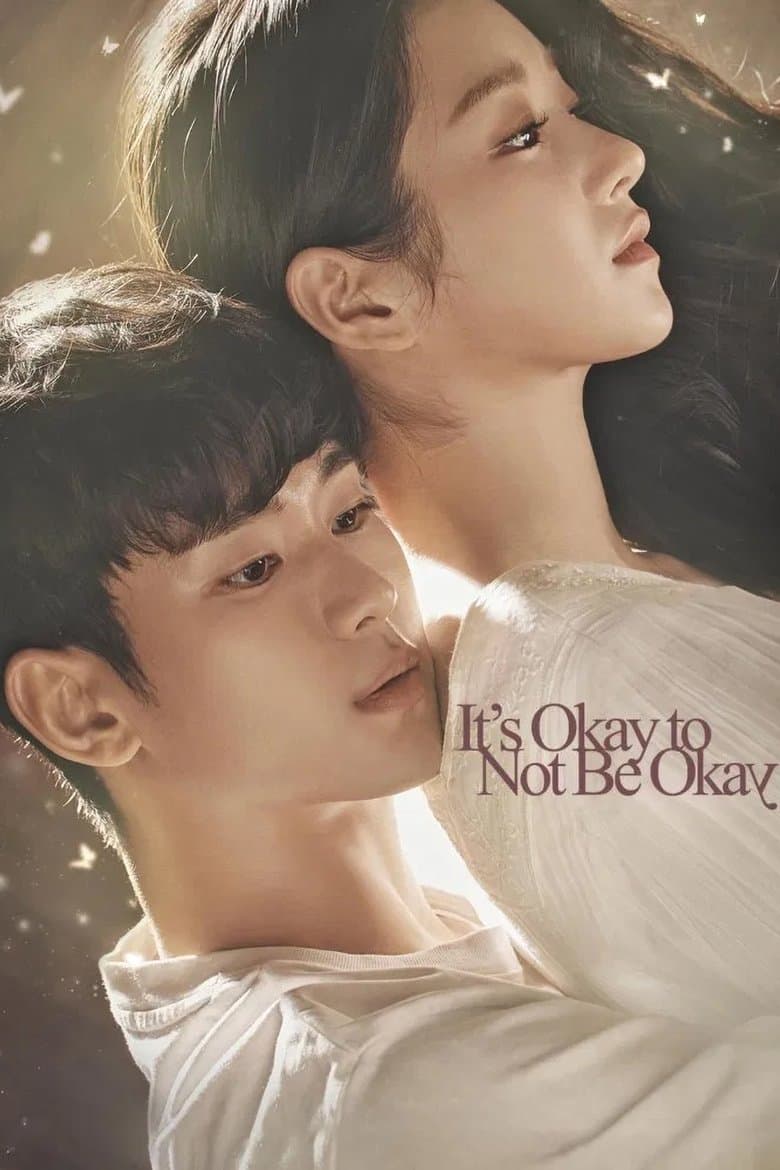
Started June 20, 2020 · Ended · Based on 1 season, 16 episodes through August 9, 2020 · TV-MA · Korean
It's Okay to Not Be Okay is a South Korean romance drama about Moon Gang-tae, a care worker at a mental health hospital. He has spent his life looking after his older brother Sang-tae, who is autistic, while hiding his own pain. Gang-tae meets Ko Moon-young, a rich children's book writer who is cold, bold, and shaped by a cruel childhood. Their return to the same town brings love, family secrets, danger, and a dark fairy-tale mood.
Across the 16 episodes, the story makes mental health and disability part of nearly every major plot. The hospital patients face depression, trauma, addiction, memory loss, and other problems, while the three main characters learn to stop living in shame. The show asks viewers to accept wounded people as whole people and to let family members have their own lives. Moon-young also leads the romance and openly chases Gang-tae, while the man is the caregiver, which reverses some usual romance roles.
Community feedback
Was our 41% Woke rating accurate?
Breakdown
These are the editorial factors and ratings behind our score for It's Okay to Not Be Okay.
Woke representation / casting
All major cast members are Korean, which fits the South Korean setting. The show puts an autistic adult and several people with mental health conditions in important roles. This makes disability and mental illness highly visible, but the cast is not arranged as a broad diversity lineup and no diversity-first casting message was found.
28%
Woke political dialogue
The hospital staff and patients often speak about pain, stigma, and the need to accept people who are not well. In one literature class, Moon-young questions old lessons about birth order, appearance, and wife-beating. The show also tells Gang-tae that a person can ask for a life beyond family duty. These are clear social messages, but they are not party politics or long activist speeches.
29%
Identity-driven story themes
Mental health and disability drive the main plot from the first episode to the last. Sang-tae's autism shapes the brothers' home life, work, and final move toward independence. The hospital adds repeated stories about depression, trauma, addiction, memory loss, and other conditions. The story says people should not be reduced to a diagnosis and should be allowed to seek help and choose their own lives. This is a strong identity-focused theme, but it stays personal rather than political.
55%
Western institutional / cultural critique
The woman leads the romance and openly chases the man, while the man is the caregiver who must stop living only for his brother. The story also says family duty should not erase a person's own choices. These points question old gender and duty roles, but the show does not attack Western institutions or conservative politics.
18%
Woke character or canon changes
Not relevant. The series is an original story. Its fairy tales borrow familiar images, but no established character, canon, or historical figure is changed.
0%
Anti-woke backlash and complaints
Not present. Reported complaints centered on suggestive scenes, sexual harassment concerns, and rough language. No prominent anti-woke or DEI backlash was found.
0%
Creator track record context
Not present. The cached creator summaries show no sustained activist, partisan, DEI, or identity-politics profile for Jo Yong, Park Shin-woo, or Kim Yoon-jin. Their title-related interviews focus on healing, warmth, and seeing people as they are.
0%
Production
TV Show · 2016
In his funky California beach enclave, Chip's the go-to guy for personal insights. But he isn't quite as enlightened when it comes to his own baggage.
TV Show · 2024
When aristocratic Eddie inherits the family estate, he discovers that it's home to an enormous weed empire — and its proprietors aren't going anywhere.
TV Show · 2019
Burned out on life, Miles undergoes a strange procedure at a strip mall spa -- and wakes to find he's been replaced by a better version of himself.
TV Show · 2023
A disgraced cop in debt is forced to return to his home state of Florida for a shady mission only to get swept up in a wild — and deadly — treasure hunt.

TV Show · 2020
New passions. New fashions. New Emily? A plucky American marketing whiz spreads her wings in life and love after landing her dream job in Paris.
TV Show · 2019
A group of working-class friends finding unconventional ways to win at life in suburban northern England. These lads have dealt, scammed, bribed and conned their way through…

TV Show · 2019
A paragliding mishap drops a South Korean heiress in North Korea -- and into the life of an army officer, who decides he will help her hide.
TV Show · 2016
Set nearly a decade after the finale of the original series, this revival follows Lorelai, Rory and Emily Gilmore through four seasons of change.
