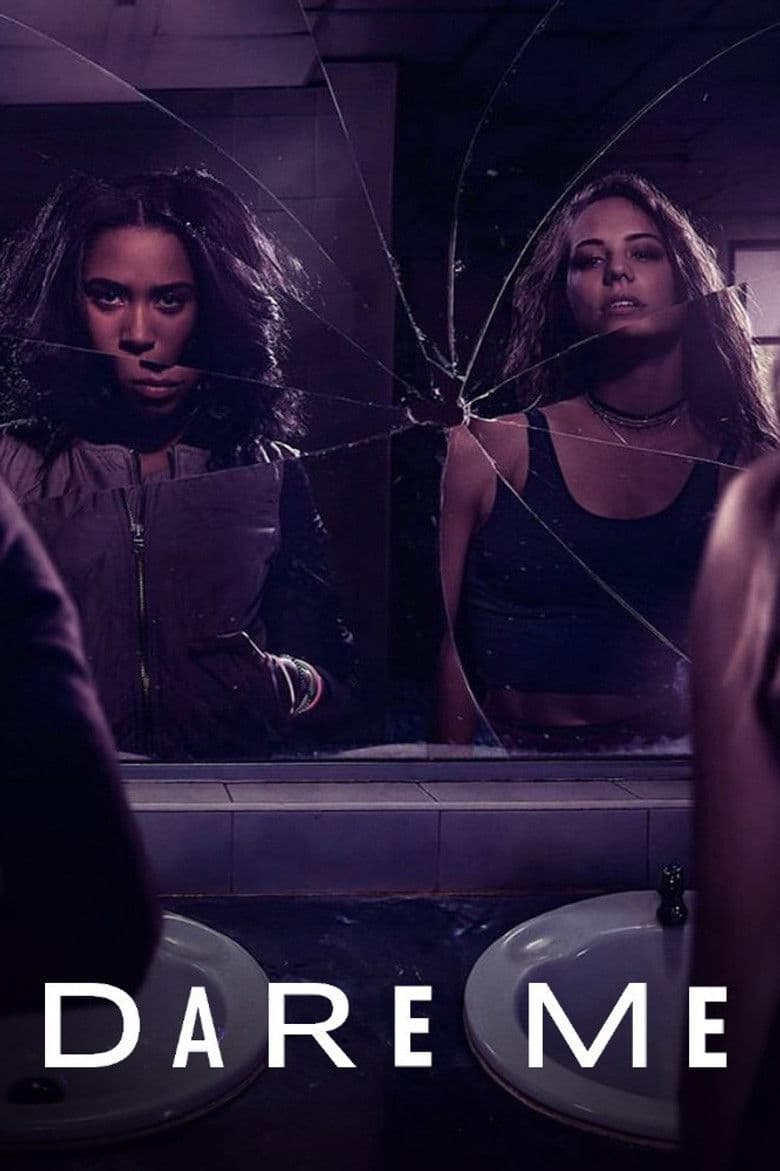
Started December 29, 2019 · Canceled · Based on 1 season, 10 episodes through March 8, 2020 · TV-MA · 45 min
Addy Hanlon is a quiet high school cheerleader who lives with her police-officer mother in a struggling Midwestern town. Her best friend Beth has ruled the squad through fear until a new coach, Colette French, removes the captain role and pushes the girls toward a higher level. Addy becomes close to Colette, while Beth fights to keep Addy's loyalty and control the team. The season mixes hard training, parties, sex, family trouble, blackmail, and a murder mystery in a tense and often grim tone.
The strongest woke element is the show's steady focus on female power, female desire, and the harm caused by control from both women and men. Addy and Beth have a close bond with romantic tension, and a flashback shows them kiss after Beth admits she has fallen for Addy. The show presents girls as ambitious, athletic, violent, and deeply flawed instead of harmless side characters, while several adult men cheat, use, or pressure women and girls. These ideas shape the main friendship and coach plot, but the show does not turn them into a direct political campaign or a broad debate about race, class, or government.
Community feedback
Was our 52% Woke rating accurate?
Breakdown
These are the editorial factors and ratings behind our score for Dare Me.
Woke representation / casting
Willa Fitzgerald, Herizen Guardiola, and Marlo Kelly lead a mostly female cast, and the cheer squad includes a visibly mixed group with a prominent black lead. The female-heavy casting fits a story centered on a girls' cheer team. The repeated non-white roles create a mild representation signal, but the show does not make race or ethnicity a spoken issue or sell the team as a diversity project.
18%
Woke political dialogue
Not present. The season has no recurring speeches about DEI, current identity politics, or party politics. Its dialogue stays with cheerleading, loyalty, sex, crime, family trouble, and personal power.
0%
Identity-driven story themes
Addy and Beth's friendship is the main story, and the show treats their love, jealousy, and desire as serious forces. Beth says she has fallen for Addy, and episode 8 shows the girls kiss in a flashback. Addy is also drawn to Colette, so queer tension sits inside the central triangle. Female power, ambition, and sexual feeling drive most episodes, but the show presents them as messy personal drama rather than a direct activist lesson.
58%
Western institutional / cultural critique
Colette and Beth repeatedly push against the idea that girls should stay quiet, harmless, or supportive. Beth's father uses the cheer team to help sell a stadium project, while male adults cheat, pressure, or exploit women and girls. These choices make male entitlement and power part of the story, but the season does not give a broad attack on capitalism, religion, or all men. Women and girls are also shown as cruel and controlling, so the critique stays tied to personal drama.
34%
Woke character or canon changes
Not relevant. The show adapts the existing novel and keeps its main characters and premise. No identity-driven rewrite of an established character, source, or historical event was confirmed.
0%
Anti-woke backlash and complaints
Not present. Available reactions focused on the dark female friendship, slow pacing, and queer subtext. No clear anti-woke or right-leaning backlash about DEI, identity politics, or a forced agenda appeared.
0%
Creator track record context
Megan Abbott's work has a feminist pattern about female desire, agency, rage, and male power. Josephine Decker has a strong feminist and queer record, and Lauren Wolkstein is openly queer with a women-centered career pattern. Gina Fattore and Sarah Condon also have progressive or queer-focused credits. This background matches Dare Me's focus on female power and same-sex tension, but it remains supporting context rather than proof of a political message.
62%
Production
TV Show · 2021
A detective in a small Pennsylvania town investigates a local murder while trying to keep her life from falling apart.

TV Show · 2023
A mysterious woman's escape from her harrowing captivity points investigators toward the dark truth behind an unsolved disappearance 13 years earlier.

TV Show · 2021
When family man Nick Brewer is abducted in a crime with a sinister online twist, those closest to him race to uncover who is behind it and why.
TV Show · 2024
When ex-soldier Maya sees her murdered husband on a secret nanny cam, she uncovers a deadly conspiracy that stretches deep into the past.
TV Show · 2020
When an insidious supernatural force edges its way into a seemingly straightforward investigation into the gruesome murder of a young boy, it leads a seasoned cop and an…

TV Show · 2026
Ben Reilly, an aging and down on his luck private investigator in 1930s New York, is forced to grapple with his past life as the city's one and only superhero.
TV Show · 2022
Lucy wakes every night at exactly 3:33am. Nothing in her life has made sense for a long time. But the answers are out there, somewhere, at the end of a trail of brutal murders.
TV Show · 2020
A family's lives are irreparably disrupted when the 14-year-old son is accused of murdering a fellow classmate.
