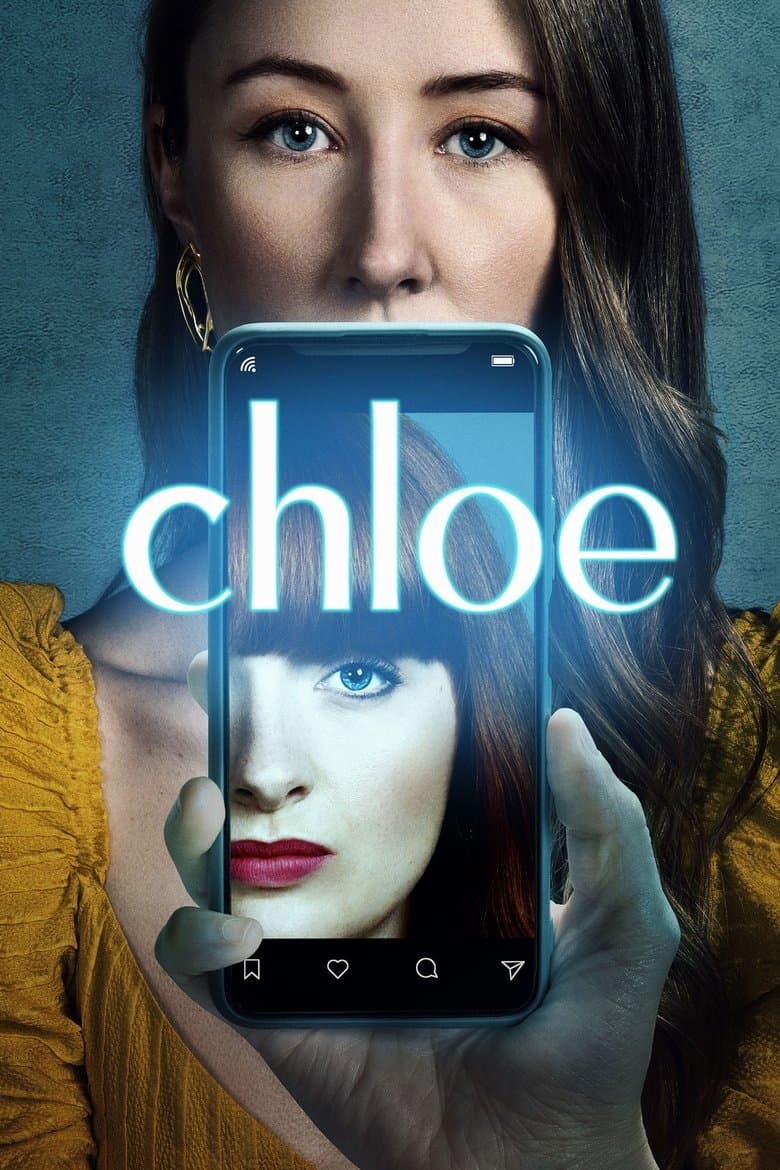
Started February 6, 2022 · Ended · Based on 1 season, 6 episodes through February 21, 2022 · TV-MA · 60 min
Chloe follows Becky Green, a lonely young woman in Bristol who lives with her mother and works dull temporary jobs. Becky spends her nights watching Chloe Fairbourne’s perfect-looking life on Instagram. After Chloe dies, Becky takes the name Sasha Miles and enters Chloe’s rich art and political friend group to learn why she died. The dark thriller follows lies, grief, stalking, family pain, and the danger of wanting to become someone else. The show gives strong attention to female friendship, social class, and the way people build an image for others. Becky and Chloe’s broken friendship shapes the mystery, while Chloe’s marriage reveals a controlling man who makes her feel small and blocks her wish to leave. The cast includes a prominent black middle-class businesswoman who runs her own event company and becomes Becky’s link to Chloe’s world. Short scenes mention sexism, female ambition, inclusion, and a parent’s concern about an atypical child, but these ideas stay beside the main story instead of taking it over.
Community feedback
Was our 47% Woke rating accurate?
Breakdown
These are the editorial factors and ratings behind our score for Chloe.
Woke representation / casting
The main cast has several prominent non-white characters, including Livia, a black British business owner, Josh, and Anish. Livia runs her own event company and becomes a major force in Becky’s entry into Chloe’s circle. Pippa Bennett-Warner said the role mattered because middle-class black British women are rarely shown as fully rounded and flawed. The story does not make race a plot point, and Bristol is a modern city, so the diversity feels visible but not extreme.
42%
Woke political dialogue
Livia says she is done apologising for being ambitious. A party guest calls a comment sexist and says women can be “big dicks” too. A client complains that a website uses a family photo to look inclusive. Elliot’s campaign speech praises Bristol’s diversity, community, and rebellious spirit. These moments are short and spread across the season, so they add a mild political layer without taking over the mystery.
36%
Identity-driven story themes
Becky’s fractured sense of self drives the whole story. The show repeatedly studies how young women compare themselves, seek approval, and put friends on a pedestal. Chloe’s attempt to escape a controlling husband gives the season a repeated story about a woman seeking freedom from male power. The show treats these ideas as personal drama and grief, not as a broad political campaign.
44%
Western institutional / cultural critique
The show contrasts Becky’s temp work and care for her mother with Chloe’s wealthy art and political circle. The rich group uses clothes, money, accents, and connections to decide who belongs. Elliot uses his charm, money, and Chloe’s mental health to control how others see her. The story criticizes male power and class barriers, but it does not attack capitalism, Christianity, democracy, or family life as institutions.
36%
Woke character or canon changes
Not relevant. The show is an original story and does not adapt known characters or real events.
0%
Anti-woke backlash and complaints
Not present. No sustained anti-woke complaints appeared in public coverage. Audience discussion focused on the ending, plot gaps, and the social media story.
0%
Creator track record context
Alice Seabright has no strong public record of political activism or identity advocacy. Amanda Boyle’s work includes disability-focused drama and stories about youth and sexuality, but her wider record is varied. Joanna Crow has worked on identity-focused projects such as Chloe and Supacell, while the other producers and casting director have little public activist profile. The key creative background adds some representation context without showing a strongly ideological team.
27%
Production
TV Show · 2019
A Philadelphia couple are in mourning after an unspeakable tragedy creates a rift in their marriage and opens the door for a mysterious force to enter their home.
TV Show · 2022
Lucy wakes every night at exactly 3:33am. Nothing in her life has made sense for a long time. But the answers are out there, somewhere, at the end of a trail of brutal murders.
TV Show · 2022
Identical twins Leni and Gina have secretly switched places for years. But when one sister disappears, both of their lives start to fall apart.
TV Show · 2026
A desperate father searching for his runaway daughter gets caught up in a murder case — and stumbles upon secrets which could destroy his family for good.
TV Show · 2026
Wrongfully imprisoned for murdering his own son, a father sets out on a desperate rescue mission after learning the boy may still be alive.

TV Show · 2023
A disgraced cop in debt is forced to return to his home state of Florida for a shady mission only to get swept up in a wild — and deadly — treasure hunt.
TV Show · 2022
A dying man's enigmatic last words send vicar's son, Bobby Jones, and his socialite friend, Lady Frankie Derwent, on a crime-solving adventure.
TV Show · 2024
John Sugar is a dashing private eye navigating the dark corners of sunny LA. Though he sees only the good in humanity, Sugar is haunted by a secret too dangerous to expose.
