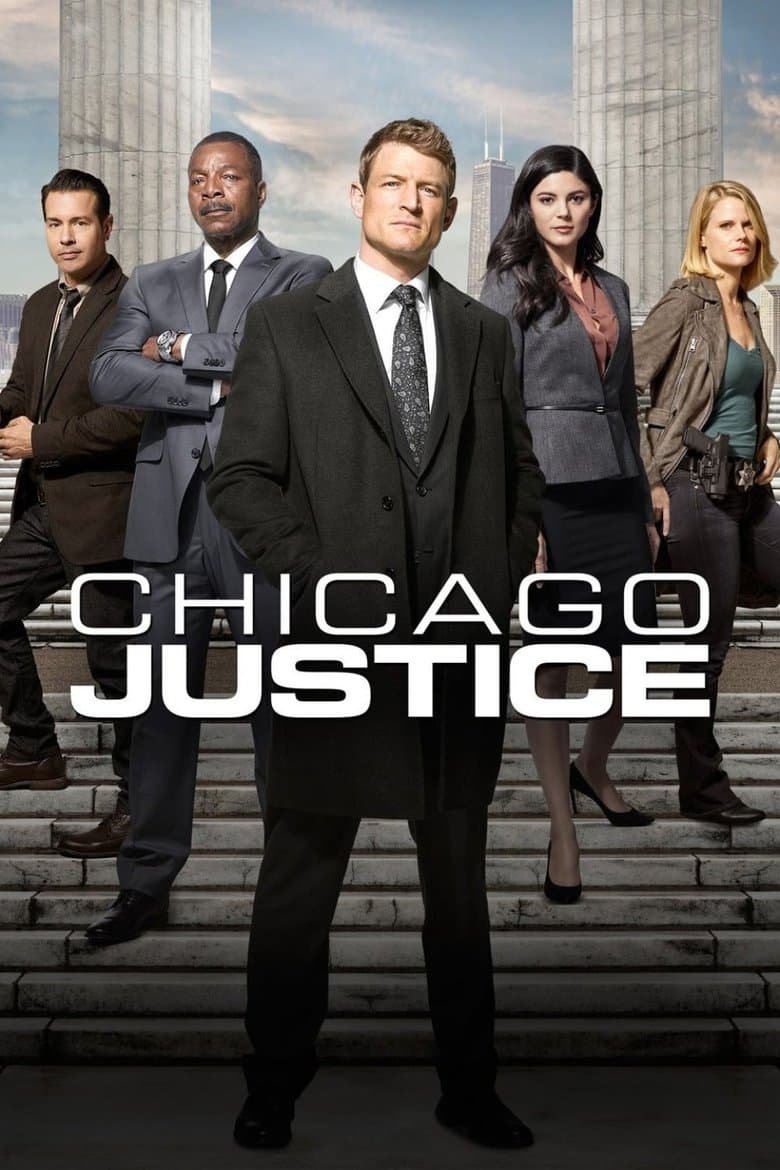
Started March 1, 2017 · Canceled · Based on 1 season, 13 episodes through May 14, 2017 · TV-14 · 43 min
Chicago Justice follows prosecutor Peter Stone and his team in the Cook County State’s Attorney’s office. The lawyers and investigators handle murders, police cases, gang violence, political fights, and public pressure in Chicago. Stone wants strong cases, but he must also deal with rules, hidden facts, and powerful people. The tone is serious, tense, and similar to Law & Order.
The show gives visible importance to a black investigator, a Latino investigator, a black state’s attorney, and several capable women in law and police work. Some cases question police force, government secrecy, unfair treatment, and the power of rich people. These ideas appear in several episodes, but they usually serve the crime plot instead of becoming a constant identity message. The season does not center on queer themes, race activism, or modern political slogans.
Community feedback
Was our 29% Woke rating accurate?
Breakdown
These are the editorial factors and ratings behind our score for Chicago Justice.
Woke representation / casting
The show places several minority characters in important jobs, including State’s Attorney Mark Jefferies and investigators Antonio Dawson and Laura Nagel. The cast also includes capable women in major legal and investigative roles. Chicago is a diverse modern city, so the casting fits the setting in many cases. The visible pattern gives a mild representation signal but does not appear to drive the story.
22%
Woke political dialogue
The show discusses police force, government secrecy, public pressure, and political power. Episode 2 directly questions police conduct after a suspect dies in custody. The dialogue usually stays inside courtroom arguments and case facts. The show does not use repeated activist slogans or direct modern identity-politics speeches.
24%
Identity-driven story themes
The show includes a case about possible excessive force against a black officer’s suspect. Other episodes examine how institutions protect themselves and how public pressure affects justice. These themes are present but are not built around race, gender, sexuality, or identity. The main focus remains crime investigation and prosecution.
18%
Western institutional / cultural critique
The show repeatedly questions police actions, government secrecy, political influence, and the power of wealthy business owners. Episode 13 links a deadly building collapse to a powerful real estate developer. The stories show institutions failing or hiding facts, but the criticism is mainly crime-drama conflict. The show does not make a broad attack on family, religion, men, or Western culture.
29%
Woke character or canon changes
Not relevant. The show is an original Chicago Justice spin-off about prosecutors and investigators. It does not make an identity-driven change to an established character or historical figure.
0%
Anti-woke backlash and complaints
Not present. The provided X research found no anti-woke reaction. News and audience coverage did not show a meaningful complaint that the show pushed woke or DEI politics.
0%
Creator track record context
Dick Wolf’s cached score is low and his work is mainly built around crime, police, and legal procedurals. The other listed creators also have low cached scores. Their known work does not show a strong identity-activist pattern connected to this title.
14%
Production
TV Show · 2021
Follows the elite agents of the FBI's International Fly Team headquartered in Budapest as they travel the world with the mission of protecting Americans wherever they may be.
TV Show · 2023
Follows rookie police officers working in Belfast, a city in which being a frontline response cop comes with unique pressures and dangers.
TV Show · 2018
The harrowing true story of the 1993 standoff between the FBI, ATF and the Branch Davidians, a spiritual sect led by David Koresh in Waco, TX that resulted in a deadly shootout…

TV Show · 2018
The stranger-than-fiction account of a prison break in upstate New York in the summer of 2015, which spawned a massive manhunt for two convicted murderers who were aided in their…
TV Show · 2020
Hiding a twisted past, a man maintains his facade as the perfect husband to his detective wife — until she begins investigating a series of murders.

TV Show · 2016
17-year-old Joshua "J" Cody moves in with his freewheeling relatives in their Southern California beach town after his mother dies of a heroin overdose.
TV Show · 2019
Loosely based on infamous crime boss Bumpy Johnson, who in the early 1960s returned from ten years in prison to find the neighborhood he once ruled in shambles.
TV Show · 2022
Under pressure, fraying at the edges. In relentless night-time Liverpool, copper Chris is paired with a rookie. Will they save or destroy each other?
