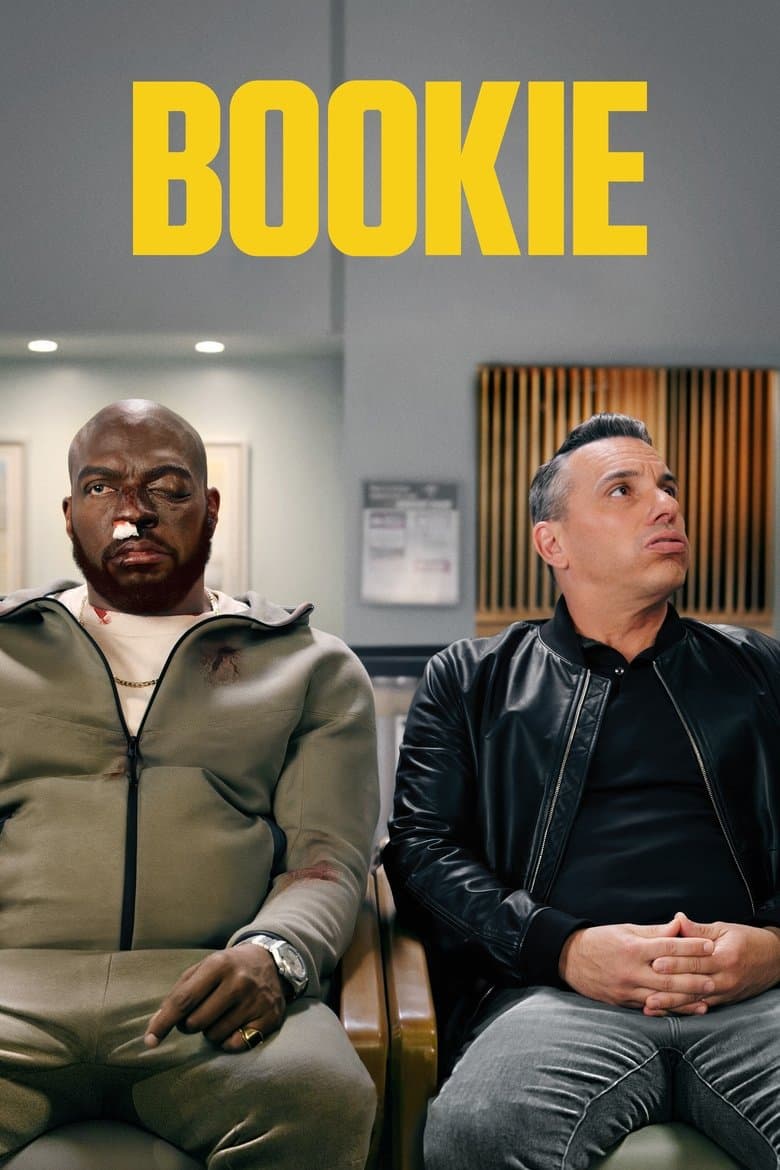
Started November 30, 2023 · Canceled · Based on 2 seasons, 16 episodes through January 30, 2025 · TV-MA
Bookie follows Danny Colavito, a veteran sports bookie in Los Angeles. He collects debts, takes bets, and tries to keep his family and small crew safe while California moves toward legal sports gambling. His closest partner is Ray, a former football player who works as muscle, while Danny’s sister Lorraine and former drug dealer Hector help run the business. The show uses dark, crude comedy as the group faces violent clients, broken marriages, drugs, money problems, and rival bookies. Most of the two seasons focus on gambling, family trouble, crime, sex, addiction, and men trying to adjust to a changing business. The pilot includes Stewie, a client who has transitioned and says she has decided to live her truth, while other characters joke about gender and pronouns. Later episodes use white privilege, discuss why the NFL has few Black owners, compare a black partner and a white owner to a plantation setup, and reject blaming one race for riots. These identity and race lines are clear but brief, so they support some woke themes without replacing the show’s main crime and friendship story.
Community feedback
Was our 38% Woke rating accurate?
Breakdown
These are the editorial factors and ratings behind our score for Bookie.
Woke representation / casting
Not present. The main group includes a white family, a black partner, and a Spanish-speaking friend in modern Los Angeles. The show does not make that mix a message or build a representation-first group.
0%
Woke political dialogue
The pilot uses a trans client’s change for jokes about gender sensitivity and pronouns. Season 1 later calls a rich client’s escape from punishment “white privilege.” Season 2 compares Danny and Ray to a plantation owner and a black warrior, then discusses the lack of Black NFL owners. Another season 2 scene rejects blaming riots on one race, so identity language returns in several episodes but stays inside crude jokes and crime plots.
42%
Identity-driven story themes
Stewie’s transition shapes one short debt-collection story in the pilot, but Stewie does not become a continuing character. Race and power appear in a few later jokes about white privilege, Black NFL owners, and riots. The main arcs follow gambling, marriage, family, addiction, and crime. Identity-driven story themes are noticeable in spots but do not drive either season.
28%
Western institutional / cultural critique
Season 1 says a black man killed in Los Angeles would only make the news if he bled on a white man, then links the problem to 400 years. Season 2 compares Danny and Ray to a plantation owner and a black warrior, points to the lack of Black NFL owners, and says people should not blame one race for riots. These are modern race and power comments, but they appear in short comic exchanges. The show does not build a continuing attack on family life, Christianity, or Western institutions.
38%
Woke character or canon changes
Not relevant. Bookie is an original series about invented characters in modern Los Angeles. No established character, source story, or historical figure is rewritten.
0%
Anti-woke backlash and complaints
Not present. One tiny X complaint named no specific scene and had no pickup, while another viewer praised the show as anti-woke. No sustained anti-woke controversy followed the show’s brief trans and race-related scenes.
0%
Creator track record context
Chuck Lorre has a mild liberal record and has criticized conservative politicians, but his profile shows no strong focus on identity or DEI. Nick Bakay has no documented activist profile. The other directors and producers have low or limited activist records. Bookie interviews focus on crime, comedy, work change, sports betting, and human connection rather than activist goals.
17%
Production
TV Show · 2020
A ghost-hunting duo team up to uncover and film paranormal sightings across the U.K. and share their adventures on an online channel.
TV Show · 2020
David Tennant and Michael Sheen (playing themselves) were due to star in a production of 'Six Characters in Search of an Author' in the West End.
TV Show · 2023
The inner workings of an American jury trial through the eyes of one particular juror, Ronald Gladden. Gladden is unaware the entire case is fake, everyone except him is an actor…
TV Show · 2019
There is no such thing as an ordinary interaction in this offbeat sketch comedy series that features a deep roster of guest stars.

TV Show · 2019
Burned out on life, Miles undergoes a strange procedure at a strip mall spa -- and wakes to find he's been replaced by a better version of himself.
TV Show · 2016
After North Jackson High's long-time principal steps down to tend to his ailing wife, Neal Gamby and Lee Russell, the school's vice principals, are forced to put their mutual…
TV Show · 2024
Conan O'Brien visits new friends he met through his podcast, "Conan O'Brien Needs a Fan," where he dives deep with listeners from across the country and the world.
TV Show · 2025
Eight years after an unforgivable mistake nukes his promising college football career, hotshot quarterback Russ Holliday tries to resurrect his dreams by disguising himself as…
