Movie review
November 26, 2025 · 108 min · PG · Kids · Animation · Comedy · Mystery · Adventure · Family
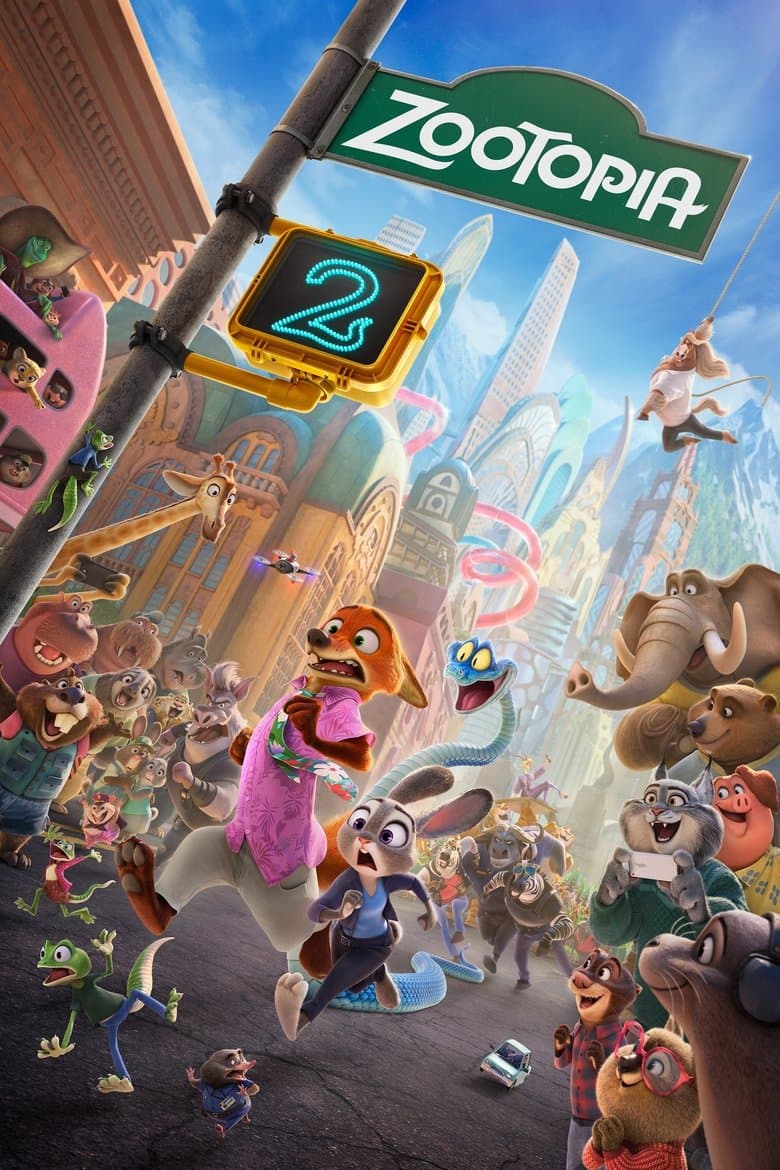
Zootopia 2 is an animated family movie. The story follows bunny cop Judy Hopps and fox cop Nick Wilde. They must solve a new mystery in the city when a snake named Gary arrives. The two cops are framed by a rich family and must go undercover. The movie has very clear social justice themes that families will easily notice. It focuses heavily on historical land theft and the unfair treatment of reptiles. These elements make the film's political message very visible.
Community feedback
Was our 86% Woke rating accurate?
Breakdown
These are the editorial factors and ratings behind our score for Zootopia 2.
Woke representation / casting
The film casts several diverse actors in key roles, including Quinta Brunson, Ke Huy Quan, and Danny Trejo. A beaver character named Nibbles is voiced by famous lesbian comedian Fortune Feimster, which led to many viral posts online about gay representation. Also, two gay male antelopes named Bucky and Pronk return for a scene after the credits. This background gay presence, along with the high-profile diverse casting, gives the film a clear focus on representation.
45%
Woke political dialogue
The characters speak openly about systemic bias, historical erasure, and land displacement. The main characters learn that the city's founders rewrote history to hide how they mistreated reptiles. The main villain uses bigoted language to claim that certain animals are lesser. Some scenes also feature modern therapy terms about emotional support. These lines of dialogue make the political messaging very easy to hear.
60%
Identity-driven story themes
The main plot is a clear allegory for systemic racism and colonial history. The movie shows that the wealthy founders of Zootopia stole land from reptiles, forced them into a hidden swamp slum, and lied about it. The wealthy villains try to destroy this slum to expand their own rich neighborhood. This focus on group oppression, land theft, and systemic bias makes modern identity politics the main theme of the story.
70%
Western institutional / cultural critique
The movie heavily critiques the foundation and history of the city. It portrays Zootopia's creation as a product of historical theft and corrupt elites. The wealthy Lynxley family represents generational privilege and historical colonizers who control the police and politicians. The police force itself is shown as a tool of systemic segregation. This turns the city's proud history into an activist critique of Western-style systems.
65%
Woke character or canon changes
Not relevant. The sequel keeps the established characters and story rules from the first film. No characters are changed or retconned to have different identities.
0%
Anti-woke backlash and complaints
Many conservative family reviewers and online commentators criticized the film. They complained that the movie turned into a heavy-handed progressive lecture about systemic bias and land theft. Critics also targeted the viral casting of a lesbian comedian and argued that Disney was pushing political agendas on kids. This led several right-leaning family outlets to label the sequel as woke.
60%
Creator track record context
The core creative team has a strong history of promoting diversity and social themes. Jared Bush has stated that representation is vital for Disney's success. Byron Howard has championed gay representation in animation. Yvett Merino has pushed for diversity hiring, and Carrie Liao has campaigned for labor and diversity groups. This track record aligns directly with the film's focus on systemic inequality.
62%
Production
Movie · 2022
Decades since their successful television series was canceled, Chip has succumbed to a life of suburban domesticity as an insurance salesman.
Movie · 2024
Teenager Riley's mind headquarters is undergoing a sudden demolition to make room for something entirely unexpected: new Emotions!
Movie · 2024
Gromit’s concern that Wallace is becoming too dependent on his inventions proves justified, when Wallace invents a “smart” gnome that seems to develop a mind of its own.
Movie · 2024
Garfield, the world-famous, Monday-hating, lasagna-loving indoor cat, is about to have a wild outdoor adventure!
Movie · 2023
A magical meteor crash lands in Adventure City and gives the PAW Patrol pups superpowers, transforming them into The Mighty Pups.
Movie · 2019
Max the terrier must cope with some major life changes when his owner gets married and has a baby. When the family takes a trip to the countryside, nervous Max has numerous…
Movie · 2018
After he’s grounded by an injury, a high-flying bachelor is saddled with two wide-eyed orphans as they come face-to-face with the dangers and beauty of the outside world.

Movie · 2018
Dug, along with his sidekick Hognob, unite a cavemen tribe to save their hidden valley from being spoiled and, all together as a team, to face the menace of a mysterious and…
