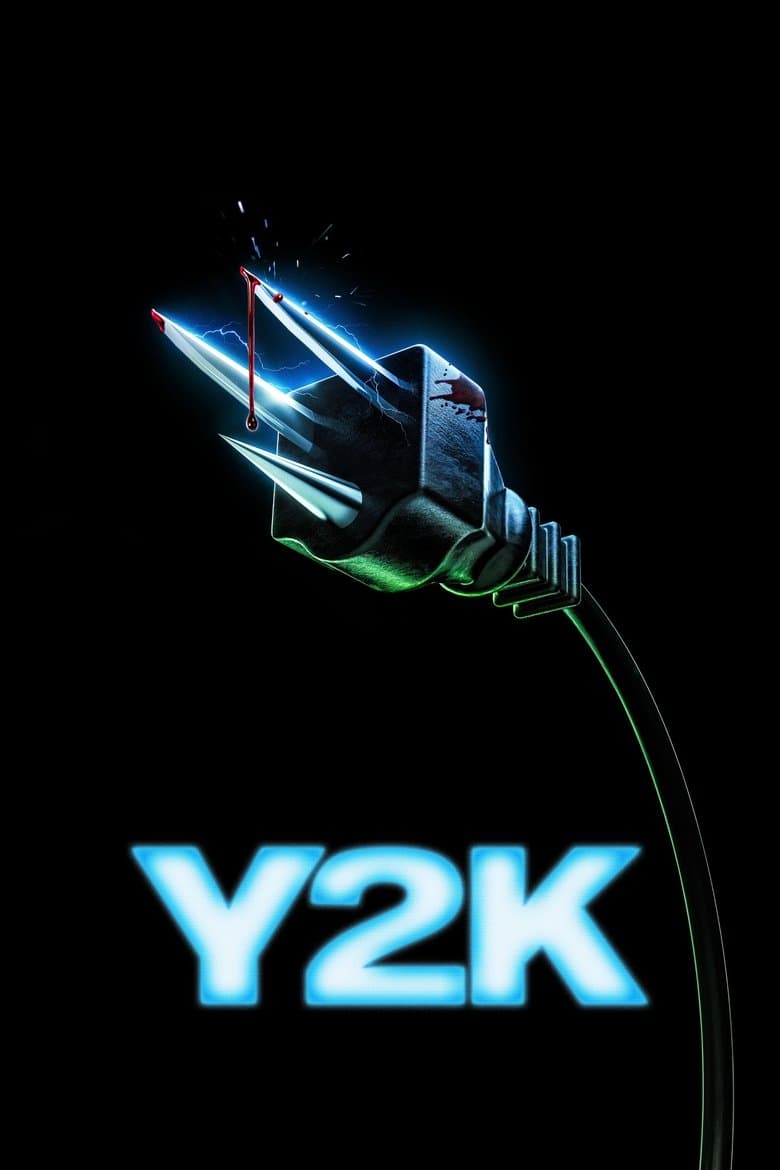
Y2K follows Eli, a shy high school junior who wants to enter a big New Year's Eve party and finally talk to Laura, the popular girl he likes. Eli goes with his loud best friend Danny on the last night of 1999 in suburban Massachusetts. When the clock reaches midnight, computers and home machines become violent monsters and turn the party into a fight for survival. The film mixes teen romance, dirty jokes, bloody horror, and loud 1990s nostalgia.
The film gives Laura a major role as a skilled computer coder who helps the group understand the threat and find a way to stop it. Ash, a punk girl in the group, says she is not sure she is into guys, but that point stays small and does not drive the plot. The main group also includes visibly varied racial and cultural backgrounds, including Danny's Māori identity. These details create a moderate representation signal, while the story stays focused on friendship, romance, technology, and survival rather than a political message.
Community feedback
Was our 25% Woke rating accurate?
Breakdown
These are the editorial factors and ratings behind our score for Y2K.
Woke representation / casting
The main teen group includes a Māori friend, a black older student, and a sexuality-questioning punk girl, alongside white leads. Laura is a popular girl with strong coding skills who helps solve the machine threat. The mix is noticeable among the main survivors. The film does not present the casting as a diversity campaign, so the score stays moderate.
30%
Woke political dialogue
Not present. The characters joke about corporate music and technology, but the film does not use recurring activist or identity-based speeches.
0%
Identity-driven story themes
Laura is the popular girl who can code, discovers how the machines share a mind, and helps create the kill code. Laura's skill is central to the final plan, and the film makes her a key hero beside Eli. Ash says she is not sure she is into guys, but that point gets little story time. The film shows these traits without making gender or sexuality the main conflict.
25%
Western institutional / cultural critique
Not present. The killer technology creates a general warning about dependence on machines. The film does not turn that warning into a modern activist attack on Western institutions, capitalism, patriarchy, or religion.
0%
Woke character or canon changes
Not relevant. The film is an original story about the 1999 computer scare. It does not rewrite an established character, canon, or real historical figure.
0%
Anti-woke backlash and complaints
A right-leaning outlet called Rachel Zegler a “woke” star and tied her public image to Y2K's weak opening. An anti-woke YouTube review questioned the choice to make Laura a popular computer genius. Most discussion criticized the film's pacing, jokes, and tone instead, so title-specific anti-woke backlash is small.
8%
Creator track record context
The stored creator notes give Kyle Mooney a 0 and Evan Winter a 22. Winter's writing history includes themes of belonging, exclusion, power, and birthright. The listed producers have low to mild stored scores and no strong activist pattern, so this context is mild.
14%
Production
Movie · 2024
A family's vacation to a remote getaway takes an unexpected turn when they discover the present-day implications of the island's cannibalistic past.
Movie · 2026
When a mutating, highly contagious fungus escapes a sealed facility, two employees – joined by a grizzled bioterror operative – must survive the wildest night shift ever to save…
Movie · 2025
When twin brothers find a mysterious wind-up monkey, a series of outrageous deaths tear their family apart. Twenty-five years later, the monkey begins a new killing spree forcing…

Movie · 2026
When their plan to book a show at the Rivoli goes horribly wrong, Matt and Jay accidentally travel back to the year 2008.
Movie · 2022
Legendary rock band Foo Fighters move into an Encino mansion steeped in grisly rock and roll history to record their much anticipated 10th album.

Movie · 2026
In a post-apocalyptic future where an event known as "The Quiet Rapture" caused all known stars and habitable planets in the universe to disappear, a convict is sent to search an…
Movie · 2019
Columbus, Tallahassee, Wichita, and Little Rock move to the American heartland as they face off against evolved zombies, fellow survivors, and the growing pains of the snarky…
Movie · 2024
With his wife out sick, a struggling father brings home a lifelike AI, only to have his self-aware new help want everything her new family has to offer...
