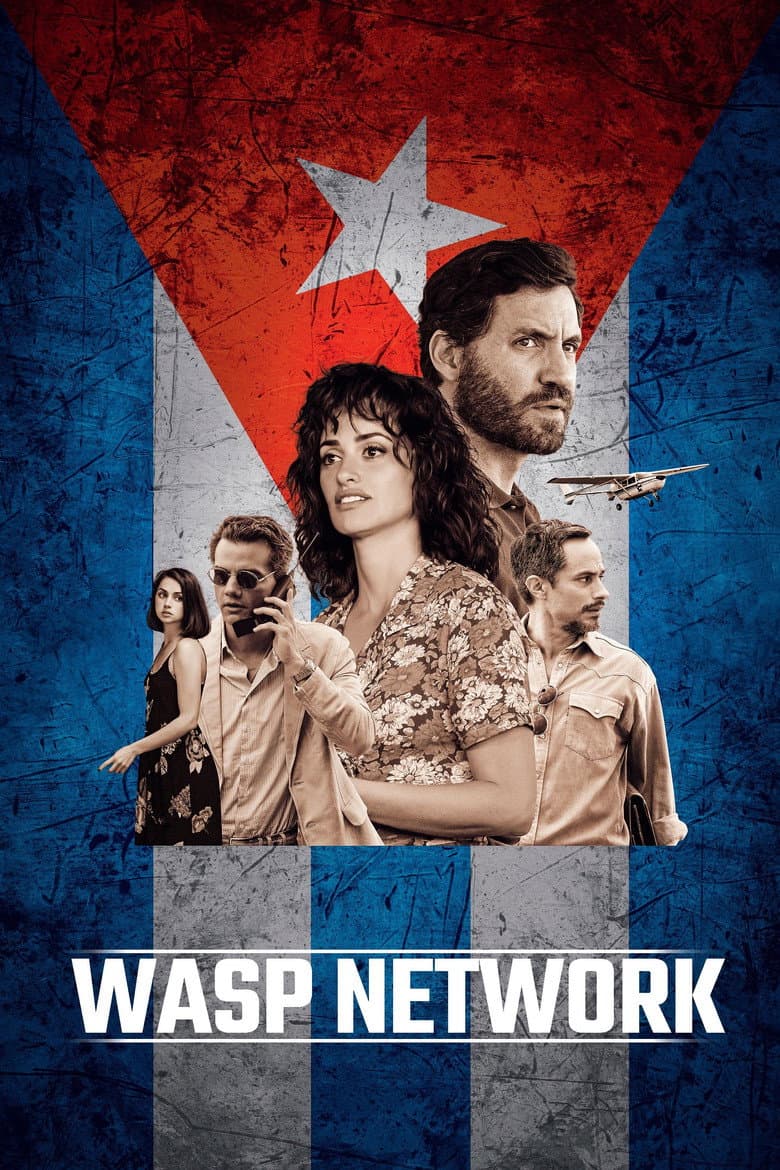
Wasp Network follows René González, a Cuban pilot who leaves his wife Olga and daughter Irma in Havana and flies to Miami in 1990. He appears to be a defector, but he joins a secret Cuban spy group that enters anti-Castro exile groups. The story moves between Cuba, Florida, and the Caribbean as bombings, plane attacks, arrests, and prison sentences spread through both sides. The film has a serious, tense tone, but its many names and time jumps make the story hard to follow.
The film gives Olga and Ana Margarita, the wives left behind by male spies, important emotional roles. Their pain, work, children, betrayal, and fight to rebuild their lives shape the human side of the spy story. The main woke-related signal comes from the pan-Latin star cast, since many major Cuban characters are played by actors from other countries and only a small part of the lead cast is Cuban. The movie also presents the Cuban revolutionary side with sympathy and attacks exile groups as violent or criminal, but it does so through a Cold War story rather than modern identity politics.
Community feedback
Was our 35% Woke rating accurate?
Breakdown
These are the editorial factors and ratings behind our score for Wasp Network.
Woke representation / casting
The film puts a large international Latin cast into a story about Cuban people. The main cast includes actors from Venezuela, Spain, Mexico, Brazil, Argentina, and Cuba, and several reports noted that Ana de Armas was the clearest Cuban presence among the top names. Cuban and Latino reactions questioned the accents and the lack of more Cuban performers. The choice looks partly like an international star package, while Édgar Ramírez described it as a pan-American cast.
28%
Woke political dialogue
Not present. The characters talk about communism, democracy, terrorism, propaganda, and the Cuban Revolution. The dialogue does not push modern identity, gender-role, or DEI ideas.
0%
Identity-driven story themes
The film gives Olga and Ana major emotional roles beside the male spies. Olga raises her daughter alone, while Ana faces betrayal and rebuilds her life after Roque’s secret is exposed. Their stories add a woman-centered part, but they are family dramas rather than a modern gender campaign.
18%
Western institutional / cultural critique
Not present. The film criticizes Cuban and American power groups as part of a 1990s spy conflict. It does not turn that history into a modern attack on patriarchy, Christianity, capitalism, or traditional family life.
0%
Woke character or canon changes
Not relevant. The film dramatizes real people and events, but no race, gender, sexuality, or leadership identity is changed from an established source.
0%
Anti-woke backlash and complaints
Miami Cuban exiles and critics called the film Castro-communist propaganda and said it glorified spies while smearing exile groups. A reported boycott petition passed 15,000 signatures, and José Basulto later sued Netflix over the portrayal of Brothers to the Rescue. Audience reviews repeat both the communist-propaganda complaint and the opposite view that the exile groups were terrorists. No anti-woke reaction was found on X, so the backlash is real but mostly anti-Castro and anti-left rather than DEI-focused.
48%
Creator track record context
Assayas has a political and anti-dictatorship background, but no strong DEI profile is documented in the cached context. Morais is a left-wing political writer whose work centers on Latin American history, not modern identity activism. Most listed producers have low or unclear woke context, while Fraiha and Torrealba have stronger links to LGBTQ, women-centered, and underrepresented stories. This gives the title moderate creator context, even though the film itself is mainly a historical spy drama.
30%
Production
Movie · 2018
Two lifelong friends head up to an isolated Scottish Highlands village for a weekend hunting trip that descends into a never-ending nightmare as they attempt to cover up a…

Movie · 2016
When Krisha returns to her estranged family for Thanksgiving dinner, past demons threaten to ruin the festivities.

Movie · 2025
Marty Mauser, a young man with a dream no one respects, goes to hell and back in pursuit of greatness.

Movie · 2024
During the 1972 Munich Olympics, an American sports broadcasting crew finds itself thrust into covering the hostage crisis involving Israeli athletes.

Movie · 2016
Irish Commandant Pat Quinlan leads a stand off with troops against French and Belgian Mercenaries in the Congo during the early 1960s.

Movie · 2017
A newly-released prison gangster is forced by the leaders of his gang to orchestrate a major crime with a brutal rival gang on the streets of Southern California.

Movie · 2019
During the 1980s, a failed stand-up comedian is driven insane and turns to a life of crime and chaos in Gotham City while becoming an infamous psychopathic crime figure.

Movie · 2017
In a small town in Maine, seven children known as The Losers Club come face to face with life problems, bullies and a monster that takes the shape of a clown called Pennywise.
