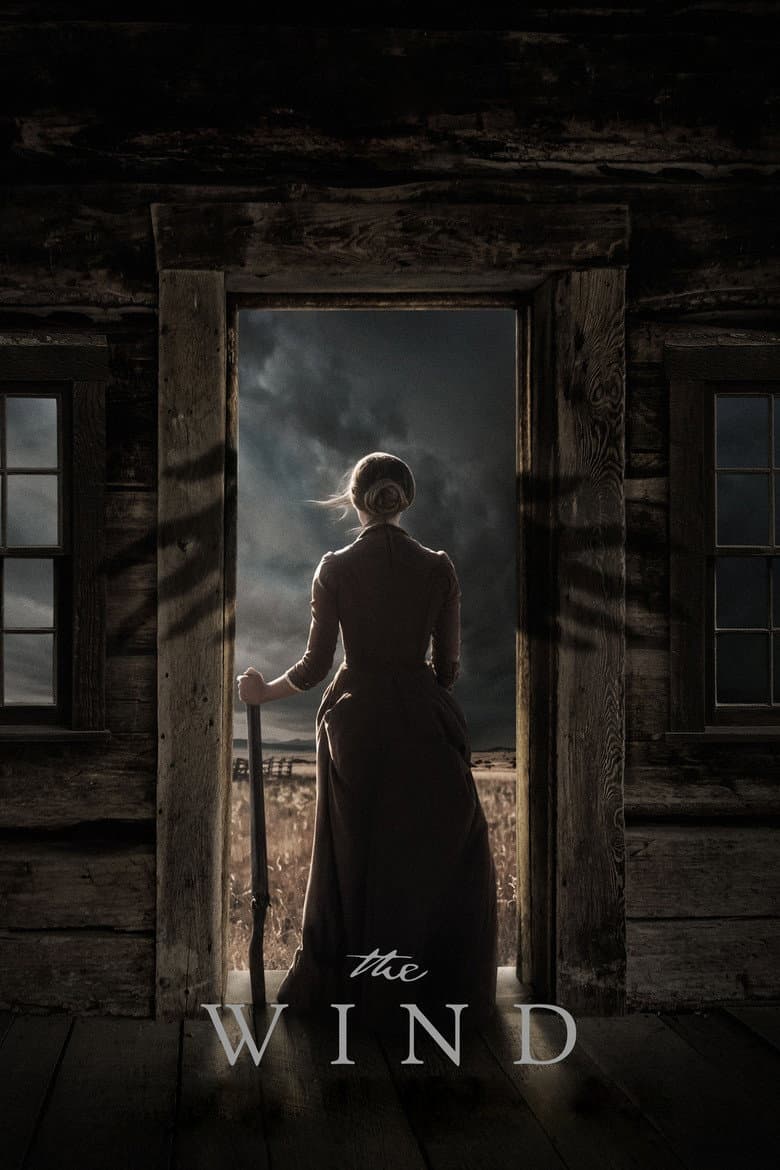
Lizzy Macklin lives with her husband, Isaac, on a lonely farm in New Mexico in the late 1800s. She works hard, uses a rifle, and tries to survive a land where the wind never stops. After new neighbors Emma and Gideon move nearby, Lizzy hears whispers and fears that something evil is near her and Emma's unborn child. The film uses broken timelines, quiet scenes, and sudden violence to create a bleak, uneasy horror story.
The film keeps its attention on women's lives, fears, and work instead of following the men who build the farms. Lizzy and Emma face pregnancy loss, jealousy, and pressure to stay quiet while their husbands dismiss what they see. The story treats male control, gender roles, and the dismissal of female fear as part of Lizzy's suffering, but it does not turn those ideas into a modern political campaign. The horror grows from grief, religion, possible madness, and the question of whether the wind carries a real evil.
Community feedback
Was our 38% Woke rating accurate?
Breakdown
These are the editorial factors and ratings behind our score for The Wind.
Woke representation / casting
The film places Lizzy, a German immigrant, at the center of a late 1800s frontier story. Lizzy carries the main survival role and holds the camera's point of view for most of the story. Emma is the other major woman, but the film does not build a broad identity mix in the setting. Interviews and release coverage openly frame the movie as a female POV and feminist horror western.
24%
Woke political dialogue
Not present. The film has no modern identity, DEI, or activist speech. Its lines about wives, husbands, religion, and pregnancy describe the period and the characters' fear rather than argue for a current political idea.
0%
Identity-driven story themes
Lizzy and Emma carry the emotional center of the film, and their lives are shown through fear, pregnancy, grief, jealousy, and isolation. The story gives Lizzy the main survival role while the men leave, doubt, or restrain the women. The film treats female fear and anger as important parts of the horror, even when Lizzy becomes an unreliable killer. The gender focus is recurring and central, but it stays tied to period survival and mental breakdown instead of a current identity campaign.
43%
Western institutional / cultural critique
Isaac and Gideon repeatedly dismiss their wives when the women describe the things they hear and see. Isaac ties Lizzy down and tells her to stop filling her head with the demon pamphlet. Emma is told to stay quiet near the men, and the women are expected to cook, bear children, and support the farms. The film also makes religion and the traveling reverend part of the danger, but it keeps this criticism inside a 19th-century horror story rather than attacking modern Western institutions.
41%
Woke character or canon changes
Not relevant. The film does not change a known franchise character or real historical person. No established character is given a race, gender, sexuality, or hero-role change.
0%
Anti-woke backlash and complaints
Not present. The supplied X pass found no anti-woke reaction. Broader discussion focused on horror, pacing, and the unclear ending, with no meaningful complaint that the film pushes DEI or identity politics.
0%
Creator track record context
Emma Tammi has a 1/100 creator score and a public record centered on horror and craft. Teresa Sutherland has a 10/100 creator score and no known activist record. The producers' scores range from 5/100 to 34/100 and show genre production rather than a repeated identity agenda. The creators' title interviews support the film's female point of view, but they do not show a broad activist pattern.
15%
Production
Movie · 2023
Between the events of 'Saw' and 'Saw II', a sick and desperate John Kramer travels to Mexico for a risky and experimental medical procedure in hopes of a miracle cure for his…
Movie · 2017
After a mysterious global crisis, a young girl is left alone to hide from a malevolent power that stalks her home.
Movie · 2017
Two young women at a prestigious prep school are assailed by an evil, invisible power when they're stranded over winter break.
Movie · 2016
Father and son coroners receive a mysterious unidentified corpse with no apparent cause of death. As they attempt to examine the "Jane Doe," they discover increasingly bizarre…
Movie · 2026
The host of a popular paranormal podcast becomes haunted by terrifying recordings mysteriously sent her way.
Movie · 2019
When a 12-year-old boy goes missing at a local park, a detective investigates the case to help the boy's family find answers.
Movie · 2017
A group of college friends reunite for a trip to the forest, but encounter a menacing presence in the woods that's stalking them.
Movie · 2023
Jess, a newly separated mother and nurse, moves into her old family farmhouse with Tyler, her teenage daughter, and Owen, her eight-year-old son.
