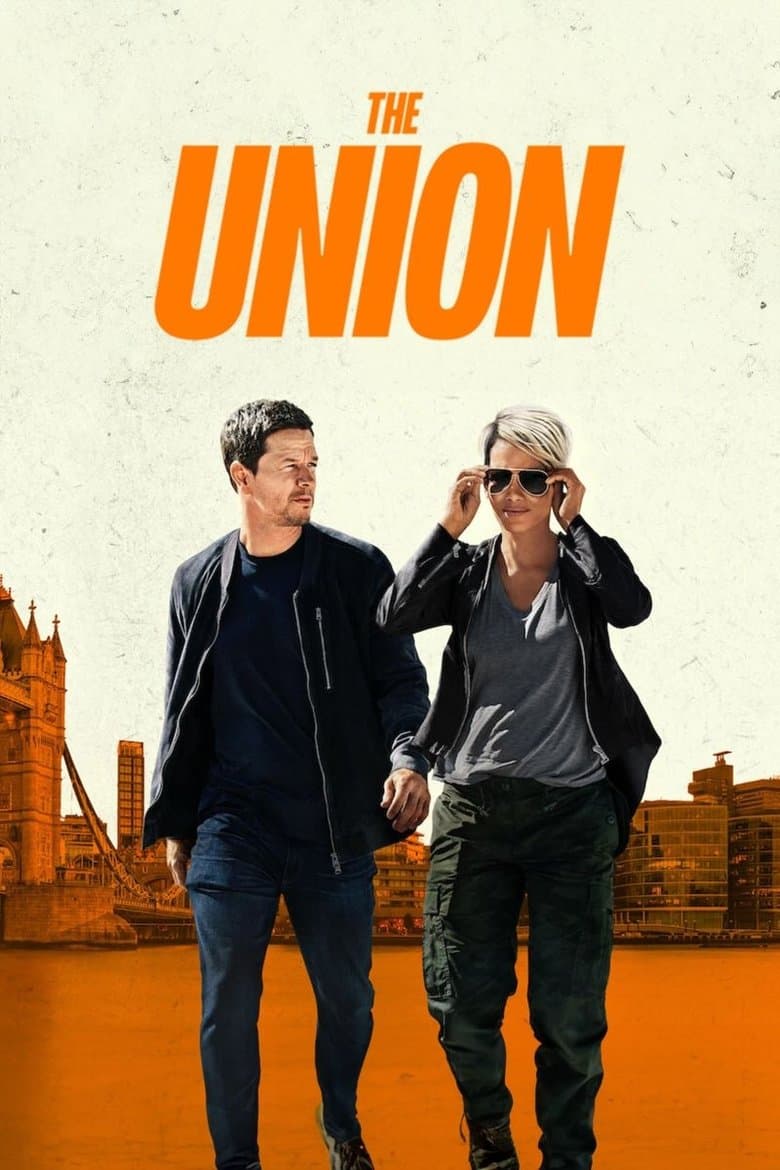
Mike McKenna is a New Jersey construction worker who has spent his adult life in the same town. His old high school sweetheart, Roxanne Hall, returns as a trained spy and pulls him into a dangerous mission in Europe. A group has stolen private data about people who have worked for Western governments, and the Union tries to recover it before the data is sold. The movie uses shootouts, car chases, jokes, and a slow romance between two people who never fully dealt with their past.
Roxanne is a black woman who leads the mission while Mike begins as an untrained recruit. Their old romance ended partly because Mike’s father rejected Roxanne for being black, and Mike admits that he failed to defend her. The Union also gives major spy jobs to black and Asian characters, while its leaders praise working people over elite schools and agencies. These identity and class signals are easy to see, but the movie keeps them inside a light spy romance instead of building a wider political argument.
Community feedback
Was our 34% Woke rating accurate?
Breakdown
These are the editorial factors and ratings behind our score for The Union.
Woke representation / casting
The film puts a black woman at the center as the lead spy and mission leader. The film also gives major Union roles to black men and an Asian woman, and it pairs Roxanne with a white male lead. The story takes place in the present day, so the casting does not create a clear period mismatch. The repeated pattern of high-status, capable minority characters is still an audience-visible representation signal.
34%
Woke political dialogue
The film includes one direct argument about racial prejudice. Roxanne says Mike’s father rejected her because she was black, and she compares his “old-fashioned” excuse with the Ku Klux Klan. The rest of the dialogue concerns espionage, loyalty, and personal history rather than current political causes. This makes the factor brief but clear.
12%
Identity-driven story themes
Roxanne is the trained agent who chooses the mission, teaches Mike, and often takes control in dangerous scenes. Mike begins as the inexperienced recruit and learns to follow her judgment. Their interracial romance also carries a short story about his father’s racism and Mike’s failure to defend her. These themes shape both the action and the romance, but the movie does not grow into a wider campaign about race or gender.
34%
Western institutional / cultural critique
The Union repeatedly contrasts blue-collar workers with elite government agencies. The script says the team avoids Princeton, Harvard, and Yale recruits, while a CIA officer looks down on Union workers. The story rewards practical skill and loyalty over polished status. This class-based message recurs across the setup, but it does not become a broad attack on capitalism, family, religion, or Western society.
24%
Woke character or canon changes
Not relevant. The film is an original spy story, not a remake or a story about a real historical figure. It has no established character or canon that the film changes.
0%
Anti-woke backlash and complaints
Not present. Reviews and audience posts focused on weak plot logic, generic action, and the leads’ chemistry. The separate X research pass found no substantive anti-woke complaint, boycott, defense, or review-bombing.
0%
Creator track record context
Julian Farino has past work with queer themes, but no widely reported activist profile. Casting director Dixie Chassay has spoken about diversity and inclusive casting. The cached context gives the writers and producers low woke scores and no clear activist record. This creates mild supporting context that matches the film’s diverse cast and female-led action setup.
18%
Production

Movie · 2023
Dan Morgan is many things: a devoted husband, a loving father, a celebrated car salesman. He's also a former assassin.

Movie · 2024
Fresh off an almost career-ending accident, stuntman Colt Seavers has to track down a missing movie star, solve a conspiracy and try to win back the love of his life while still…
Movie · 2019
Ever since US Diplomatic Security Service Agent Hobbs and lawless outcast Shaw first faced off, they just have traded smack talk and body blows.
Movie · 2022
A case of mistaken identity forces a bumbling entrepreneur to team up with a notorious assassin known as The Man from Toronto in hopes of staying alive.

Movie · 2022
Reclusive author Loretta Sage writes about exotic places in her popular adventure novels that feature a handsome cover model named Alan.
Movie · 2025
Fifteen years after vanishing from the CIA to start a family, elite spies Matt and Emily jump back into the world of espionage when their cover is blown.

Movie · 2026
A dysfunctional couple head to a remote cabin to "reconnect", but each has secret intentions to kill the other.
Movie · 2023
When Ashley and her young daughter Sarah get caught up in a criminal enterprise that puts their lives at risk, she turns to the only person who can help: her estranged father…
