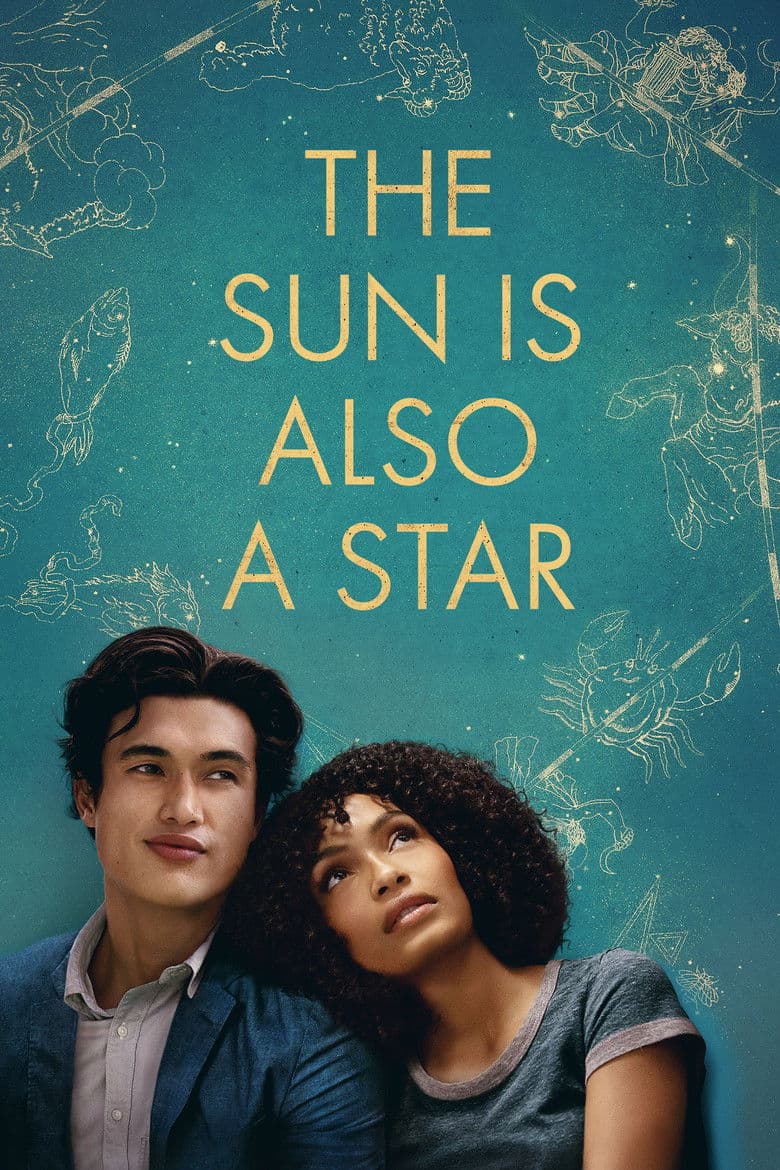
Natasha Kingsley is a science-focused Jamaican teenager who lives in New York with her parents and younger brother. Her family is scheduled for deportation, so she spends the day searching for a lawyer who might help them stay. Daniel Bae is a Korean American student who wants to write poetry even though his parents want him to become a doctor. The two teenagers meet by chance and spend one long day testing whether love and hope can survive the pressure around them. The bright city setting and dreamy style give the romance a warm but rushed tone.
The movie makes immigration and deportation part of the main love story. Natasha and Daniel explain how their Jamaican and Korean family histories shape their fears, plans, and ideas about home. The film shows an interracial relationship, a black female science student, and a Korean American boy who resists a fixed career path. A visit to Daniel’s family hair store brings racist and sexist remarks, and Daniel answers with an apology about racism and unfairness. The story treats empathy for immigrants and the freedom to choose one’s future as hopeful answers to family duty, exclusion, and the fear of losing home.
Community feedback
Was our 70% Woke rating accurate?
Breakdown
These are the editorial factors and ratings behind our score for The Sun Is Also a Star.
Woke representation / casting
The film centers a Black Jamaican female science student and a Korean American male poet. The main cast also highlights Caribbean, Black, and Korean communities in New York. The setting and source story make the casting believable, but the movie still presents diversity and the interracial pairing as part of its main purpose. The director and cast also described that identity mix as important to the film.
50%
Woke political dialogue
Natasha describes her family’s fear of deportation and being treated as outsiders. Daniel says he is sorry for the racism and unfairness connected to his family’s behavior. The characters talk about who belongs in America, cultural identity, and whether outsiders deserve empathy. These ideas return during the legal case and family scenes, although the film has no long activist speech.
44%
Identity-driven story themes
The deportation threat controls Natasha’s choices and gives the romance its deadline. Natasha and Daniel explain how their Jamaican and Korean family histories shape their ideas about home. The couple talks about belonging, race, and the fear of being pushed outside a community. The film presents immigrant empathy, interracial love, and personal freedom as hopeful answers to these pressures.
64%
Western institutional / cultural critique
The immigration office treats Natasha’s family case as a file and denies their last appeal. The deportation system becomes the main outside force that can break up the family and the new romance. The film questions who gets to call America home and says outsiders deserve empathy. The story also criticizes racist and sexist family behavior, but it does not attack Christianity, capitalism, or Western society as a whole.
43%
Woke character or canon changes
Not relevant. The film adapts a novel with no pre-existing screen canon. The reported changes concern story detail and pacing, not race, gender, sexuality, or another identity.
0%
Anti-woke backlash and complaints
One college newspaper review called the movie woke and said it pushed a moral lesson about immigration. The review objected to repeated political language and the question of who gets to be American. The separate X research pass found no anti-woke posts or specific complaints. No broad boycott or organized backlash was found.
18%
Creator track record context
Cached context gives Ry Russo-Young a 66, Tracy Oliver a 63, and Nicola Yoon a 59. The cached summaries link Russo-Young to LGBTQ family and legal-rights stories. The same summaries link Oliver and Yoon to Black, immigrant, and wider representation work. Those records match this film’s focus, while the two producers have much lower cached scores.
57%
Production
Movie · 2020
Young musician Zach Sobiech discovers his cancer has spread, leaving him just a few months to live. With limited time, he follows his dream and makes an album, unaware that it…
Movie · 2016
In 1958, in the state of Virginia, the idea of interracial marriage was not only considered to be immoral to many, it was also illegal.

Movie · 2016
Canadian folk artist Maud Lewis falls in love with a fishmonger while working for him as a live-in housekeeper.
Movie · 2020
When a young woman meets an aspiring saxophonist in her father’s record shop in 1950s Harlem, their love ignites a sweeping romance that transcends changing times, geography, and…
Movie · 2023
After decades apart, childhood friends Nora and Hae Sung are reunited in New York for one fateful weekend as they confront notions of destiny, love, and the choices that make a…
Movie · 2025
Based on a true story, two down-on-their-luck musicians form a joyous Neil Diamond tribute band, proving it's never too late to find love and follow your dreams.

Movie · 2025
18-year-old Noah moves from America to London, with her mother who's recently fallen in love with William, a wealthy British businessman.
Movie · 2017
The story of four characters whose lives intertwine amid the hustle and bustle of the Coney Island amusement park in the 1950s: Ginny, an emotionally volatile former actress now…
