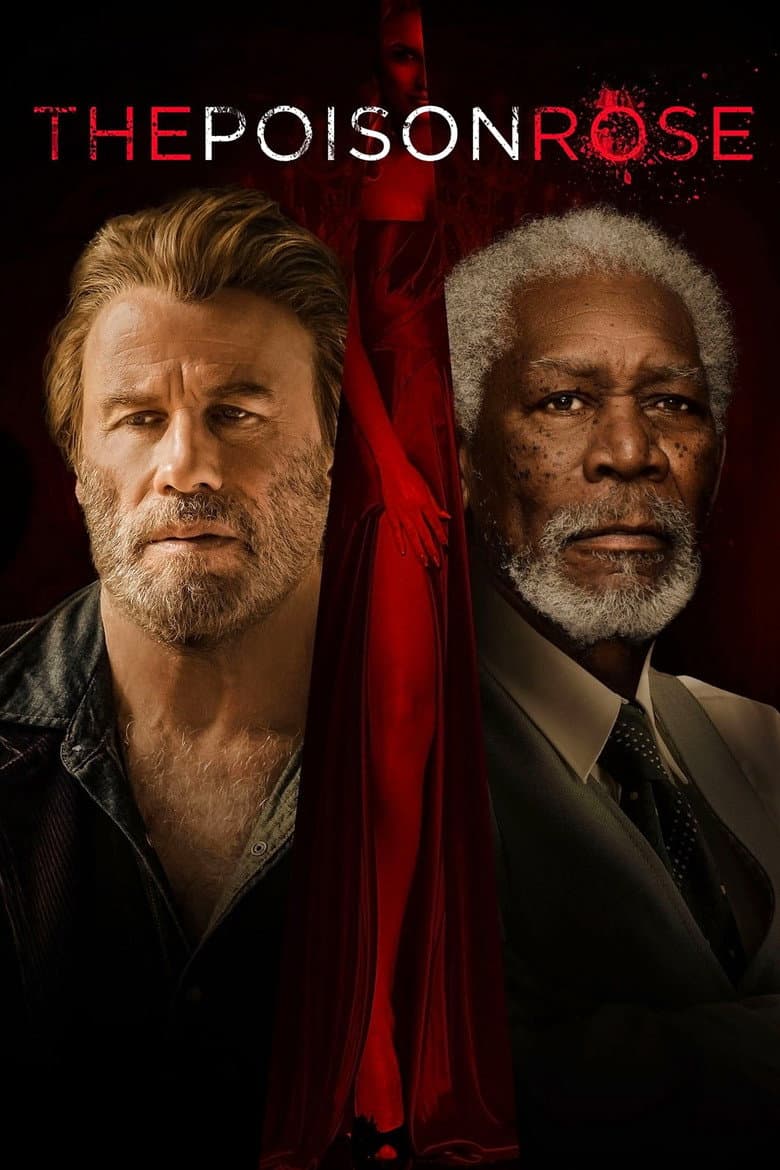
Carson Phillips is a broke, hard-drinking private investigator in Los Angeles. A former football star, he returns to Galveston, Texas, in 1978 after an old girlfriend asks him to find her missing aunt at a mental hospital. The case soon connects to a dead college quarterback, drug dealing, a corrupt sheriff, and a powerful local businessman. Carson also learns that the suspect's wife, Becky, is his daughter, and that her family has hidden painful secrets. The movie uses a dark, old-style detective tone with voice-over, smoky bars, crooked officials, and sudden gun fights.
The main story is about family guilt, murder, abuse, and a town where money and football status protect bad men. Becky has suffered violence from her husband, while her mother Jayne kills him to save her daughter before her own illness takes her life. The film treats Jayne as a tragic killer and ends with Carson choosing his lost family over Los Angeles. Its other major thread is pollution from an oil business, but the film presents that as a local crime secret rather than a wider political lesson.
Community feedback
Was our 1% Woke rating accurate?
Breakdown
These are the editorial factors and ratings behind our score for The Poison Rose.
Woke representation / casting
Not present. The cast includes black characters, including Morgan Freeman as Doc and Kat Graham as Rose. The film does not frame their identities as a message or build its cast around a diversity theme.
0%
Woke political dialogue
Not present. The dialogue is about murder, drugs, money, football, family, and corruption. It does not push modern identity, DEI, or activist ideas.
0%
Identity-driven story themes
Not present. The story includes abuse, a mother protecting her daughter, and an oil poisoning scandal. These events drive the crime plot and are not framed as a modern identity or activist campaign.
0%
Western institutional / cultural critique
Not present. The film shows a sheriff, doctor, and business owners hiding crimes. That is a local noir corruption plot, not a modern critique of Western culture, family, religion, or traditional social rules.
0%
Woke character or canon changes
Not relevant. The film adapts Richard Salvatore’s 2018 novel and is not part of a known franchise or legacy canon.
0%
Anti-woke backlash and complaints
Not present. The supplied X pass found no anti-woke reaction. Web reviews and audience posts focused on the weak plot, acting, accents, and low budget rather than woke or DEI claims.
0%
Creator track record context
The director, writers, producers, and casting directors have mainly worked on commercial crime and genre films. One writer has done prison theater and anti-mafia work, but no clear public record connects that work to DEI or identity politics. John Travolta’s public profile centers on acting, family, and charity.
7%
Production

Movie · 2021
Ten years after he was last seen, a vicious mob enforcer returns home to find his son and methodically track down the gang that double-crossed him.
Movie · 2020
Ex heroin junkie, Daniel Léger, gets involved in a drug deal with the wrong people for the wrong reasons. When the deal goes sour, Daniel gets thrown into a Thai prison and…
Movie · 2023
With the price on his head ever increasing, John Wick uncovers a path to defeating The High Table. But before he can earn his freedom, Wick must face off against a new enemy with…
Movie · 2018
A gritty crime saga which follows the lives of an elite unit of the LA County Sheriff's Dept. and the state's most successful bank robbery crew as the outlaws plan a seemingly…
Movie · 2024
While awaiting the next fuel truck at a middle-of-nowhere Arizona rest stop, a traveling young knife salesman is thrust into a high-stakes hostage situation by the arrival of two…

Movie · 2018
A serial killer is murdering school girls, and a newbie cop has to track him down before the victim count increases.

Movie · 2016
A group of teens break into a blind man's home thinking they'll get away with the perfect crime. They're wrong.
Movie · 2021
Sara is a teen girl who is looking forward to her 18th birthday to move away from her controlling father Don.
