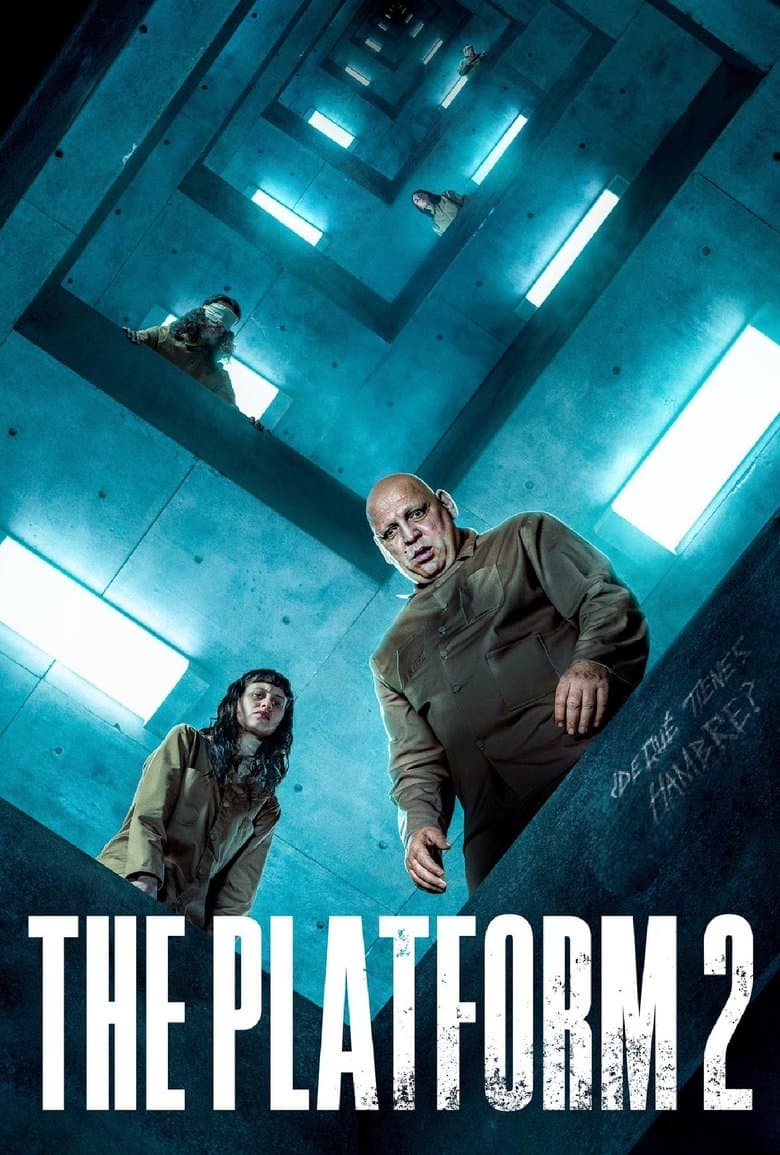
The Platform 2 follows Perempuán, a sculptor who enters a huge vertical prison to face her guilt. Each day, a table of rich food moves from the top floor to the bottom, while prisoners move to new floors each month. A new law says each person may eat only the meal they chose, but guards among the prisoners punish anyone who breaks it. Perempuán and her cellmates must choose between strict order, open hunger, and a violent fight for survival. The film is bleak, graphic, strange, and often hard to follow.
The main woke element is the film's repeated focus on equality, shared resources, class power, and systems that claim to protect the weak. The Loyalists call their food law fair, yet they use public punishment and fear to force everyone to obey. The story attacks selfish wealth and also shows a collective system turning into a cruel cult, so its politics are aimed at power in many forms rather than one simple party message. Perempuán is a major fighter and rescuer, but the film does not frame her as a feminist symbol or build its story around race, sexuality, or diversity. The social message is central, while identity politics are not.
Community feedback
Was our 59% Woke rating accurate?
Breakdown
These are the editorial factors and ratings behind our score for The Platform 2.
Woke representation / casting
Not present. The film does not give a diversity-first casting message. Women and men have major roles, but that alone does not create a clear identity-driven casting pattern.
0%
Woke political dialogue
The inmates repeatedly argue about fairness, shared food, freedom, and obedience. The Loyalists say that one rule will protect people on the lower floors. Babi says that fear and terror are needed to build a safer future. These political arguments drive the law, punishments, and revolt, but they do not discuss race, gender, or queer identity.
45%
Identity-driven story themes
The story treats equal food access and class power as its main moral problem. The Loyalists try to build a shared system, while the Barbarians resist rules and fight for personal choice. The film shows how a promise of equality can become a violent cult. It uses activist-style system criticism, but it does not center race, sex, or sexuality.
46%
Western institutional / cultural critique
The film presents the Pit as a society built on unequal access to food. The story attacks selfish hoarding and the idea that a higher place should grant more comfort. The fair-sharing law becomes an authoritarian system ruled by religious language, public fear, and violent punishment. The film criticizes capitalist-style inequality and rigid collectivist control.
48%
Woke character or canon changes
Not relevant. The film adds Perempuán as a new lead. It does not change the race, sex, or sexuality of an established character.
0%
Anti-woke backlash and complaints
A small Reddit thread calls the film woke garbage. Metacritic and Letterboxd users also blame a woke agenda. Small X posts complain about feminism and a gender-swapped role. The comments had little visible reach, and no large anti-woke campaign was found.
24%
Creator track record context
Galder Gaztelu-Urrutia has a high cached score for stories about inequality, capitalism, and social harm. Pedro Rivero and David Desola show similar patterns about class pressure and failing systems. Carlos Juárez has backed projects about inequality, migration, and unequal power. The other listed creators have little or no matching public record.
60%
Production

Movie · 2018
Held captive in a futuristic smart house, a woman hopes to escape by befriending the A.I. program that controls the house.
Movie · 2021
Following the events at home, the Abbott family now face the terrors of the outside world. Forced to venture into the unknown, they realize that the creatures that hunt by sound…
Movie · 2025
On the mysterious planet of Ash, Riya awakens to find her crew slaughtered. When a man named Brion arrives to rescue her, an ordeal of psychological and physical terror ensues…

Movie · 2024
A group of criminals kidnap a teenage ballet dancer, the daughter of a notorious gang leader, in order to obtain a ransom of $50 million, but over time, they discover that she is…

Movie · 2019
When a huge hurricane hits her hometown in Florida, Haley ignores evacuation orders to look for her father. After finding him badly wounded, both are trapped by the flood.

Movie · 2024
An elite trio of astronauts aboard a years-long, possibly compromised mission to Saturn's moon, Titan, gears up for a highly dangerous slingshot manoeuvre that will either…

Movie · 2025
Four years after defeating The Grabber, Finney Blake is struggling with life after captivity. When his younger sister Gwen begins receiving calls in her dreams from the Black…
Movie · 2026
A strange doorway appears in the basement of a furniture showroom.
