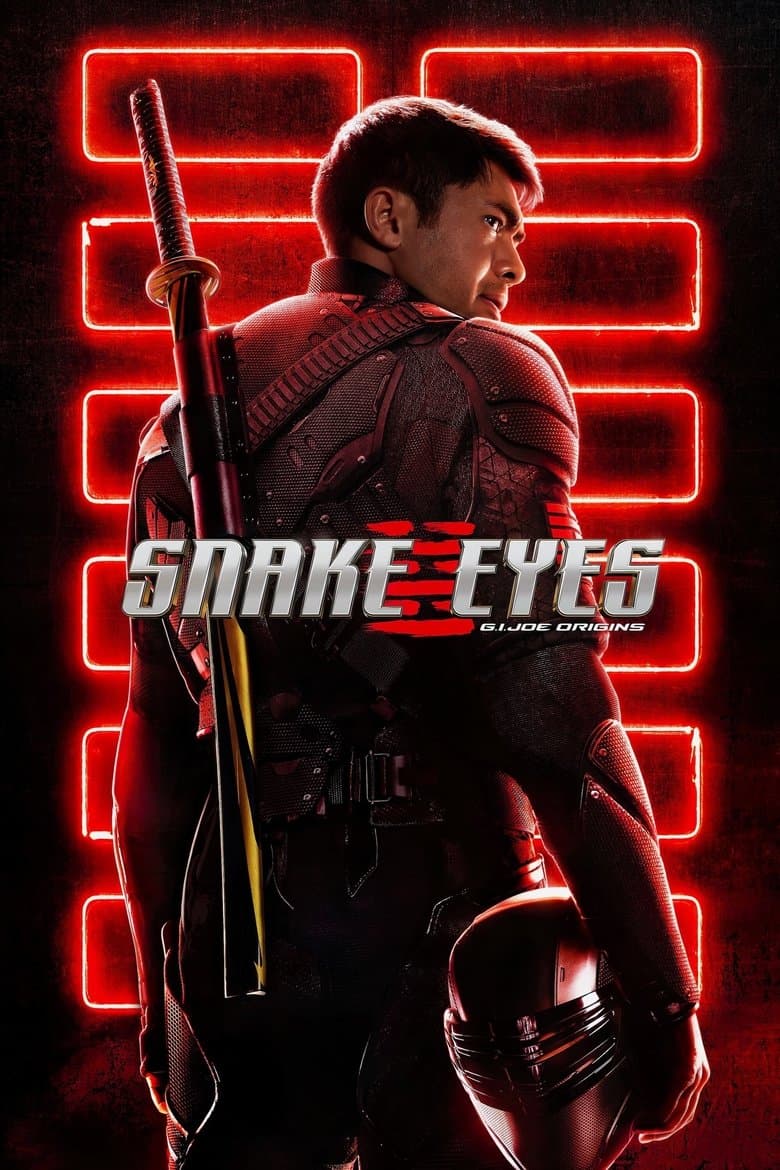
Snake Eyes is a skilled but angry loner who survives by fighting and chasing the man who killed his father. After he saves Tommy Arashikage, Tommy brings him to Japan and offers him a place in his family’s ninja clan. Snake Eyes trains under the clan’s masters while Kenta and Cobra fight to control the clan’s magical Jewel of the Sun. The film has a dark action tone, and its fights grow more intense as Snake Eyes faces revenge and a broken friendship.
The movie places an Asian hero at the center of a story about an outsider entering a Japanese clan and trying to earn trust. Snake Eyes must choose between personal revenge and the clan’s rules about honor, truth, and selfless action. Akiko guards the clan, while Scarlett and the Baroness connect it to the wider G.I. Joe conflict. These identity and representation choices are easy to see, but the plot stays focused on loyalty and family. The story also asks whether Snake Eyes can put betrayal behind him and change his life.
Community feedback
Was our 42% Woke rating accurate?
Breakdown
These are the editorial factors and ratings behind our score for Snake Eyes: G.I. Joe Origins.
Woke representation / casting
The film puts Henry Golding, a Malaysian-British actor, in the lead role of a character long shown as white, blonde, and blue-eyed. The film also gives major action roles to Andrew Koji, Haruka Abe, Iko Uwais, and other Asian performers in the Japanese clan. Director Robert Schwentke said the team wanted a new casting direction and worried about another story where a white man goes east to save people. The Japanese setting explains much of the cast, but the lead recasting and its stated identity purpose make this a clear representation choice.
37%
Woke political dialogue
Not present. The dialogue focuses on revenge, honor, family, loyalty, and criminal plans. The movie has no clear modern activist, DEI, or identity-politics speech.
0%
Identity-driven story themes
The film makes an Asian outsider’s search for belonging part of its central story. Snake Eyes joins a Japanese clan, learns its rules, and tries to earn a place beside Tommy as a brother. The movie connects acceptance to honor, loyalty, and personal change rather than to a debate about race or present-day politics. This gives the title a visible identity-driven story theme, but it is one part of a revenge action plot.
28%
Western institutional / cultural critique
Not present. The film shows a secret clan, yakuza criminals, Cobra, and rival fighters. It does not attack Western institutions, family roles, Christianity, or modern social rules.
0%
Woke character or canon changes
The film changes Snake Eyes from the established white, blonde, blue-eyed commando into an Asian lead played by Henry Golding. The movie also replaces his older military and outsider background with a new childhood, a revenge quest, and a direct path into the Arashikage clan. Director Robert Schwentke tied the casting change to avoiding a white man going east to save people, while Larry Hama said he had long wanted an Asian Snake Eyes. This is a central identity-driven change to a known character.
46%
Anti-woke backlash and complaints
Small fan accounts objected that comic Snake Eyes was a white, blonde, blue-eyed character and treated Henry Golding’s casting as a race-swap or DEI choice. Some later posts tied the film’s flop to that casting, but they had little reach. Henry Golding answered the double bind by saying he was not white enough for Snake Eyes. The supplied X research found no large boycott, review-bomb drive, or organized anti-woke campaign.
15%
Creator track record context
The cached context gives the director and most writers and producers low woke scores. The writers have made some stories about politics, power, and injustice, but they have no strong DEI or queer pattern. Producer Brian Goldner led mainstream corporate diversity and inclusion work at Hasbro. The director’s casting comments add a small title-related identity signal, so this context is low but not zero.
18%
Production

Movie · 2023
Ethan Hunt and his IMF team embark on their most dangerous mission yet: To track down a terrifying new weapon that threatens all of humanity before it falls into the wrong hands.
Movie · 2025
After a family tragedy, kung fu prodigy Li Fong is uprooted from his home in Beijing and forced to move to New York City with his mother.
Movie · 2017
The Guardians must fight to keep their newfound family together as they unravel the mysteries of Peter Quill's true parentage.

Movie · 2023
Dan Morgan is many things: a devoted husband, a loving father, a celebrated car salesman. He's also a former assassin.
Movie · 2023
65 million years ago, the only 2 survivors of a spaceship from Somaris that crash-landed on Earth, must fend off dinosaurs to reach the escape vessel in time before an imminent…

Movie · 2016
Following the events of Age of Ultron, the collective governments of the world pass an act designed to regulate all superhuman activity.

Movie · 2024
When the plots of reclusive author Elly Conway's fictional espionage novels begin to mirror the covert actions of a real-life spy organization, quiet evenings at home become a…

Movie · 2024
When 93-year-old Thelma Post gets duped by a phone scammer pretending to be her grandson, she sets out on a treacherous quest across the city to reclaim what was taken from her.
