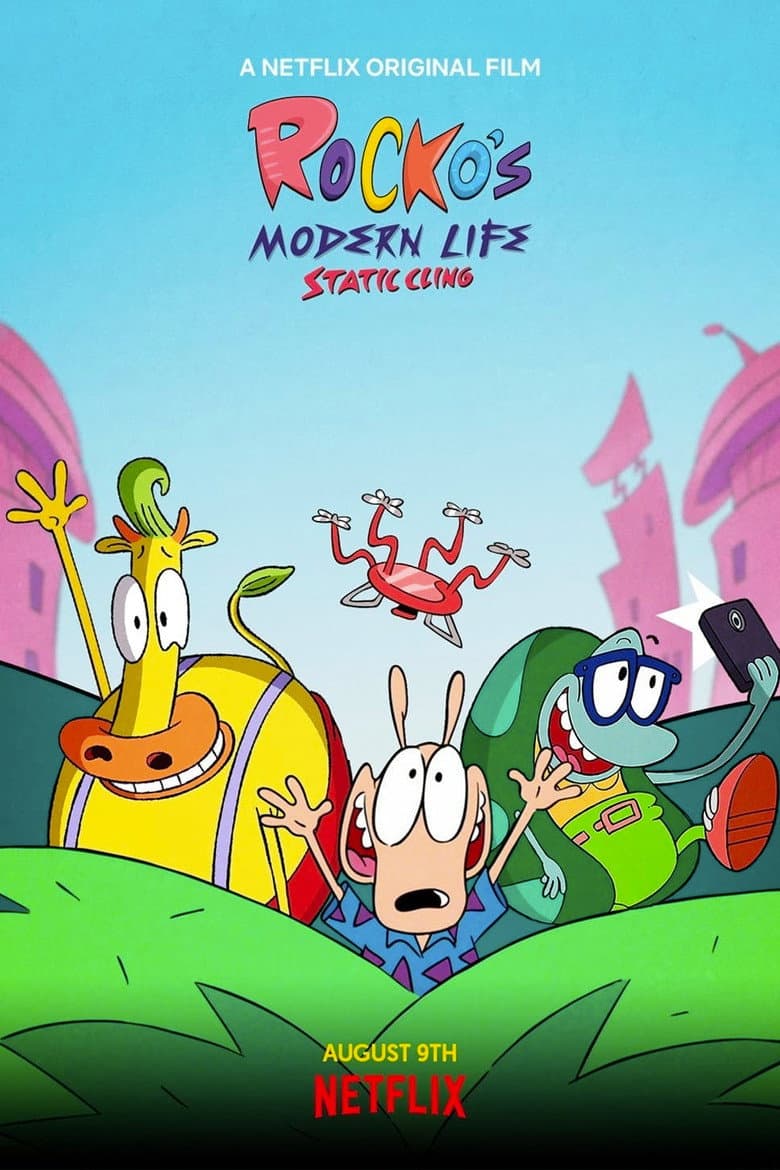
Movie review
August 9, 2019 · 45 min · G · Kids · Animation · Comedy · Family
Rocko is a wallaby who returns to O-Town after spending 20 years in space with Heffer, Filburt, and Spunky. He struggles with a world filled with smartphones, food trucks, energy drinks, cheap computer cartoons, and nonstop change. Rocko wants his favorite 1990s cartoon, The Fatheads, back on television, so he searches for its missing creator. The movie uses loud jokes, gross gags, strange trips, and warm family moments while it makes fun of modern life and old fan habits.
The missing creator is Ralph Bighead, who now lives as Rachel, a transgender woman. Rachel's friends accept her at once, but her father Ed refuses to call her his daughter and says the old show cannot continue without his son. Rachel uses a new Fatheads story to show her father who she is, and Ed finally accepts her after seeing her happiness. The film makes this identity story a clear part of its larger message that people and their relationships must change, while its other message attacks corporate control, consumer habits, and fans who demand that old entertainment never change.
Community feedback
Was our 67% Woke rating accurate?
Breakdown
These are the editorial factors and ratings behind our score for Rocko's Modern Life: Static Cling.
Woke representation / casting
Not present. The film uses animated characters, so no audience-visible casting pattern drives its message.
0%
Woke political dialogue
Rachel says she is not Ralph anymore and that she is finally happy as Ed's daughter. Rocko and his friends answer her reveal with quick praise instead of doubt. Bev tells Ed to be more open-minded, and Rocko says a parent cannot live without a relationship with a child. These lines openly support transgender identity and acceptance, while the film also uses a brief anti-capitalist joke.
45%
Identity-driven story themes
Rachel's gender change from Ralph to Rachel becomes a major part of the search for The Fatheads. Her friends accept her, while her father refuses to accept her as his daughter. The story treats acceptance as the right answer and uses Rachel's happiness to change Ed's mind. The movie connects her story to the wider idea that old shows, families, and fans must accept change.
55%
Western institutional / cultural critique
Conglom-O owns much of O-Town and treats The Fatheads as a cheap product. The story mocks corporate control, machine-made art, consumer technology, and online fan pressure. The ending also jokes about capitalist redundancy and sends corporate wealth back to the town. This criticism is repeated but remains comic rather than a full activist program.
31%
Woke character or canon changes
Ralph Bighead was a named character in the original series, and the film changes him into Rachel, a transgender woman. The change is not a side joke because Rocko must find Rachel to bring back The Fatheads. Rachel's father rejects the change, and the family conflict ends only when he accepts her as his daughter. This established-character gender change is one of the movie's main identity-driven story devices.
82%
Anti-woke backlash and complaints
Small conservative X accounts called the special “grooming” or “woke-world-order” content. Other fringe posts called the transgender story forced, pandering, or an agenda. Reddit threads and anti-woke review sites repeated similar complaints. No large conservative influencer, review-bombing drive, or organized boycott was found.
32%
Creator track record context
Joe Murray has a cached creator score of 15/100. Cosmo Segurson has a cached score of 4/100, and Mr. Lawrence and Martin Olson each have 5/100. Their summaries describe comedy, absurd humor, and curiosity more than activism or identity campaigns. Their low prior scores keep this context factor low despite the film's clear transgender storyline.
8%
Production
Movie · 2025
Plankton's tangled love story with his sentient computer wife goes sideways when she takes a stand — and decides to destroy the world without him.
Movie · 2021
Shaun's seasonal excitement turns to dismay when a farmhouse raid to get bigger stockings for the flock inadvertently leads to Timmy going missing.
Movie · 2020
A young rabbit embarks on a journey to dig the burrow of her dreams, despite not having a clue what she's doing.
Movie · 2016
A koala named Buster recruits his best friend to help him drum up business for his theater by hosting a singing competition.
Movie · 2025
Gabby heads out on a road trip with her Grandma Gigi to the urban wonderland of Cat Francisco. But when Gabby's dollhouse, her most prized possession, ends up in the hands of an…
Movie · 2016
The Minions need to raise $20 to purchase an as seen on TV banana blender. So they take up lawn mowing at an old folks home, with hilarious antics!
Movie · 2026
A small goat with big dreams gets a once-in-a-lifetime shot to join the pros and play roarball, a high-intensity, co-ed, full-contact sport dominated by the fastest, fiercest…
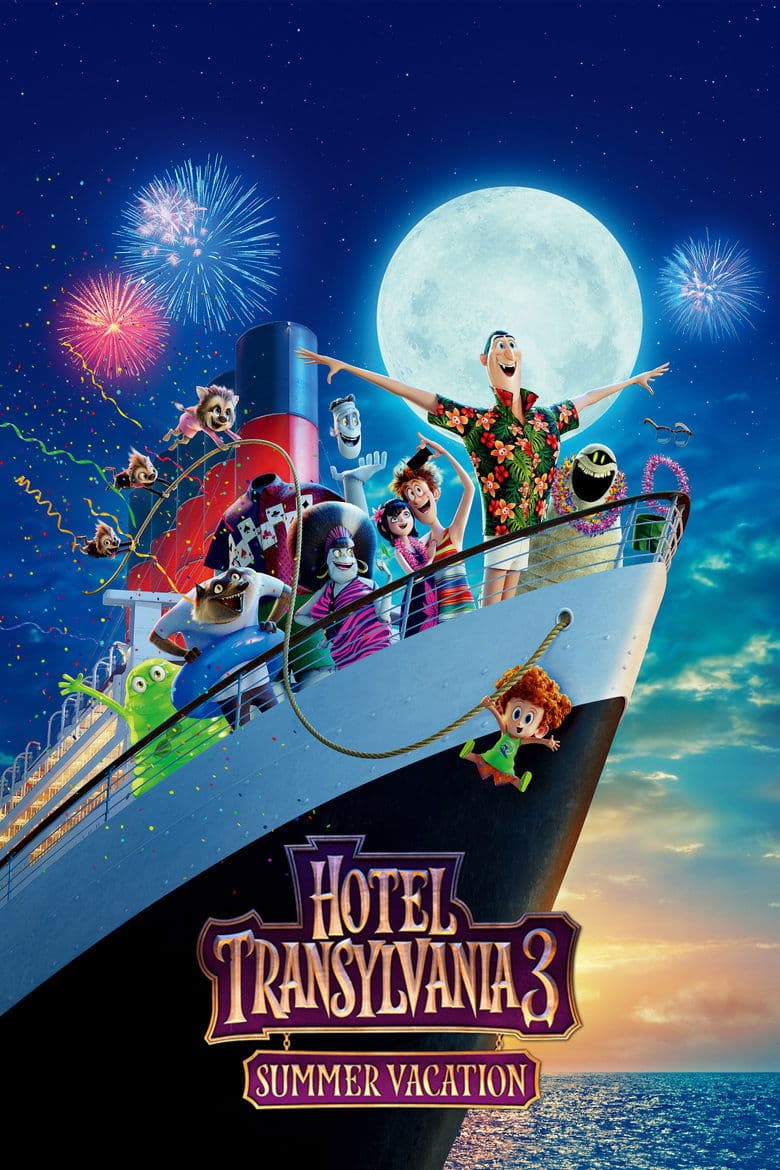
Movie · 2018
Dracula, Mavis, Johnny and the rest of the Drac Pack take a vacation on a luxury Monster Cruise Ship, where Dracula falls in love with the ship’s captain, Ericka, who’s secretly a…
