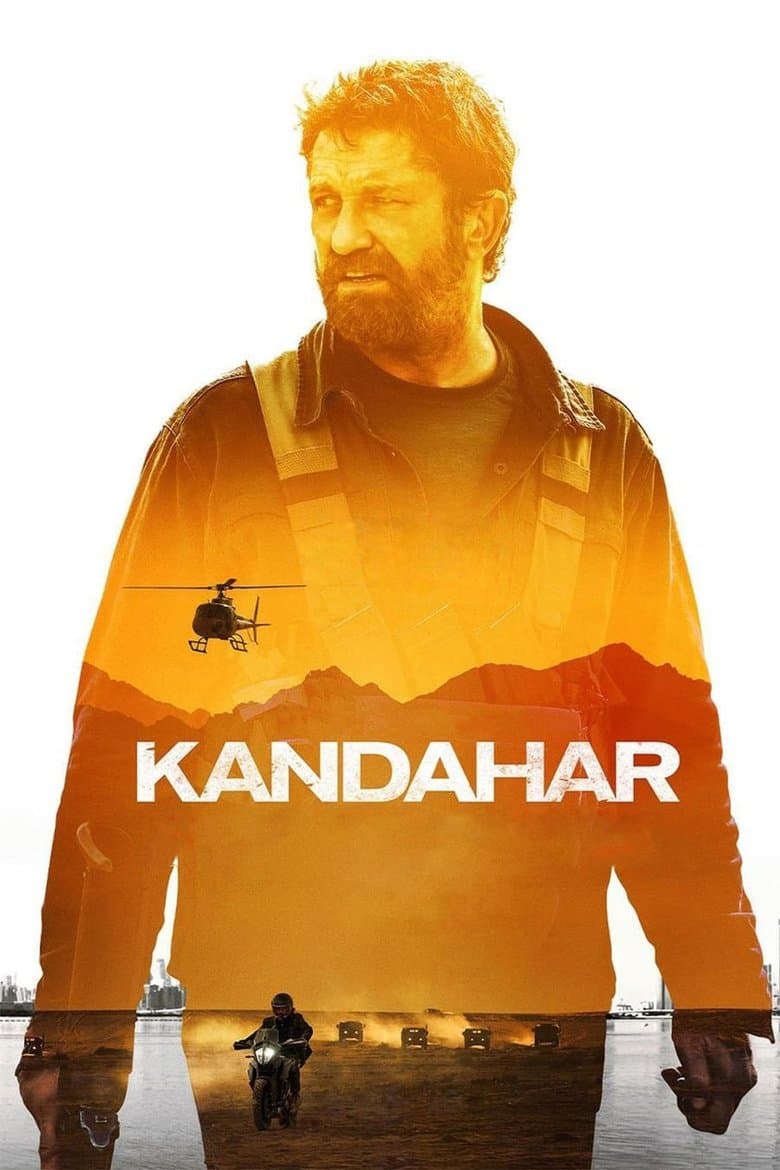
Tom Harris is a skilled MI6 agent on loan to the CIA who has spent years on secret missions in the Middle East. After he helps destroy an Iranian nuclear site, a leak exposes his identity and turns him into a target. Tom and his Afghan translator, Mohammad "Mo" Doud, cross hundreds of miles from Herat to Kandahar while forces from Iran, Pakistan, and the Taliban hunt them. The movie uses desert chases, gun fights, and tense escapes, but it also gives Tom and Mo quiet talks about family, guilt, war, and getting home.
The film gives Mo a personal reason to return to Afghanistan, including his search for family and the loss of his son. It shows Muslim characters with different beliefs and goals, including a Muslim family man, a stylish Pakistani agent, and people caught between old rules and modern life. Tom admits that Western agents depend on people like Mo and that American decisions have damaged other countries. These ideas add a human and anti-war layer, but the main story remains a violent escape led by Tom.
Community feedback
Was our 22% Woke rating accurate?
Breakdown
These are the editorial factors and ratings behind our score for Kandahar.
Woke representation / casting
Not present. The film uses a White British lead, an Afghan translator, and regional actors for Iranian, Pakistani, and Taliban roles. The story does not present the casting as a diversity goal or build a visibly engineered identity group.
0%
Woke political dialogue
The film has a few direct lines about Western responsibility for damage in other countries. Tom says that Western agents rely on people like Mo and then tell them how to act. Mo also blames American decision-makers after his family suffers from the conflict. These moments add an anti-war and anti-policy message, but political talk is not the film's main focus.
14%
Identity-driven story themes
The film gives Muslim and Middle Eastern characters family ties, faith, and personal motives instead of making every local fighter a faceless enemy. Mo's Afghan background and Muslim faith shape his bond with Tom and his reason for returning. Kahil and Farzad also show different ways people live inside the region's conflicts. This humanizing theme recurs, but it is part of a war story rather than a modern identity campaign.
16%
Western institutional / cultural critique
The film questions the cost and purpose of Western covert work in the Middle East. Tom says that Western agents depend on people like Mo and then tell them how to act. Mo blames American decision-makers after his family suffers from the conflict. The movie uses these points as an anti-war warning, but it does not turn them into a broad attack on Western culture.
24%
Woke character or canon changes
Not relevant. The film is an original screenplay loosely based on the writer's Afghanistan experience. It does not change an established character, canon, or historical figure to make an identity point.
0%
Anti-woke backlash and complaints
The only anti-woke reaction found was fringe discussion from a few small X accounts. Those posts praised Kandahar as “no woke” or apolitical action, and one grouped it with Plane as a non-woke Butler film. No meaningful complaint said that the film pushed DEI, race or gender swaps, girlboss writing, or LGBT themes. No boycott, review-bomb drive, or organized campaign was found.
7%
Creator track record context
Available creator records show low woke scores for Waugh, LaFortune, Butler, and nearly all producers. Waugh said he wanted viewers to see the people on the ground and decide for themselves instead of receiving a fixed political message. His Kandahar interviews use human-cost and cultural-change language. Tom Ortenberg is a progressive political outlier, but the wider team has no clear identity-first pattern.
11%
Production
Movie · 2018
A gritty crime saga which follows the lives of an elite unit of the LA County Sheriff's Dept. and the state's most successful bank robbery crew as the outlaws plan a seemingly…
Movie · 2026
A man living in self-imposed exile on a remote island rescues a young girl from a violent storm, setting off a chain of events that forces him out of seclusion to protect her from…
Movie · 2021
Rescued as a child by the legendary assassin Moody and trained in the family business, Anna is the world’s most skilled contract killer.

Movie · 2026
A grieving woman pushing her limits on a solo adventure in the Australian wild is ensnared in a twisted game with a cunning killer who thinks she's prey.
Movie · 2023
During the war in Afghanistan, a local interpreter risks his own life to carry an injured sergeant across miles of grueling terrain.
Movie · 2021
A former special forces agent is trapped in a time loop and relives his death over and over again. To escape the terrible situation, he must track down those responsible and stop…
Movie · 2017
With the Third Reich at its peak in 1942, the Czech resistance in London plans the most ambitious military operation of WWII – Anthropoid.
Movie · 2017
Quan is a humble London businessman whose long-buried past erupts in a revenge-fueled vendetta when the only person left for him to love – his teenage daughter – dies in an Irish…
