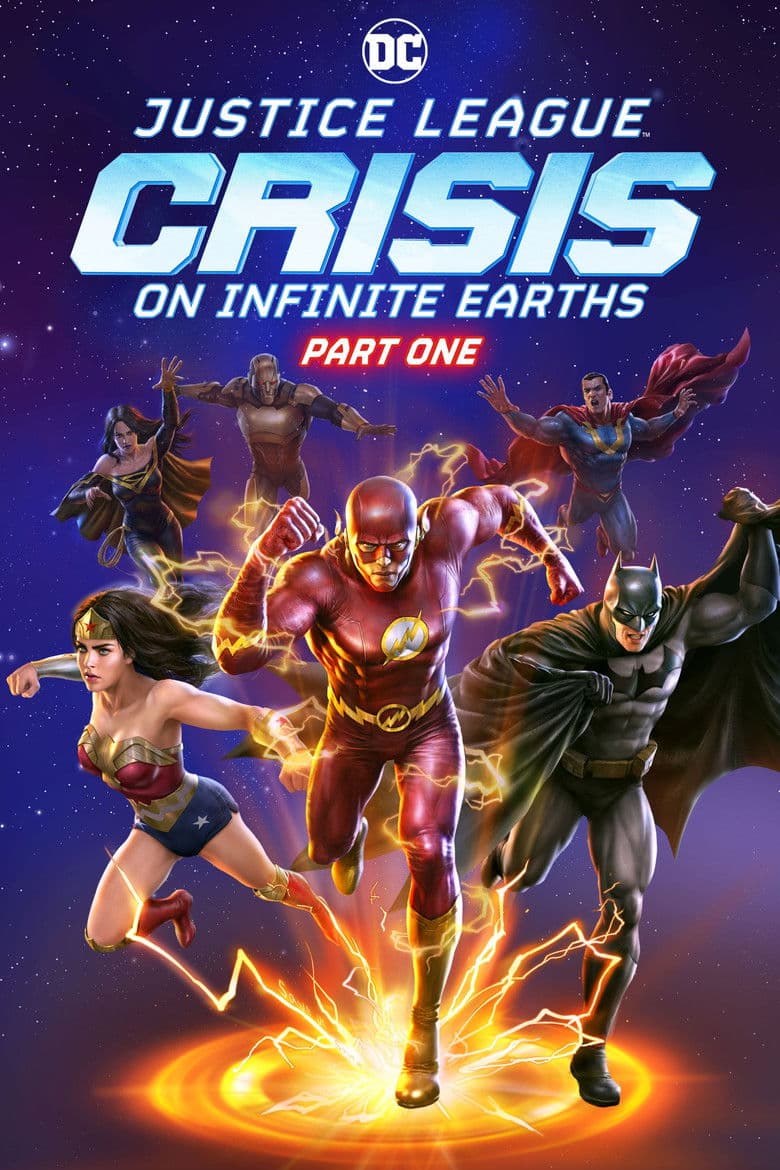
Movie review
January 8, 2024 · 93 min · PG-13 · Sci-Fi · Animation · Action
Barry Allen, the Flash, is pulled through different moments of his life as the worlds around him begin to die. He meets Iris, helps form a Justice League, and learns that an antimatter wave is erasing Earths across the multiverse. The Monitor gathers heroes and scientists from many worlds to find a defense. The tone mixes fast superhero action with a sad love story about time, duty, and loss.
The clearest identity signal is a brief gender line. Iris tells Barry not to act sexist when she keeps working on the defense tower, and the film treats her as his equal partner. The cast also places women such as Wonder Woman, Supergirl, Vixen, Doctor Light, Huntress, and Dawnstar beside major male heroes, while John Stewart and other black heroes hold visible roles. This mix is easy to notice, but the story uses those characters for teamwork, romance, sacrifice, and science fiction action rather than making representation or identity politics the central message.
Community feedback
Was our 19% Woke rating accurate?
Breakdown
These are the editorial factors and ratings behind our score for Justice League: Crisis on Infinite Earths Part One.
Woke representation / casting
The film repeatedly places women such as Wonder Woman, Supergirl, Vixen, Doctor Light, Huntress, and Dawnstar in visible hero roles. It also gives major science and hero roles to John Stewart, Mr. Terrific, Martian Manhunter, and Amazing-Man. DC's own feature presents the wide mix of heroes as a celebration of DCU diversity. The multiverse premise and the characters' comic history make much of this mix expected, so the identity signal stays limited.
18%
Woke political dialogue
Iris tells Barry not to act sexist when he tries to help her finish the defense tower. The line treats her as an equal worker who can handle her own task. The moment is brief, and the film has no wider political speech.
8%
Identity-driven story themes
Not present. The story centers on Barry's marriage, teamwork, sacrifice, and survival across the multiverse. Race, sex, sexuality, and current identity politics do not drive the main conflict.
0%
Western institutional / cultural critique
Iris pushes back on Barry's sexist assumption while they work on the tower. Barry accepts her answer, and the pair share the task as equals. This is one short gender-role exchange, not a wider attack on men, family, religion, or Western institutions.
10%
Woke character or canon changes
Not relevant. The film changes the comic's order, makes Barry the lead, and gives Ivo a Nairobi University background. These changes serve the Tomorrowverse story and are not presented as identity or DEI messaging.
0%
Anti-woke backlash and complaints
A few small or anonymous accounts called the Ivo and Nairobi University detail a race swap for woke points. Another small account called the Justice League releases woke nonsense. Broader reaction showed no sustained boycott, review-bomb push, or large right-leaning campaign. These complaints are fringe claims and do not prove the alleged motive.
12%
Creator track record context
Gerry Conway, one credited writer, later ran Black Lives Matter campaigns. The other cached writers, director, producers, and casting leads have mostly low scores and no strong modern activist record. The film does not use Conway's later cause as story material.
16%
Production
Movie · 2024
An endless army of shadow demons bent on the destruction of all reality swarms over our world and all parallel Earths!
Movie · 2018
Batman, along with many of his allies and adversaries, finds himself transported to feudal Japan by Gorilla Grodd's time displacement machine.
Movie · 2022
After discovering he has powers, 11-year-old Jonathan Kent and assassin-turned-Boy-Wonder Damian Wayne must join forces to rescue their fathers (Superman & Batman) and save the…
Movie · 2019
When a hulking monster arrives on Earth and begins a mindless rampage, the Justice League is quickly called in to stop it.
Movie · 2016
Robin is sent by Batman to work with the Teen Titans after his volatile behavior botches up a Justice League mission.
Movie · 2022
The Red Ribbon Army, an evil organization that was once destroyed by Goku in the past, has been reformed by a group of people who have created new and mightier Androids, Gamma 1…
Movie · 2016
After being brutally murdered in a subway station, a teen boy awakens to find himself resurrected by a strange computer named Gantz, and forced to fight a large force of invading…
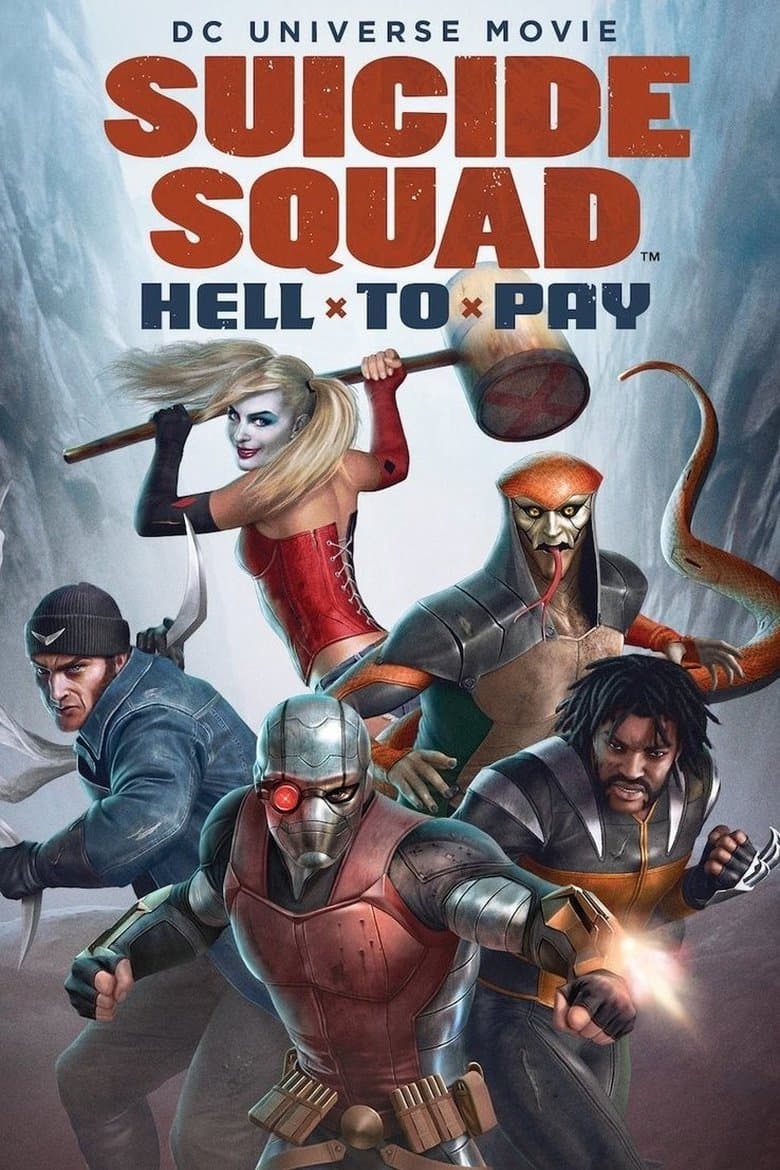
Movie · 2018
Amanda Waller's top-secret "Task Force X" — consisting of Deadshot, Bronze Tiger, Killer Frost, Captain Boomerang, Harley Quinn, and Copperhead — is on a mission to retrieve a…
