Movie review
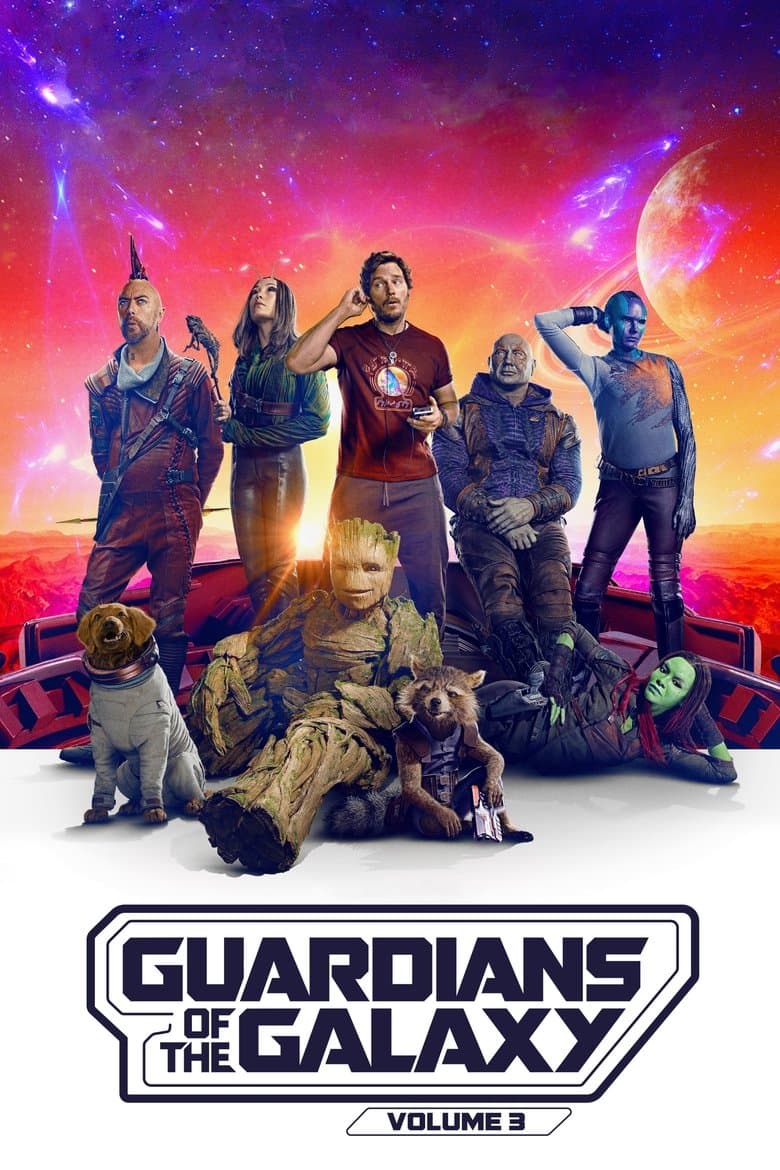
Peter Quill still hurts after losing Gamora. When Rocket is badly hurt and near death, the Guardians race across space to save him. Their fight leads them to Rocket’s cruel creator, the High Evolutionary, who treats living beings like lab tools. The movie mixes big action, jokes, and heavy feelings about family, pain, and belonging.
What stands out most for social messaging is Rocket’s past. Long flashbacks show animals locked up, cut into, and used for “perfect” new life. That story is the heart of the film and is easy to read as a strong animal-cruelty warning. PETA even praised the movie for it. The team stays mixed by race and gender as before, and a young Phyla joins near the end (a comics character who is lesbian on the page, but the film never shows any queer romance or talk). Cosmo is female here while the comics dog was male. Some online posts attacked a Nebula poster look as “trans” signaling, and a few people noted the High Evolutionary’s race change from the comics. For most viewers, the movie still plays as a found-family space adventure first, with animal-abuse horror as the clear extra message.
Community feedback
Was our 35% Woke rating accurate?
Breakdown
These are the editorial factors and ratings behind our score for Guardians of the Galaxy Vol. 3.
Woke representation / casting
Returning Guardians stay a mixed-race, mixed-gender team. New faces include Chukwudi Iwuji as the High Evolutionary and Kai Zen as young Phyla. Cosmo is gender-swapped female, but since it's a dog, the impact is limited. Diversity is visible in a space-opera world but mostly continues earlier films rather than feeling like a new quota pitch. Phyla’s comics queer status is not shown on screen.
26%
Woke political dialogue
Talk centers on saving Rocket, grief, loyalty, and stopping a cruel scientist. The High Evolutionary speechifies about “perfect” life and evolution. There is little race, gender, or modern identity-politics lecturing; animal-empathy lines sit inside the plot more than as slogans.
5%
Identity-driven story themes
The core theme is Rocket’s abuse as a lab animal and the Guardians as a found family. Animal testing is shown in hard detail and is the emotional center, so many viewers will hear a clear anti-cruelty message (PETA agreed). Race/gender identity arcs and queer romance are not the main plot. Phyla is only a future-team seed. Heavy push on found family and valuing flawed misfits as the emotional core.
25%
Western institutional / cultural critique
The villain is a space eugenicist and company boss who plays god. That fits classic mad-scientist and anti-tyranny stories, not a focused attack on modern Western culture, churches, “toxic masculinity,” or traditional family norms.
10%
Woke character or canon changes
Cosmo’s comics-male-to-film-female change is the clearest canon gender shift (framed as a Laika tribute). High Evolutionary’s race casting differs from many comic looks. Phyla is aged down into a child with no on-screen sexuality. These are real changes but not heavy identity rewrites of the main Guardians.
12%
Anti-woke backlash and complaints
Real but limited: Nebula poster “trans ideology” claims, some High Evolutionary race-swap gripes, and occasional posts calling animal-lab themes or Marvel itself woke. Plenty of right-leaning viewers instead called Vol. 3 one of the least “woke” good MCU films, so anti-woke anger never dominated the film’s reputation.
12%
Creator track record context
Driven by Gunn (~46), Feige (~47), Alonso (~58), and Finn (~51). Their broader progressive casting and inclusion records matter as context. Gunn’s actual pitch for this title stayed on Rocket’s pain and found family more than on DEI slogans. Older comic writers on the credits score low.
48%
Production
Movie · 2017
The Guardians must fight to keep their newfound family together as they unravel the mysteries of Peter Quill's true parentage.
Movie · 2016
Following the events of Age of Ultron, the collective governments of the world pass an act designed to regulate all superhuman activity.

Movie · 2026
Fighting crime full-time as Spider-Man in a world that doesn't remember him—and the pressure of seeing his old friends move on without him—sparks a change in Peter Parker he may…
Movie · 2017
Fuelled by his restored faith in humanity and inspired by Superman's selfless act, Bruce Wayne and Diana Prince assemble a team of metahumans consisting of Barry Allen, Arthur…
Movie · 2010
Cobb, a skilled thief who commits corporate espionage by infiltrating the subconscious of his targets is offered a chance to regain his old life as payment for a task considered…
Movie · 2016
Through a technology that unlocks the genetic memories of his ancestor in 15th century Spain, Callum Lynch discovers he is a descendant of an ancient line of Assassins and amasses…
Movie · 2026
The evil Empire has fallen, and Imperial warlords remain scattered throughout the galaxy. As the fledgling New Republic works to protect everything the Rebellion fought for, they…
Movie · 2023
When his attempt to save his family inadvertently alters the future, Barry Allen becomes trapped in a reality in which General Zod has returned and there are no Super Heroes to…
