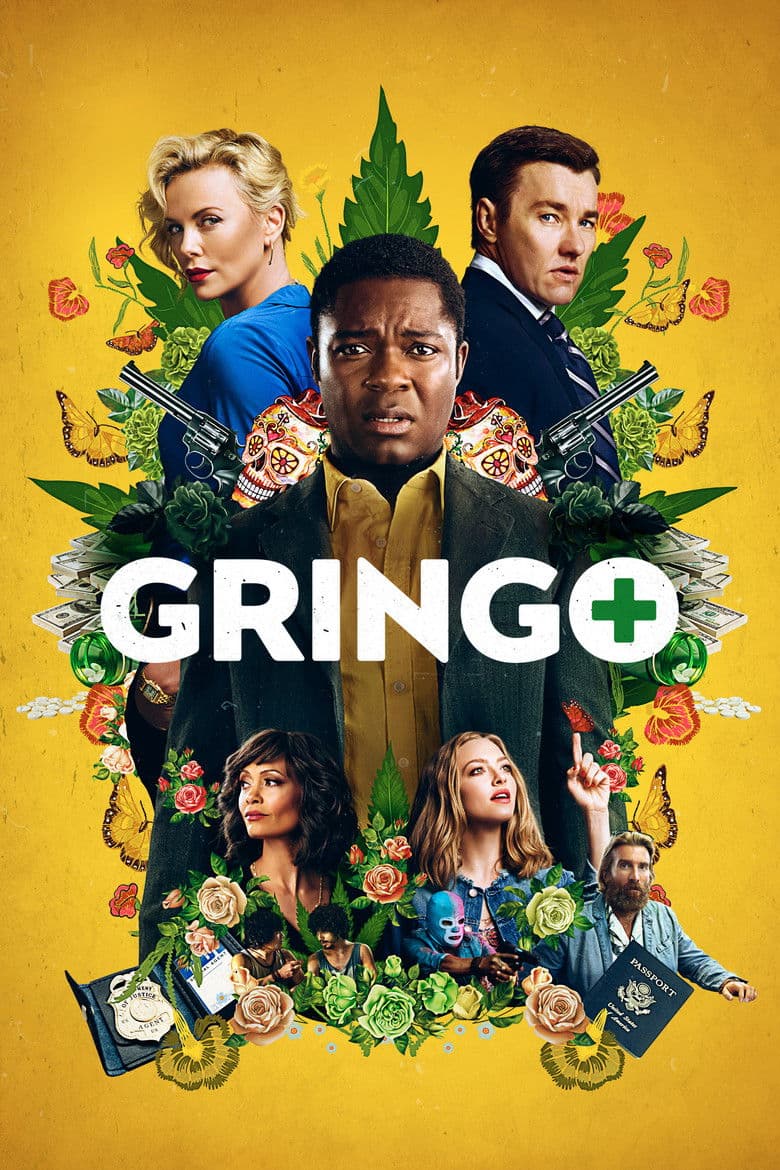
Harold Soyinka is a kind but easily fooled operations worker at a Chicago drug company. His bosses send him to Mexico while they hide a secret deal involving a marijuana pill, and Harold learns that they may fire him and leave him to take the blame. After his wife leaves him and his fake kidnapping becomes real, he is chased by company agents, cartel killers, and a hired fighter. The movie mixes dark jokes, sex, violence, and sudden twists as Harold tries to survive and start over.
Harold's story includes his life as a first-generation Nigerian immigrant, and the movie shows him as an outsider in both the American office and Mexico. His background adds a small race and class theme because honest work and following rules do not protect him from richer people who lie and use him. The cast puts David Oyelowo in the main role and Charlize Theron in charge of the company, but the story does not turn these choices into a larger message about identity. Most of the story stays focused on greed, betrayal, drugs, marriage trouble, crime, and whether a good person can survive by breaking rules.
Community feedback
Was our 31% Woke rating accurate?
Breakdown
These are the editorial factors and ratings behind our score for Gringo.
Woke representation / casting
Harold is played by David Oyelowo as a Black Nigerian immigrant, although the early script described him as a white man. Oyelowo and Nash Edgerton discussed that change, and the film gives Harold an immigrant backstory. Mexican roles are played by Mexican actors, which fits the setting rather than adding a broad identity message. The film has one clear representation signal in a lead role, but it does not build a large diversity-first cast pattern.
34%
Woke political dialogue
Not present. The film includes insults about race, sex, and weight, but those lines come from ignorant characters and do not promote modern identity politics or activism. The dialogue does not repeat a message about gender, DEI, or social justice.
0%
Identity-driven story themes
Harold is a first-generation Nigerian immigrant who feels out of place in the American office and in Mexico. His father teaches him to work hard and follow rules, while richer people gain power by lying and taking what they want. The film uses that contrast for a small race and class theme about the American dream failing an honest outsider. The kidnapping, drug deal, broken marriage, and revenge story remain more important than the identity theme.
32%
Western institutional / cultural critique
Not present. The movie attacks a corrupt drug company and criminal bosses, but that is a crime-comedy plot rather than a modern activist critique. The story does not frame capitalism, male power, Christianity, or Western culture as identity systems.
0%
Woke character or canon changes
Not relevant. Gringo is an original story, not an adaptation of known characters or historical events. No known source character or historical figure is being rewritten.
0%
Anti-woke backlash and complaints
Not present. The visible discussion focused on the plot, cast, dark humor, and weak reviews. No reliable anti-woke complaint, boycott, or review-bomb campaign was found, and the separate X check found no reaction calling the film woke, DEI, or identity-politics content.
0%
Creator track record context
Cached context gives Nash Edgerton a 40/100 score because he later directed a short film supporting a 2023 public vote about Indigenous representation in Australia. Cached context gives Charlize Theron 47/100 for feminist and equal-pay advocacy, and Carmen Cuba 37/100 for supporting diverse talent. The writers and most other producers have little or no activist record in the stored notes. These signals give the film a mild creator-context lift, but the crew did not present Gringo as a political project.
30%
Production
Movie · 2022
The Accident Man is back, and this time he must best the top assassins in the world to protect the ungrateful son of a mafia boss, save the life of his only friend and rekindle…
Movie · 2024
Stuck at a dead end but vying for the love of spunky club manager Anata, aging contract killer Danny Dolinski is thrilled when The Company pulls him back in the field, but only to…

Movie · 2025
Kat is an improv comedy teacher beginning to question if she’s missed her shot at success. When an undercover cop offers her the role of a lifetime, she recruits two of her…
Movie · 2018
Mermer family, who has been managing a restaurant called “Anatolian flavors” in Haydarpasa train station for generations, consist of 8 members.
Movie · 2020
American expat Mickey Pearson has built a highly profitable marijuana empire in London. When word gets out that he’s looking to cash out of the business forever it triggers plots…
Movie · 2024
Forty years after his unforgettable first case in Beverly Hills, Detroit cop Axel Foley returns to do what he does best: solve crimes and cause chaos.
Movie · 2019
JJ, aka John Shaft Jr., may be a cyber security expert with a degree from MIT, but to uncover the truth behind his best friend’s untimely death, he needs an education only his dad…
Movie · 2016
Friends hatch a plot to retrieve a stolen cat by posing as drug dealers for a street gang.
