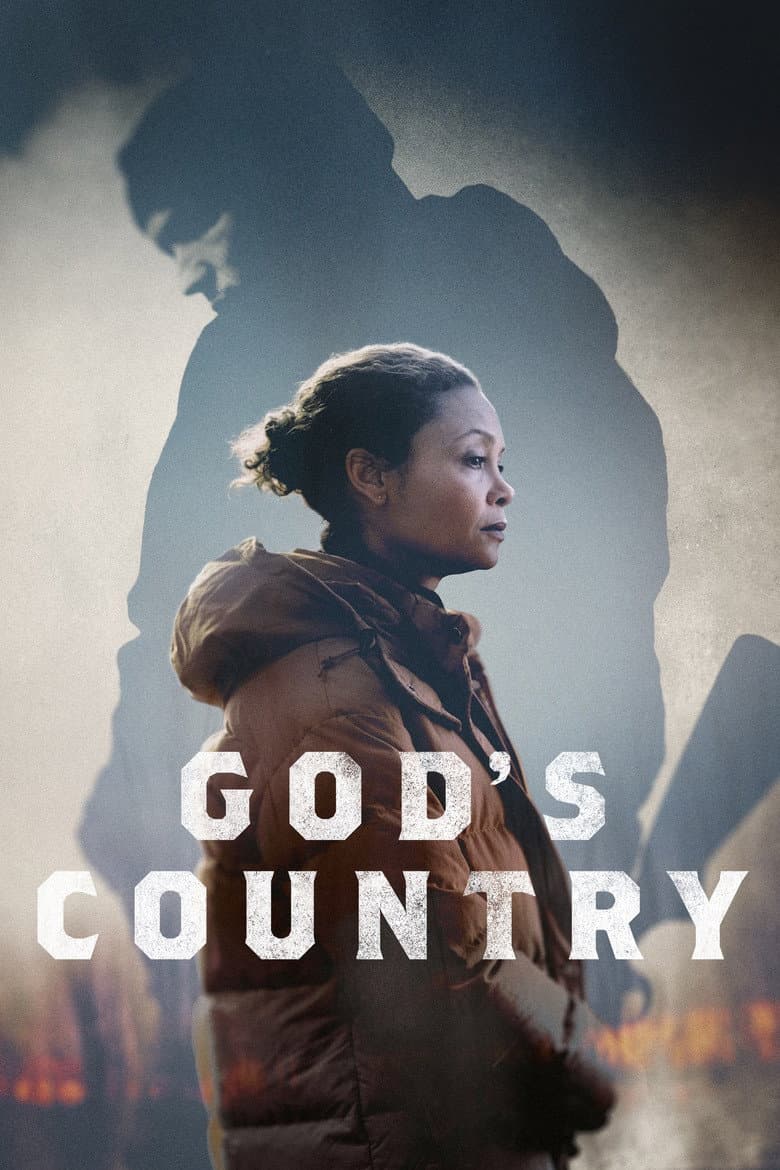
God’s Country follows Sandra Guidry, a grieving college professor who lives alone in the snowy mountains of Montana. Two brothers park their truck on her land to hunt, and they refuse to leave when she asks them to stop. The local sheriff cannot protect her, so a small dispute grows into threats, stalking, and deadly violence. Sandra’s past as a New Orleans police officer and the death of her mother deepen her anger. The film is a slow, bleak thriller with long silences and a harsh view of human nature.
The film makes Sandra’s race and sex part of nearly every major conflict. She faces white male hunters, a mostly white male college department, resistance to hiring a person of color, and a teacher accused of mistreating a female assistant. Her memories of Hurricane Katrina also shape her belief that government institutions fail black people. The story treats these events as connected signs of racism, sexism, male power, and unfair systems. Sandra’s final choice turns that anger into a violent act, so the identity and social themes are tied closely to the main thriller rather than left as background.
Community feedback
Was our 89% Woke rating accurate?
Breakdown
These are the editorial factors and ratings behind our score for God's Country.
Woke representation / casting
Sandra is the only person of color shown in the remote Montana town. The film makes her a black woman who is both a college professor and a former police officer. The film and its trailer present that choice as a new way to tell a Western. The lead casting is therefore a clear identity statement, not just a background detail.
60%
Woke political dialogue
Sandra argues with her white colleagues over whether the department should include a person of color in its hiring list. The group rejects a promise to include one candidate and warns against a quota. Sandra says the school talks about fairness while producing the same result. Her talks with the sheriff and her memories of Katrina also tie race to failed public institutions.
45%
Identity-driven story themes
Sandra's race and sex shape how nearly every major conflict reaches her. The movie links white male trespassing and threats with racism, sexism, male power, and broken government and school systems. Her past as a Black New Orleans officer and the Hurricane Katrina disaster explain her distrust of authority. The final violence is presented as the result of these pressures, so identity themes drive the main thriller.
68%
Western institutional / cultural critique
Local law enforcement treats the white hunters gently and tells Sandra that her complaint makes things worse. The college resists her push for a person of color in a job search and fails to punish a male teacher accused of harassing a female assistant. The film presents the town, police, and school as parts of a wider system that leaves a black woman unsafe. It often presents male authority as entitled or ineffective, although it gives some characters limits and flaws.
58%
Woke character or canon changes
The source story centers on an older white male college professor. The movie changes that lead into Sandra, a black woman in her forties. The writers say the change was meant to open up race and gender issues that were not present in the older version. This identity change controls the movie's main conflict, point of view, and message.
70%
Anti-woke backlash and complaints
One right-leaning review calls the film woke overreach and attacks its diversity-hiring plot and view of rural people. Another audience review says the movie turns into wokeness near the end. Other user comments call it woke propaganda or anti-white and anti-male. The reaction is real but limited, with no anti-woke campaign found in the supplied X pass.
42%
Creator track record context
Cached context gives Julian Higgins a 52 score and Shaye Ogbonna a 65 score. Higgins has discussed changing a white male western lead into a black woman to explore race and gender. Ogbonna has described using art as activism about racism and white supremacy. The other cached crew scores are low or mild, so the context supports a moderate-high score.
58%
Production

Movie · 2019
A woman grieving over the death of her daughter loses grip of reality when she begins to think her girl may still be alive.
Movie · 2024
Roy Freeman, an ex-homicide detective with a fractured memory, is forced to revisit a case he can't remember.
Movie · 2022
A well-to-do husband who allows his wife to have affairs in order to avoid a divorce becomes a prime suspect in the disappearance of her lovers.

Movie · 2022
One woman's journey for self-discovery and turns into a harrowing tale of survival.
Movie · 2022
7 years after the case related to Vijay Salgaonkar and his family was closed, a series of unexpected events bring truth to light that threatens to change everything for the…
Movie · 2021
A truffle hunter who lives alone in the Oregon wilderness must visit Portland to find the mysterious person who stole his beloved foraging pig.
Movie · 2019
A young woman returns a lonely widow’s lost purse, leading to an unlikely relationship between the two — until the young woman discovers the widow might not be all that she seems.
Movie · 2017
Paul is a down-on-his-luck screenwriter who picks up a drifter and offers him a place to stay. However, when the deranged stranger takes Paul hostage and forces him to write…
