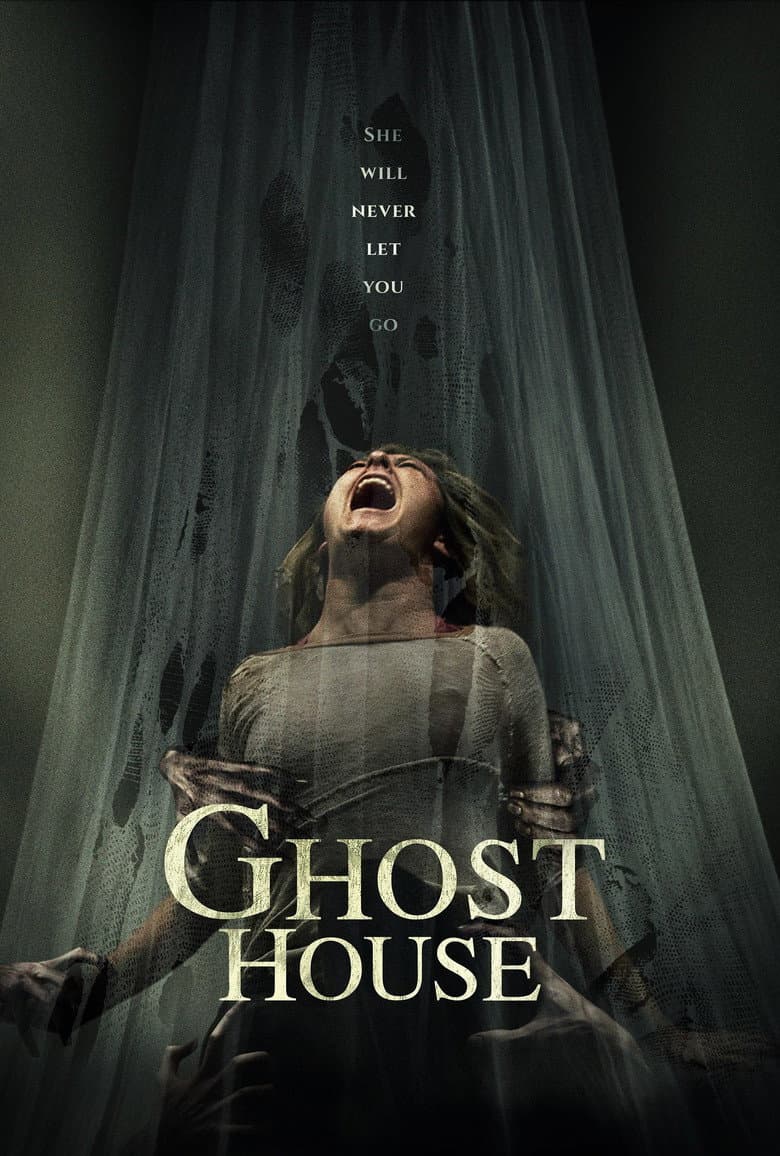
Julie travels to Thailand with her fiancé, Jim, for a romantic vacation, and Jim plans to propose. The couple follows two British tourists to a remote forest filled with small spirit houses. The tourists trick Julie into taking an object, and a burned ghost begins to haunt her. Jim turns to their driver, Gogo, a monk, and an American guide as the curse grows worse. The movie uses jump scares, dark images, strange rituals, and a tense race to save Julie.
The movie gives a mild warning about careless visitors who treat another culture like a game. Julie and Jim enter Thai spiritual spaces without enough care, and their mistake starts the danger that controls the rest of the story. Local people explain the beliefs and help the couple, while the foreign tourists who set the trap act as the main villains. The ghost’s past involves a Japanese woman betrayed by a Thai man, but the film uses that tragedy as frightening background lore. The main ideas are guilt, trust, selfish choices, love, and the price of disturbing a place that others treat as sacred.
Community feedback
Was our 1% Woke rating accurate?
Breakdown
These are the editorial factors and ratings behind our score for Ghost House.
Woke representation / casting
Not present. Julie and Jim are American tourists, while local Thai characters fill local roles and British tourists fill their own roles. The casting does not show a repeated diversity message or a mismatch with the setting.
0%
Woke political dialogue
Not present. The dialogue explains Thai ghost houses, the curse, and the need to respect local beliefs. The film does not give modern speeches or repeated lines about race, gender, DEI, or activism.
0%
Identity-driven story themes
Not present. The story warns careless tourists about a ghost house and centers on fear, guilt, love, and survival. Those ideas stay within the horror plot and do not become modern identity politics or activist themes.
0%
Western institutional / cultural critique
Not present. The film punishes a few careless tourists for disturbing a spirit house. It does not attack Western institutions, family life, religion, or traditional gender roles.
0%
Woke character or canon changes
Not relevant. The film uses original characters named Julie and Jim. It does not change a known character, source story, or real event.
0%
Anti-woke backlash and complaints
Not present. Available reviews and audience posts discuss scares, plot quality, and Thai cultural stereotypes. No reliable report shows anti-woke or DEI complaints about the film.
0%
Creator track record context
The director and writers are mainly linked to genre work and have no strong public record of activist or DEI messaging. Most producers and the casting director also have low creator-context scores. Producer Veronica Radaelli has discussed gender inequality and made a short about racism, but that work is not tied to this movie. The film’s interviews focus on horror craft, Thai beliefs, and tourist respect.
6%
Production
Movie · 2019
A rebellious teenage boy, struggling with his parents' imminent divorce, encounters a terrifying evil after his next-door neighbor becomes possessed by an ancient witch that…
Movie · 2020
A fur trapper leaves his wife and daughter behind to kill a rogue wolf in the remote wilderness, but they soon become increasingly worried when their peaceful existence is…
Movie · 2018
Following the death of the Leigh family matriarch, Annie and her children uncover disturbing secrets about their heritage.
Movie · 2019
When a 12-year-old boy goes missing at a local park, a detective investigates the case to help the boy's family find answers.
Movie · 2016
A young American woman takes a job as a nanny in a remote English village, soon discovering that the family's eight-year-old son is a life-sized doll that comes with a list of…
Movie · 2020
After a family moves into the Heelshire Mansion, their young son soon makes friends with a life-like doll called Brahms.
Movie · 2019
Six strangers find themselves in circumstances beyond their control, and must use their wits to survive.
Movie · 2021
Reeling from the unexpected death of her husband, Beth is left alone in the lakeside home he built for her. Soon she begins to uncover her recently deceased husband's disturbing…
