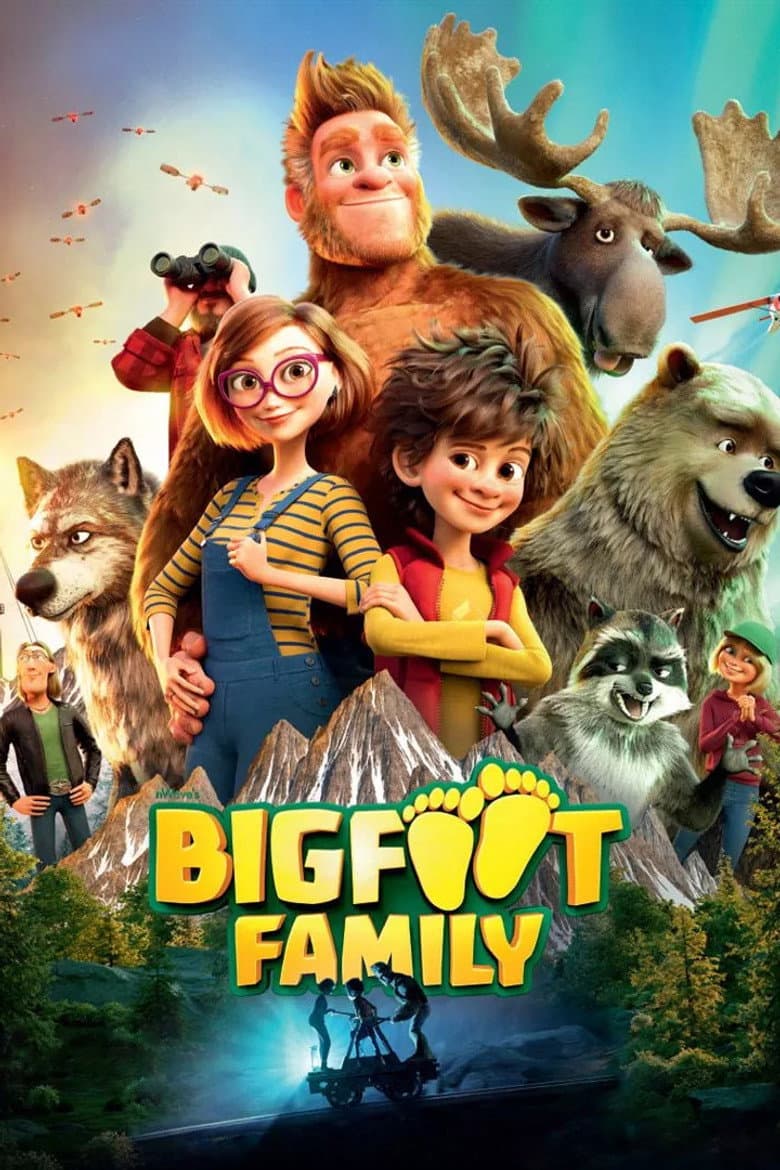
Bigfoot Family follows Adam, a shy teenage boy whose father has become a famous Bigfoot. Bigfoot travels to Alaska after environmental protesters ask him to stop an oil company from drilling in a wildlife reserve. When the company makes him disappear, Adam, his mother Shelly, and their animal friends cross the wilderness to find him and save the valley. The film mixes family feelings, jokes, chase scenes, and cartoon danger.
The movie makes environmental activism its main social message. Bigfoot uses his fame and a video online to bring protesters to the fight, while the oil company is shown as greedy, dishonest, and ready to destroy nature for money. The story supports protecting animals and wild places, and it says that one person can make a difference. The message returns across the adventure, but the film does not center its story on race, sex, gender, queer identity, or representation.
Community feedback
Was our 37% Woke rating accurate?
Breakdown
These are the editorial factors and ratings behind our score for Bigfoot Family.
Woke representation / casting
Not present. The main human roles are fictional family members, and the rest are Bigfoot or talking animals. The film does not present its voice casting as a diversity or identity statement.
0%
Woke political dialogue
The protesters openly ask Bigfoot to help stop oil drilling in Alaska. Bigfoot says his fame should serve a good cause and uses a video to bring people to the fight. The film also warns about fake news and presents the oil company’s claims as lies. The political talk is simple and tied to the main adventure rather than to race, sex, or party politics.
38%
Identity-driven story themes
Not present. The story is about a family, wildlife, and an oil company. It does not make race, sex, gender, queer identity, or group representation the subject of its character arcs.
0%
Western institutional / cultural critique
The film turns a powerful oil company into the main enemy. Its CEO values money over animals and people, and he plans to destroy a protected valley. The story gives a clear environmental criticism of profit-driven drilling. It does not attack family life, faith, men, or Western society as a whole.
32%
Woke character or canon changes
Not relevant. The film continues the fictional family from The Son of Bigfoot. It does not change a known character’s race, sex, sexuality, or historical identity for an ideological message. Bigfoot’s new environmental mission is a normal sequel adventure.
0%
Anti-woke backlash and complaints
Alberta’s Canadian Energy Centre called the film anti-oil propaganda and said it could brainwash children. The centre urged protest messages to Netflix, and news reports said more than 1,000 automated letters were sent. X posts repeated claims that the movie was liberal or woke oil propaganda. The reaction was notable but mostly a government campaign and online mockery, with no clear mass boycott or identity-politics pile-on.
40%
Creator track record context
The cached notes give the writers scores of 8/100 and the directors scores of 0/100. The creators have mainstream family-animation careers and no known identity-politics activism in the cached record. Stassen’s interview frames this title around ecology and young people’s concern about climate change. This supports a mild activist signal, not a broad woke creator persona.
8%
Production
Movie · 2023
A magical meteor crash lands in Adventure City and gives the PAW Patrol pups superpowers, transforming them into The Mighty Pups.
Movie · 2016
The quiet life of a terrier named Max is upended when his owner takes in Duke, a stray whom Max instantly dislikes.

Movie · 2018
Peter Rabbit's feud with Mr. McGregor escalates to greater heights than ever before as they rival for the affections of the warm-hearted animal lover who lives next door.
Movie · 2022
The unlikely friendship of a boy, a mole, a fox and a horse traveling together in the boy's search for home.
Movie · 2019
As Hiccup fulfills his dream of creating a peaceful dragon utopia, Toothless’ discovery of an untamed, elusive mate draws the Night Fury away.

Movie · 2024
Garfield, the world-famous, Monday-hating, lasagna-loving indoor cat, is about to have a wild outdoor adventure!
Movie · 2019
Simba idolizes his father, King Mufasa, and takes to heart his own royal destiny. But not everyone in the kingdom celebrates the new cub's arrival.
Movie · 2020
Fueled by memories of her mother, resourceful Fei Fei builds a rocket to the moon on a mission to prove the existence of a legendary moon goddess.
