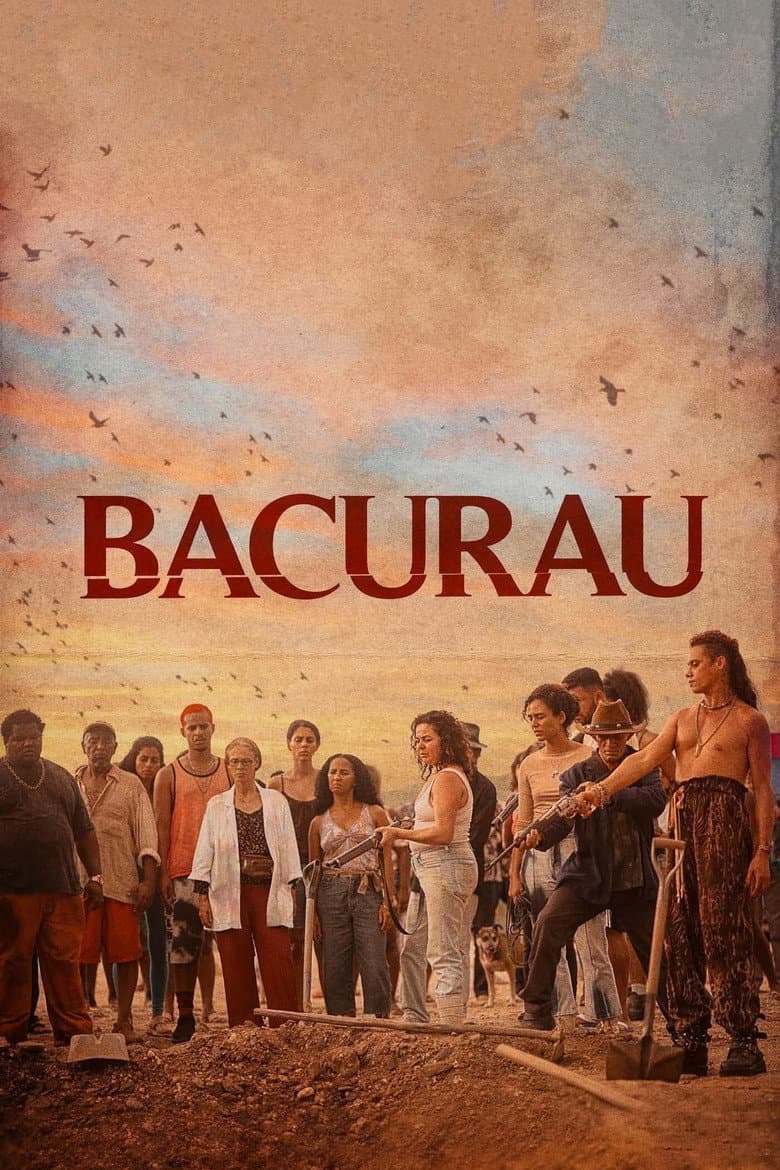
Bacurau follows Teresa, a young woman who returns to her dry home town in Brazil’s Northeast after her grandmother dies. The town is mourning when its water supply fails, its phones stop working, and its name disappears from online maps. A corrupt mayor and a group of rich foreign hunters close in on the residents, who must use the town’s museum, hidden paths, and old weapons to survive. The film shifts from a quiet mystery into a strange, bloody western with science fiction and horror touches.
The story makes a strong point about a poor community that refuses to be treated as weak, backward, or disposable. The residents include Black, Indigenous, white, gay, and trans people, and the town accepts them as part of ordinary life. Lunga, a queer bandit and local hero, becomes an important fighter beside Teresa, the doctor Domingas, and the other residents. The film also attacks foreign power, racism, gun culture, corrupt leaders, and the idea that wealthy outsiders may decide who matters.
Community feedback
Was our 80% Woke rating accurate?
Breakdown
These are the editorial factors and ratings behind our score for Bacurau.
Woke representation / casting
The film uses many local Brazilian actors for a poor town in the Northeast, so much of the casting fits its setting. The directors deliberately describe Bacurau as a mixed Black, Indigenous, white, and trans community. A queer man plays Lunga, a major hero, and women hold key roles as the doctor, the returning guide, and community leaders. The identity pattern is visible and was discussed as diversity, but it is tied to the town’s story rather than presented as a separate campaign.
48%
Woke political dialogue
The film repeats direct lines about who counts as white, who has a political voice, and who controls the water. A woman answers the mayor’s abuse by saying that sex workers vote too. Foreign hunters call the locals savages, while a television report and the mayor’s campaign make the political warning clear. The lines are clear but spread through a genre story instead of forming long speeches.
45%
Identity-driven story themes
The film makes a poor, mixed community the moral center and treats different identities as part of its strength. Lunga is a queer bandit hero who becomes a major fighter, and the town accepts him without making his identity a problem. The plot praises shared resistance by people pushed aside by wealth, race, region, and foreign power. Survival and revenge remain the main plot, so identity themes are strong but do not replace the whole story.
64%
Western institutional / cultural critique
The film shows a mayor using politics and a water shortage to control the town. It shows rich foreign white men hunting poor Brazilians for sport and speaking about them with racial contempt. The story links this violence to colonial power, American gun culture, landowner rule, and Brazil’s far-right politics. The town’s armed resistance is presented as a justified answer, so this critique drives the central conflict.
70%
Woke character or canon changes
Not relevant. Bacurau is an original story with fictional characters. It refers to Brazilian history and real people, but it does not rewrite them.
0%
Anti-woke backlash and complaints
A major Brazilian newspaper column called the film a sign of the death of intelligent life on the Brazilian left and attacked it as political propaganda. Another article answered that charge, and other Brazilian commentary debated whether the film celebrates violent resistance. Small X accounts repeated claims that it is leftist or a woke culture play, often pointing to Lunga and a race-related scene. No broad boycott, review-bombing campaign, or major English-language pile-on was found, while some right-leaning users praised the film as based or not woke.
30%
Creator track record context
The two main writer-directors have repeated work about class power, authoritarian rule, and resistance. Juliano has the stronger public activist record, while Kleber is openly left and partisan but less focused on identity-first work. Casting director Marcelo Caetano has a clear queer and representation-focused record, and producer Dora Amorim often supports stories about sexuality and marginal groups. Other producers and production staff have mixed or limited public evidence, so the wider team does not show one single activist pattern.
61%
Production
Movie · 2021
A psychiatrist, whose client commits suicide, finds his family life disrupted after introducing her surviving brother to his wife and daughter.
Movie · 2019
Three lighthouse keepers on an uninhabited island off the coast of Scotland discover something that isn't theirs to keep.
Movie · 2022
Stranded at a rest stop in the mountains during a blizzard, a recovering addict discovers a kidnapped child hidden in a car belonging to one of the people inside the building…
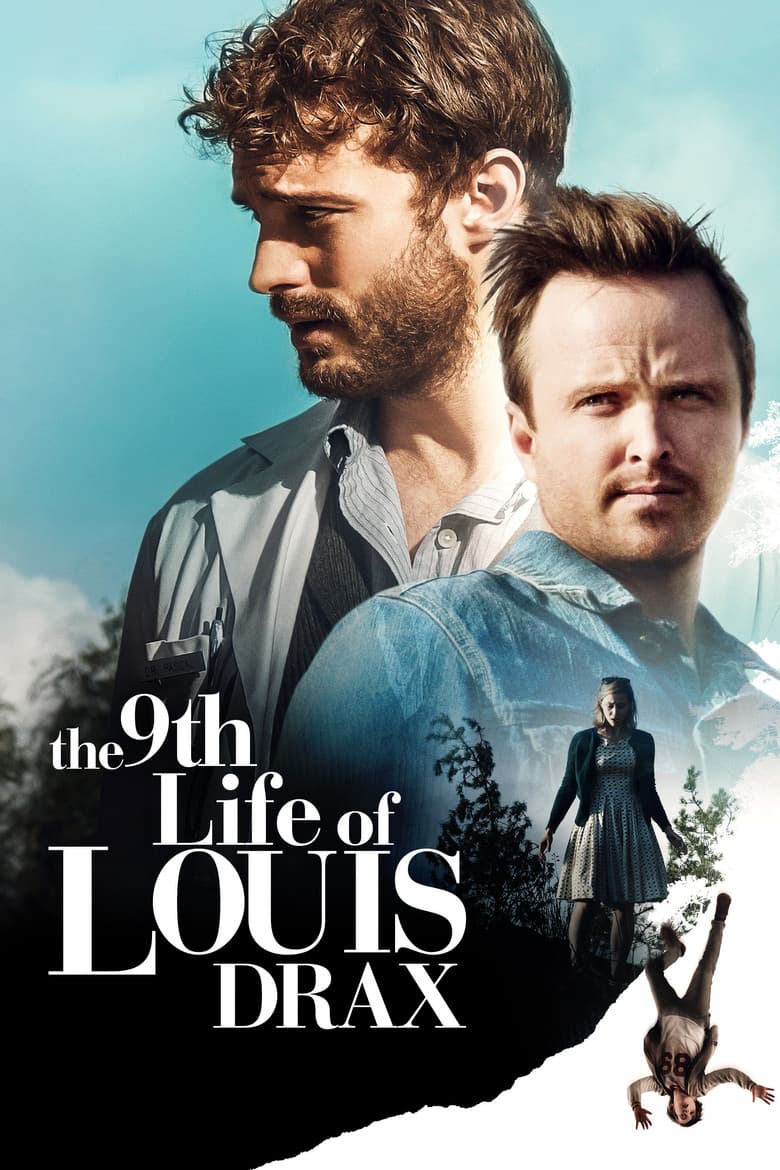
Movie · 2016
A psychologist who begins working with a young boy who has suffered a near-fatal fall finds himself drawn into a mystery that tests the boundaries of fantasy and reality.

Movie · 2019
A lone fisherman on his daily run finds himself lost in a thick fog which proves impossible to navigate. The worst is yet to come when his encounter with a seemingly abandoned…

Movie · 2017
Dr. Steven Murphy is a renowned cardiovascular surgeon who presides over a spotless household with his wife and two children.

Movie · 2018
Looking to investigate recruitment techniques of ISIS to lure women into Syria, a journalist creates a Facebook profile of a Muslim convert.

Movie · 2025
Two parents enter a race against time when they receive a distressing late-night phone call from their daughter after she caused a tragic car accident.
