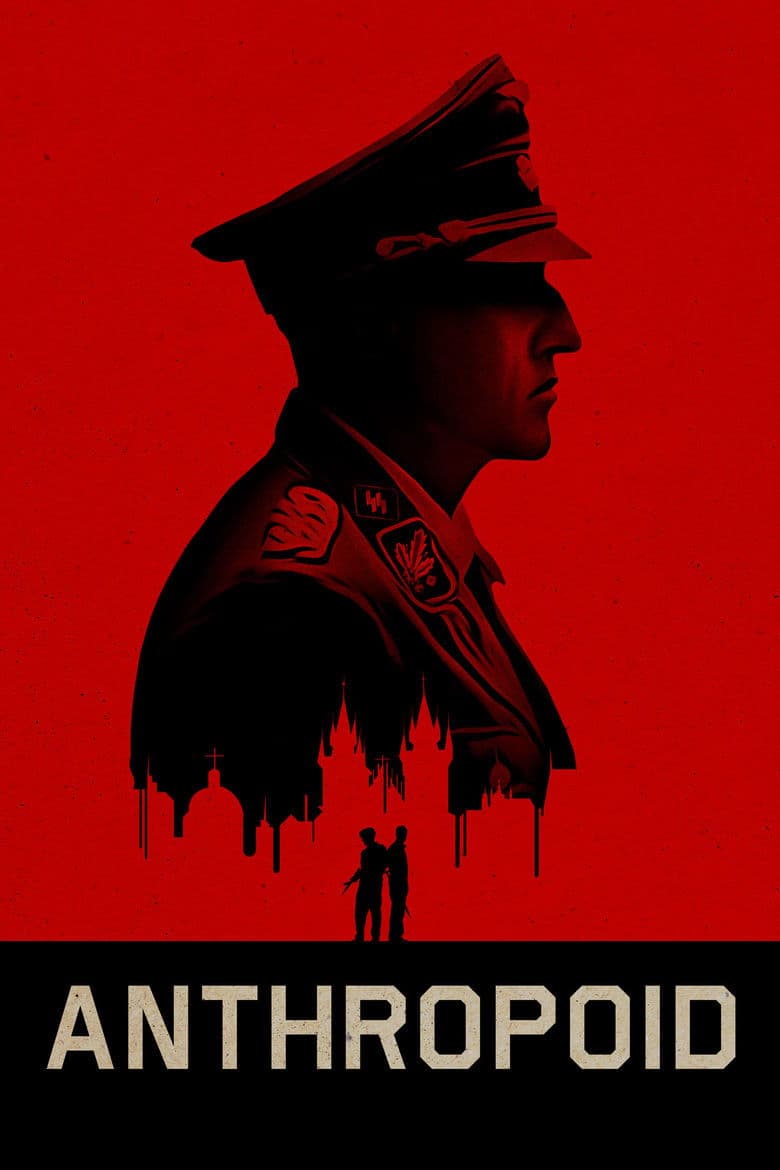
Anthropoid is a tense historical war thriller about Operation Anthropoid. In late 1941, Czech and Slovak soldiers Jozef Gabčík and Jan Kubiš parachute into Nazi-occupied Bohemia and Moravia to kill Reinhard Heydrich. He was the Reichsprotektor and a chief architect of the Final Solution. The film follows the mission planning with local resistance, the attack, brutal German reprisals including Lidice, betrayal, and the final siege at Saints Cyril and Methodius Cathedral. Its main themes are sacrifice, patriotism, fear, and the human cost of resistance.
The story is about national resistance against Nazi tyranny, not modern identity politics. Dialogue stays on mission logistics, occupation terror, loyalty, and fear of reprisals. Women appear as historically grounded resistance aides and romantic partners who support that plot. Casting fits a 1941 Prague resistance story, with European leads as Czech and Slovak soldiers and local helpers. The film is a conventional wartime thriller with period-fitting roles and almost no modern identity agenda in the story itself.
Community feedback
Was our 1% Woke rating accurate?
Breakdown
These are the editorial factors and ratings behind our score for Anthropoid.
Woke representation / casting
Not present. Cast and roles match a 1941 Prague and Czech resistance story with European leads as Czech and Slovak soldiers and local helpers, and women as historically grounded resistance aides and romantic partners rather than quota-style leaders or anachronistic diversity casting.
0%
Woke political dialogue
Not present. Dialogue centers on mission logistics, occupation terror, loyalty, fear of reprisals, and the assassination, with no modern activist talk about race, gender systems, DEI, or identity politics.
0%
Identity-driven story themes
Not present. The core arc is national resistance and sacrifice against Nazi tyranny, and wartime romances and women’s helper roles support that plot without contemporary gender or race identity messaging.
0%
Western institutional / cultural critique
Not present. The conflict is with Nazi occupation and Gestapo terror as historical anti-tyranny storytelling, not a present-day attack on Western institutions, Christianity, traditional family norms, or toxic masculinity as ideology.
0%
Woke character or canon changes
Not relevant. Real figures are dramatized in ordinary adaptation ways such as nerves and romance, with no identity or DEI-driven swaps or rewriting of historical people for modern representation.
0%
Anti-woke backlash and complaints
Not present. No notable right-leaning or anti-woke campaign treated the film as woke, DEI, or identity propaganda, and coverage focused on history, thrills, and accuracy.
0%
Creator track record context
Available profiles for Ellis, Frewin, Hanák, and the producer and editor group score low. Their work focuses on craft and commercial history. There is no clear pattern of activist or identity-driven projects tied to this film.
5%
Production
Movie · 2016
Irish Commandant Pat Quinlan leads a stand off with troops against French and Belgian Mercenaries in the Congo during the early 1960s.
Movie · 2023
During the war in Afghanistan, a local interpreter risks his own life to carry an injured sergeant across miles of grueling terrain.

Movie · 2022
For best friends Becky and Hunter, life is all about conquering fears and pushing limits. But after they climb 2,000 feet to the top of a remote, abandoned radio tower, they find…

Movie · 2024
Nothing is what it seems when a twisted one-night stand spirals into a serial killer’s vicious murder spree.

Movie · 2025
Marty Mauser, a young man with a dream no one respects, goes to hell and back in pursuit of greatness.
Movie · 2021
Ten years after he was last seen, a vicious mob enforcer returns home to find his son and methodically track down the gang that double-crossed him.
Movie · 2026
A man takes justice into his own hands, hunting down criminals. His vigilante crusade makes him a social media star but puts him at odds with the local police chief.
Movie · 2017
A former rodeo star, now a motel manager, meets a young man who is responsible for the violence that suddenly has seized his small town.
