Movie review
September 19, 2019 · 97 min · PG · Kids · Fantasy · Animation · Comedy · Adventure · Family
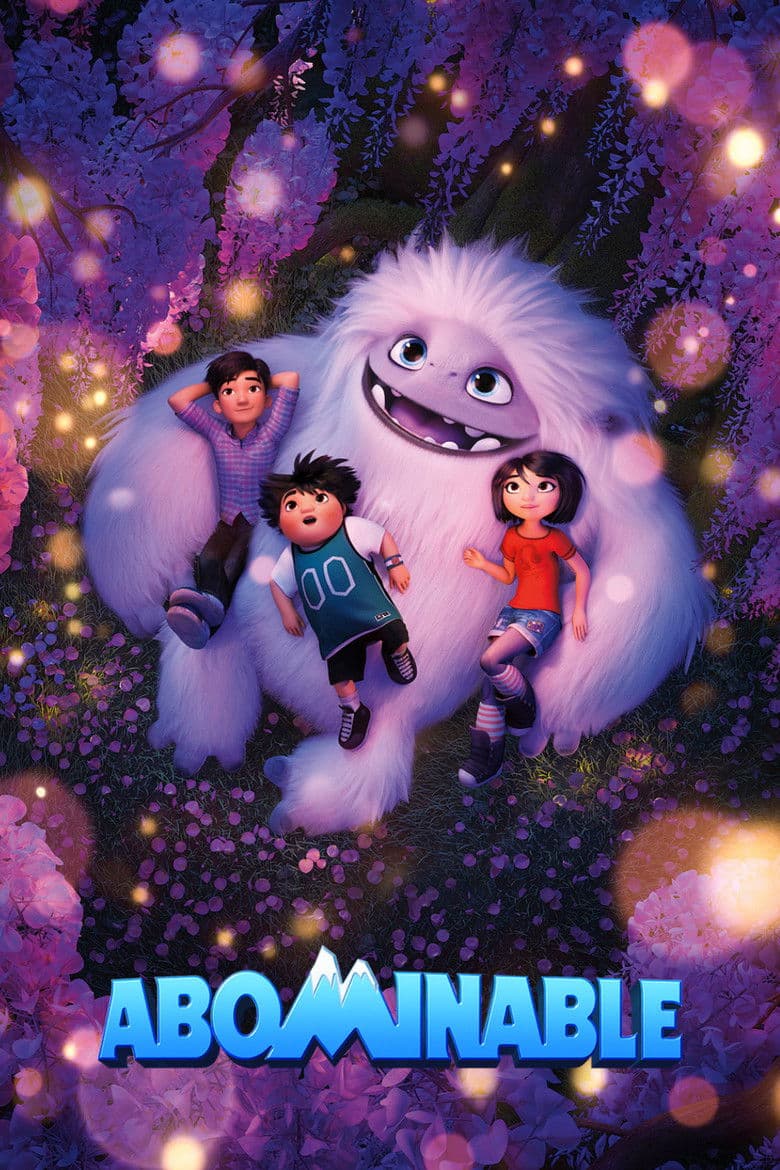
Yi is a Chinese teenager living in a crowded apartment building in Shanghai. She feels cut off from her mother, grandmother, and friends after her father dies, so she works odd jobs and plans to follow a travel dream they shared. One night, she finds a young Yeti hiding on the roof and names him Everest. Yi, Jin, and Peng cross China while a wealthy collector and his scientist try to capture the creature. The film has a bright, gentle adventure tone, with jokes, danger, music, and a sad story about loss.
The film puts a Chinese girl at the center and gives her two Asian friends and a Chinese family. Yi leads the journey, plays the violin, and chooses to protect Everest, while the boys bring different strengths and learn from their mistakes. The setting, food, landmarks, and family life make the Asian casting fit the world of the film. The main messages are about family, friendship, courage, nature, and learning to grieve, while the villains represent greed and the capture of wild animals. These elements give the film a mild representation signal, but its heart stays with a personal family adventure.
Community feedback
Was our 19% Woke rating accurate?
Breakdown
These are the editorial factors and ratings behind our score for Abominable.
Woke representation / casting
The movie gives its Chinese teen hero two Asian friends and a Chinese family, with Asian actors voicing the central children. The Shanghai setting and the journey across China make these character choices fit the story world. Chloe Bennet and Jill Culton also described the film as a major Asian and female-lead milestone in interviews. That public framing adds a mild representation signal, but the movie does not turn the casting into political dialogue.
26%
Woke political dialogue
Not present. The characters talk about grief, family, friendship, and protecting a wild creature. They do not give activist or identity-politics speeches.
0%
Identity-driven story themes
Not present. Yi’s journey is about grief, friendship, family, and helping Everest reach his home. Race, gender, and sexuality do not create the main problem or lesson.
0%
Western institutional / cultural critique
Not present. Burnish and Zara are greedy animal hunters, but the movie treats them as individual villains. It does not make a modern activist attack on family, men, religion, or Western institutions.
0%
Woke character or canon changes
Not relevant. The movie is an original Yeti adventure. It does not change an established character, canon, or historical figure to add identity messaging.
0%
Anti-woke backlash and complaints
Not present. The reported debate centered on a disputed South China Sea map and the film’s China connection. That was geopolitical criticism, not a complaint about woke, DEI, or identity-politics content.
0%
Creator track record context
Peilin Chou has promoted diverse storytelling and Asian representation in her work. Jill Culton has spoken about gender imbalance in animation and strong female characters. Tim Johnson has described Home as an immigrant story and discussed anti-colonial ideas around it. Other listed creators have little or no public record of activist or identity-driven work, so the overall context is mixed and only mildly supports a woke reading of this movie.
28%
Production
Movie · 2016
When a radio falls from the sky into the hands of a wide-eyed Tibetan Mastiff, he leaves home to fulfill his dream of becoming a musician, setting into motion a series of…
Movie · 2023
After a migrating duck family alights on their pond with thrilling tales of far-flung places, the Mallard family embarks on a family road trip, from New England, to New York City…
Movie · 2019
It's been ten years since the dragons moved to the Hidden World, and even though Toothless doesn't live in New Berk anymore, Hiccup continues the holiday traditions he once shared…
Movie · 2020
When his best friend Gary is suddenly snatched away, SpongeBob takes Patrick on a madcap mission far beyond Bikini Bottom to save their pink-shelled pal.
Movie · 2024
Teenager Riley's mind headquarters is undergoing a sudden demolition to make room for something entirely unexpected: new Emotions!

Movie · 2024
Garfield, the world-famous, Monday-hating, lasagna-loving indoor cat, is about to have a wild outdoor adventure!

Movie · 2019
Max the terrier must cope with some major life changes when his owner gets married and has a baby. When the family takes a trip to the countryside, nervous Max has numerous…
Movie · 2024
Inside of his book, adventurous Harold can make anything come to life simply by drawing it. After he grows up and draws himself off the book's pages and into the physical world…
