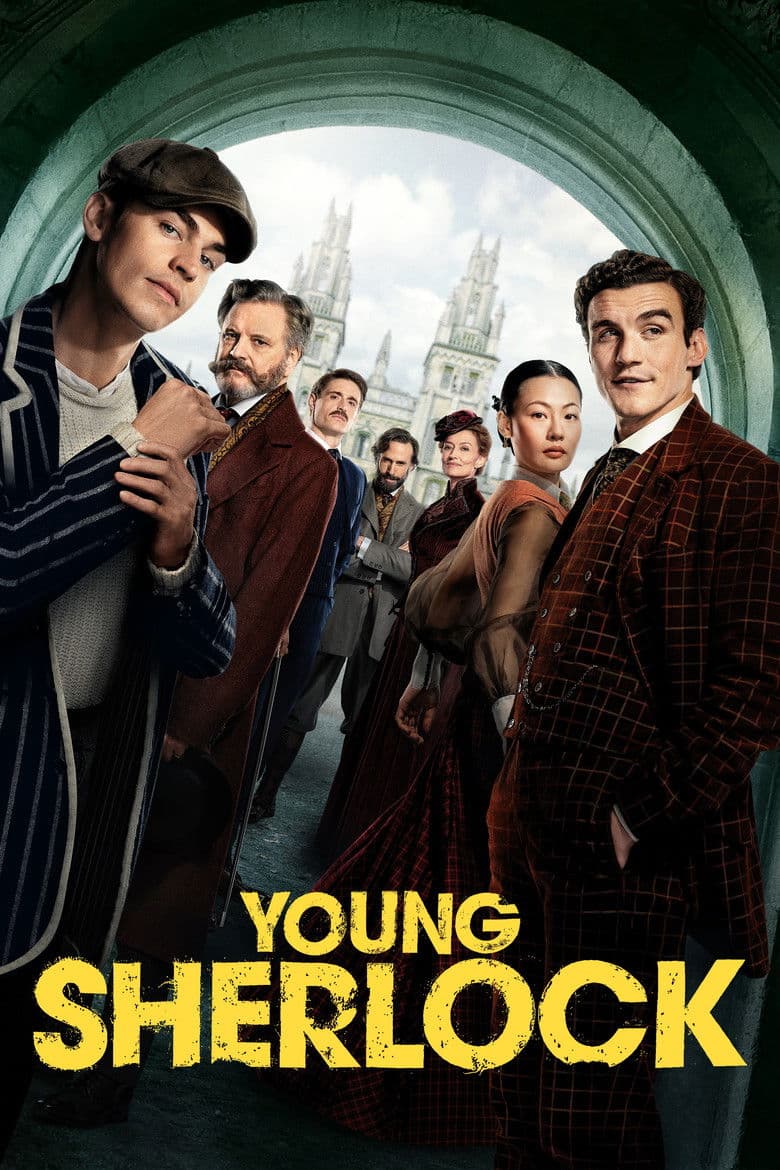
Started March 4, 2026 · Based on 1 season, 8 episodes · TV-14
Young Sherlock follows nineteen-year-old Sherlock Holmes in 1871, when he is a reckless Oxford servant who has not yet become a great detective. After a professor is murdered and ancient scrolls vanish, Sherlock joins his future enemy James Moriarty to clear his name. Their search moves from Oxford to the Holmes family home, Paris, and Constantinople. The season mixes murder, secret weapons, family lies, fistfights, and fast jokes in a loud Guy Ritchie-style adventure.
The clearest woke elements are the leading role of Xiao Wei, a Chinese village survivor who pretends to be Princess Shou’an and is both a scholar and a skilled fighter. She often matches or beats male characters, and the real princess is also shown as a strong martial artist. The season says British officials and Oxford scientists tested a deadly weapon on a Chinese village, making anger at empire part of the main mystery. These ideas grow stronger in the final episodes, but the show uses period adventure language instead of modern activist speeches.
Community feedback
Was our 46% Woke rating accurate?
Breakdown
These are the editorial factors and ratings behind our score for Young Sherlock.
Woke representation / casting
Zine Tseng plays the major non-British female role as a Qing princess and scholar who is also a skilled fighter and assassin. Xiao Wei repeatedly beats male guards and kills professors, while the real princess is also described as a martial artist. The story gives these roles a leading place beside Sherlock and Moriarty, and interviews stress that both women were made strong. The Chinese identity fits the character’s backstory, so this is a clear but limited representation pattern.
38%
Woke political dialogue
The show includes mild political talk about British officials funding a nerve agent project. Xiao Wei says the weapon was tested on her Chinese village, which the story presents as a crime by British power. Characters discuss government secrecy, colonial abuse, and selling weapons. The dialogue stays in the period world and does not use modern activist language.
18%
Identity-driven story themes
Xiao Wei’s revenge story runs from the early murders to the finale. The show reveals that British-backed scientists destroyed her village and killed her family while testing a chemical weapon. Xiao Wei chooses her own justice and kills Malik, while Sherlock learns to respect her cause. This makes anti-colonial identity conflict a major late-season thread, but it is framed as a period adventure instead of a direct current-politics lesson.
40%
Western institutional / cultural critique
The season treats Oxford and the British government as part of the weapon plot. Sir Hodge and Oxford professors help fund or hide a nerve agent that is tested on a Chinese village. The story also shows Silas using an asylum to control Cordelia and seize her money. These are pointed attacks on corrupt power, but they stay inside a Victorian conspiracy rather than becoming a broad modern attack on Western society.
32%
Woke character or canon changes
The show uses the real Qing title Princess Gulun Shou’an in a story set after the historical princess’s death. The main killer, Xiao Wei, is a fictional villager who impersonates the princess, so the show does not simply turn the historical woman into an assassin. It still gives both princess roles strong martial-arts skills, an identity-based change that was discussed in interviews. It also makes Moriarty Sherlock’s friend, but that is a normal plot change without a DEI message.
26%
Anti-woke backlash and complaints
A few small X accounts called the show woke or DEI. Complaints focused on Xiao Wei as a girlboss who outshines men, the Asian female Moriarty figure, and the anti-colonial British villains. One account also called Holmes gay, but the season shows no confirmed gay identity or same-sex romance for him. One larger post had about 1,000 likes and 62,000 views, while the other posts had little reach. No boycott, review-bomb, or organized anti-woke campaign appeared.
12%
Creator track record context
The director profiles place the listed directors in a low range and note little or no activist work. Guy Ritchie is described as uninterested in politics, while the other profiles are mainly craft-focused. Matthew Parkhill’s title interview centers on reimagining Sherlock and giving Victorian England a contemporary energy. Zine Tseng’s interviews use empowerment and Asian representation language, but no clear activist mission for the series appears.
13%
Production
