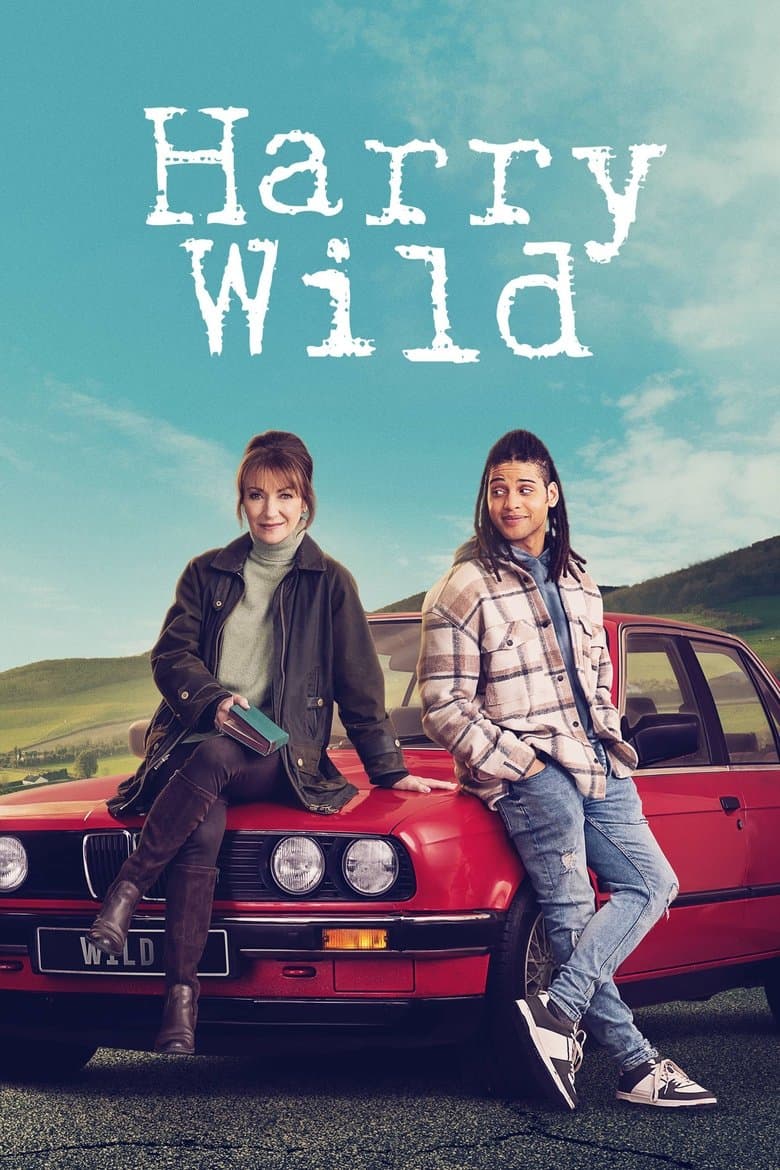
Started April 4, 2022 · Returning Series · Based on 5 seasons, 32 episodes through July 27, 2026 · TV-PG
Harry Wild follows Harriet “Harry” Wild, a retired English professor in Dublin who is bored with quiet life. After a mugging, she spots a link between a murder and an old play, but her police detective son Charlie will not listen. Harry then joins Fergus, the troubled teenager who mugged her, and they open a private detective agency. The show mixes murder cases, literary clues, family arguments, romance, and rude jokes in a light crime-comedy tone. The clearest woke element is Harry’s repeated role as an older woman who refuses to slow down, depends on no man, and solves cases that often defeat the police. The show also presents Harry and Fergus as an interracial and intergenerational team, with their friendship treated as special and unusual. One early case centers on women accusing a male professor of sexual assault and saying powerful men are protected, while a later episode uses a direct line about equality between a strong woman and a man. These ideas matter to the character work, but most episodes still focus on ordinary murders, family problems, literature, and comic detective work.
Community feedback
Was our 57% Woke rating accurate?
Breakdown
These are the editorial factors and ratings behind our score for Harry Wild.
Woke representation / casting
Harry is an older English woman in modern Dublin, and the main Irish family fits the setting. Fergus is her prominent young partner, and Jane Seymour calls their bond interracial, intercultural, and intergenerational. The official marketing also calls Dublin diverse and presents Harry as a strong female lead. The choices are not a clear setting mismatch, but the identity framing is noticeable.
39%
Woke political dialogue
Season 1, Episode 5 has Harry say that men still get away with sexual harassment and that people like the professor are protected. Women at the college form a support group and talk about predators, shame, and the old guard. Season 5 adds a direct conversation about loving a strong woman while believing in equality. These lines are forceful, but they are concentrated in one early case and one later scene.
46%
Identity-driven story themes
Harry’s late-life independence is a central part of the show. She repeatedly solves cases that Charlie and other police officers miss, while men often become helpers, comic targets, or romantic partners. The story treats her age, sexual freedom, and refusal to depend on a man as positive traits. The Harry and Fergus partnership also makes the woman the guide and the younger man the learner across all five seasons.
58%
Western institutional / cultural critique
Harry’s old college is shown protecting a male professor accused of sexual assault, and the women say its old guard is no better. One episode uses a women’s support group and says shame helps predators stay safe. The show also exposes political and school corruption, but those plots are mostly ordinary crime stories. The modern gender critique is strong in one case and does not shape every episode.
43%
Woke character or canon changes
Not relevant. Harry Wild is an original series. Its literary clues use existing works but do not change their characters or history.
0%
Anti-woke backlash and complaints
Not present. No sustained anti-woke backlash is documented. One small X account made an isolated “too woke” complaint, but it had no public pickup. Another small viewer praised the show as having very little woke content.
0%
Creator track record context
David Logan and the Burke directors have mainly professional crime and drama careers without a clear activist pattern. Jo Spain has a political past and often writes about class and social problems. Jane Seymour publicly presents Harry as a strong woman whose age should not limit work or romance. The other producers have mostly commercial or industry-focused records, so the overall creator context is mild to moderate rather than activist.
28%
Production
