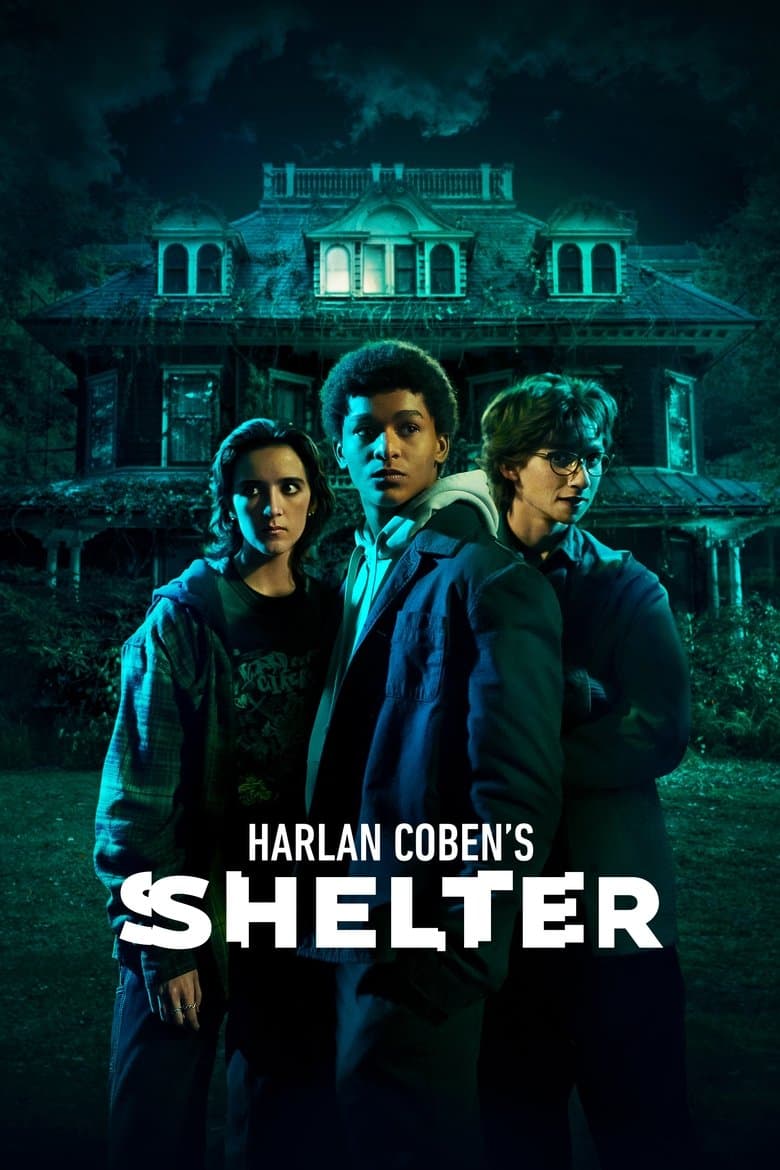
Started August 17, 2023 · Canceled · Based on 1 season, 8 episodes through September 21, 2023 · TV-14
Mickey Bolitar moves to Kasselton, New Jersey, after a car crash kills his father and leaves his mother in rehab. He lives with his aunt Shira and starts at a new high school while he grieves and tries to play basketball again. When Ashley Kent disappears, Mickey joins with the odd but loyal Spoon and Ema to search for her. Their clues lead to the Bat Lady, old child disappearances, a trafficking ring, and a secret rescue group called Abeona. The show mixes suspense, teen jokes, family pain, and a dark story about abused children.
The show gives Ema a clear queer identity and a romance with Whitney, and Ema's feelings appear in several episodes. Shira also has a hidden romantic past with Hannah, a married woman, which adds another same-sex relationship among the adults. Mickey is a black teen, and one early police scene treats him unfairly because of his race. These identity elements are visible and sometimes important, but the season still centers on mystery, grief, friendship, and rescuing children rather than current politics.
Community feedback
Was our 50% Woke rating accurate?
Breakdown
These are the editorial factors and ratings behind our score for Harlan Coben's Shelter.
Woke representation / casting
The show places black teen Mickey at the center of a mostly white suburban school cast. The pilot also makes race part of his treatment by police. Ema is a clearly queer member of the main friend group, and Shira is a prominent female prosecutor and guardian.
31%
Woke political dialogue
Not present. The show has no direct or recurring political speeches about current race, gender, sexuality, DEI, or activist causes. The racial police moment is shown through the plot, not a sustained political debate.
0%
Identity-driven story themes
Ema is queer in the TV version and kisses Whitney during the school musical subplot. Their relationship returns in later episodes after Whitney betrays Ema and later apologizes. Shira carries a separate same-sex romantic subplot with Hannah. The show also uses Mickey's race in a police-discrimination scene, but mystery and child rescue remain the main story.
45%
Western institutional / cultural critique
The pilot shows a police officer treating Mickey unfairly because he is a person of color. The scene gives the season one clear modern institutional critique. Later episodes focus on crime, family pain, and child abuse rather than a broad attack on police, schools, or Western culture.
18%
Woke character or canon changes
The book version presents Ema as a straight, overweight goth girl. The TV version changes her into a queer teen who kisses Whitney. That identity change creates a continuing romance plot across several episodes. The change from Uncle Myron to Aunt Shira looks like a normal story change and is not counted here.
42%
Anti-woke backlash and complaints
No large boycott, review-bombing campaign, or major right-leaning news push was found.
5%
Creator track record context
Harlan Coben and Charlotte Coben have little known activist history. Alfredo Barrios Jr. has backed diversity reform, while Patricia Cardoso, Deborah Kampmeier, and Christina Choe have public records tied to representation or women's issues. Producers Rola Bauer and Erik Barmack also have inclusion-focused public work. This context supports a moderate score, but it is background rather than the show's main message.
36%
Production
TV Show · 2018
After his daughter goes missing, a widower begins uncovering the dark secrets of the people closest to him.
TV Show · 2021
Facing an existential threat that could bring down the Crime Lab, a brilliant team of forensic investigators must welcome back old friends and deploy new techniques to preserve…
TV Show · 2021
A detective in a small Pennsylvania town investigates a local murder while trying to keep her life from falling apart.
TV Show · 2018
A troubled war veteran is assigned to protect a controversial politician who may be the target of a terror plot.
TV Show · 2026
Ben Reilly, an aging and down on his luck private investigator in 1930s New York, is forced to grapple with his past life as the city's one and only superhero.
TV Show · 2020
When an insidious supernatural force edges its way into a seemingly straightforward investigation into the gruesome murder of a young boy, it leads a seasoned cop and an…
TV Show · 2022
Lucy wakes every night at exactly 3:33am. Nothing in her life has made sense for a long time. But the answers are out there, somewhere, at the end of a trail of brutal murders.
TV Show · 2023
A mysterious woman's escape from her harrowing captivity points investigators toward the dark truth behind an unsolved disappearance 13 years earlier.
