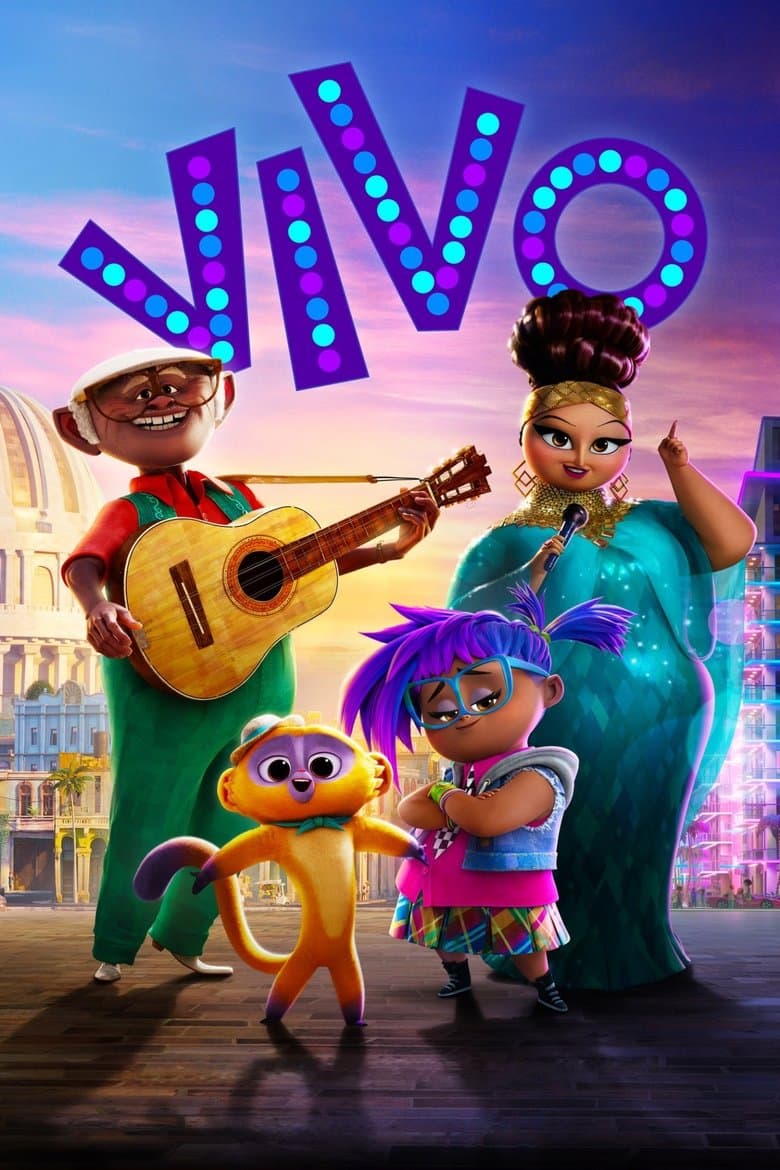
Vivo is a small kinkajou who lives with the Cuban musician Andrés in a busy Havana square. They play music together every day, but Andrés dies soon after an old partner, singer Marta, invites him to her farewell show in Miami. Vivo carries Andrés’s unsent love song and travels to Florida with Andrés’s lively grandniece, Gabi. The trip crosses beaches, the Everglades, and Miami, and the film mixes bright songs with grief, danger, jokes, and a warm family mood.
Vivo gives its clearest identity message to Gabi, a purple-haired girl who refuses to act like the quiet, obedient girls around her. Her song “My Own Drum” says that she should celebrate her own style, and the story rewards her boldness and quick thinking. The film also places Cuban and Cuban-American characters at the center and treats their music, family ties, and movement between Havana and Miami with pride. These ideas are visible, but the main story remains a love song, a friendship, and learning to live with loss rather than a political lesson.
Community feedback
Was our 26% Woke rating accurate?
Breakdown
These are the editorial factors and ratings behind our score for Vivo.
Woke representation / casting
Not present. The central human roles are Cuban or Cuban-linked because the story takes place in Havana and Miami. The film does not use an identity swap or make casting itself a message.
0%
Woke political dialogue
Not present. The characters talk about music, grief, family, love, and friendship. No character gives a sustained political or activist speech.
0%
Identity-driven story themes
The film frames Gabi as a girl who rejects the quiet role expected by other girls. Her song “My Own Drum” celebrates being different and staying true to her style. Her boldness and quick thinking drive much of the journey. The message is clear in her subplot, but the larger story is still about grief, music, and love.
30%
Western institutional / cultural critique
Not present. Gabi argues with her mother and clashes with other girls, but the film does not attack family life, tradition, religion, or a Western institution.
0%
Woke character or canon changes
Not relevant. The film is an original story with original characters. It does not change an established character, canon, or historical figure.
0%
Anti-woke backlash and complaints
Not present. No major anti-woke complaints were found. Public discussion focused on the songs, grief, Cuban setting, and Gabi.
0%
Creator track record context
Quiara Alegría Hudes has a strong history of identity and immigration stories. Lin-Manuel Miranda has supported diverse casting and Puerto Rican and immigrant stories. Michelle L.M. Wong supports cultural mentoring, and Laurence Mark has backed LGBTQ history projects. These records add context, but the movie itself is mainly a family musical.
54%
Production
Movie · 2023
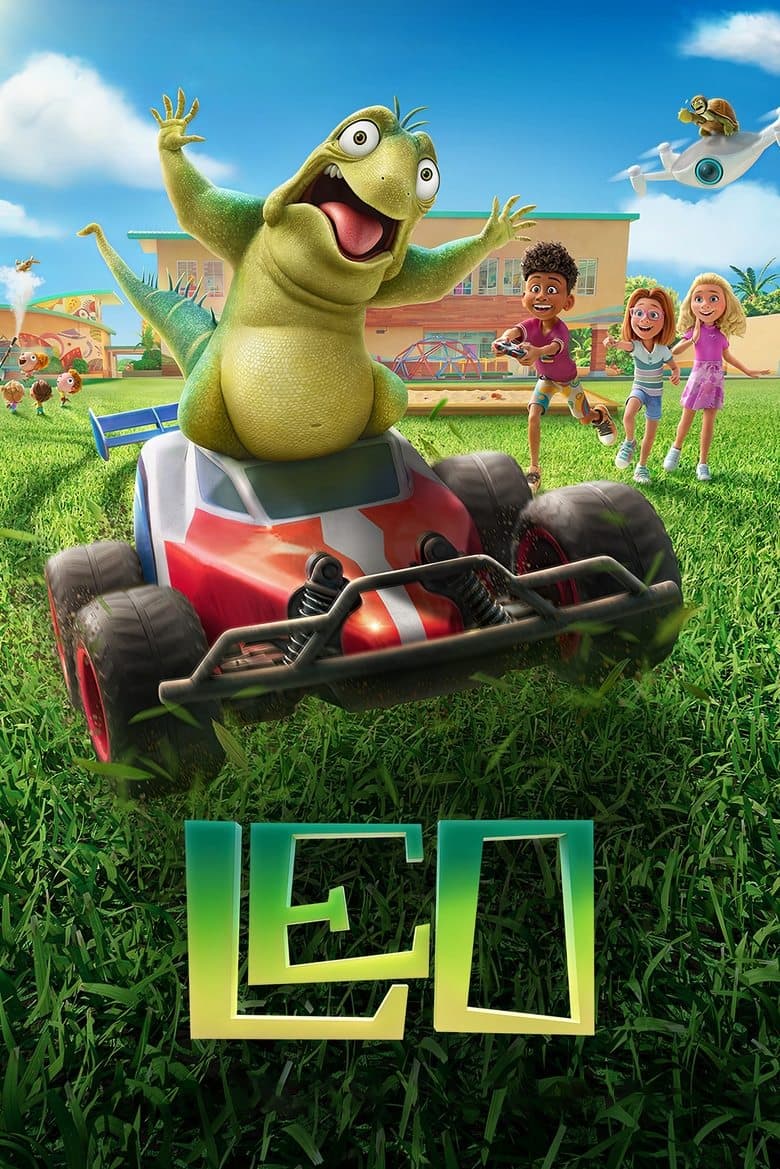
Jaded 74-year-old lizard Leo has been stuck in the same Florida classroom for decades with his terrarium-mate turtle.
Movie · 2016
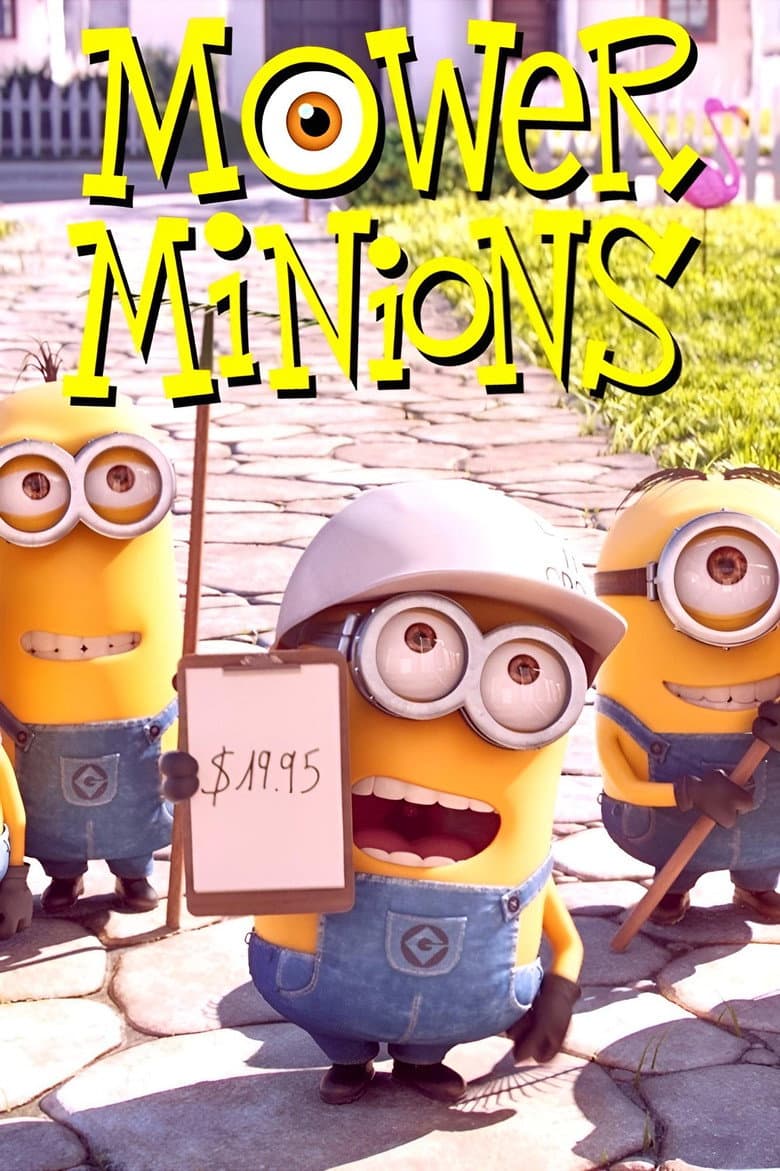
The Minions need to raise $20 to purchase an as seen on TV banana blender. So they take up lawn mowing at an old folks home, with hilarious antics!
Movie · 2021
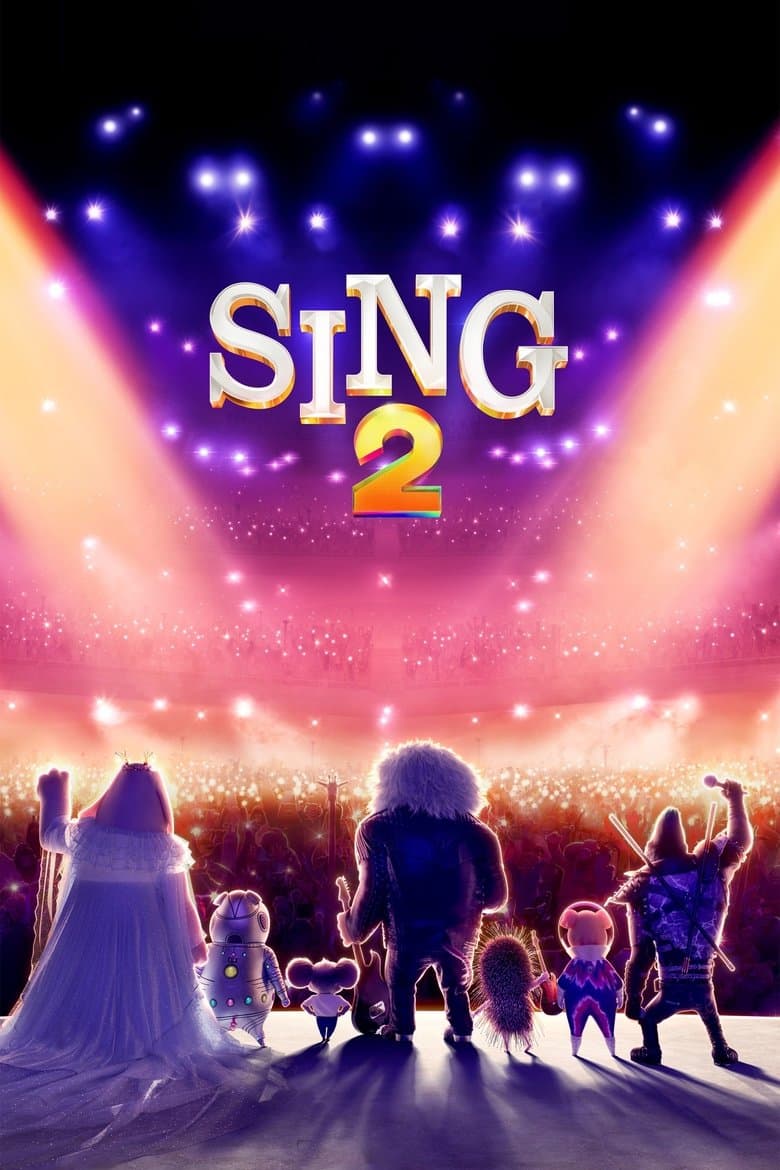
Buster and his new cast now have their sights set on debuting a new show at the Crystal Tower Theater in glamorous Redshore City.
Movie · 2024
Teenager Riley's mind headquarters is undergoing a sudden demolition to make room for something entirely unexpected: new Emotions!
Movie · 2017
Teenage outsider Adam sets out on an epic and daring quest to uncover the mystery behind his long-lost dad, only to find out that he is none other than the legendary Bigfoot!
Movie · 2016
The quiet life of a terrier named Max is upended when his owner takes in Duke, a stray whom Max instantly dislikes.
Movie · 2018
Taking place during the events of Incredibles 2, Edna Mode babysits Jack-Jack.

Movie · 2024
Garfield, the world-famous, Monday-hating, lasagna-loving indoor cat, is about to have a wild outdoor adventure!
