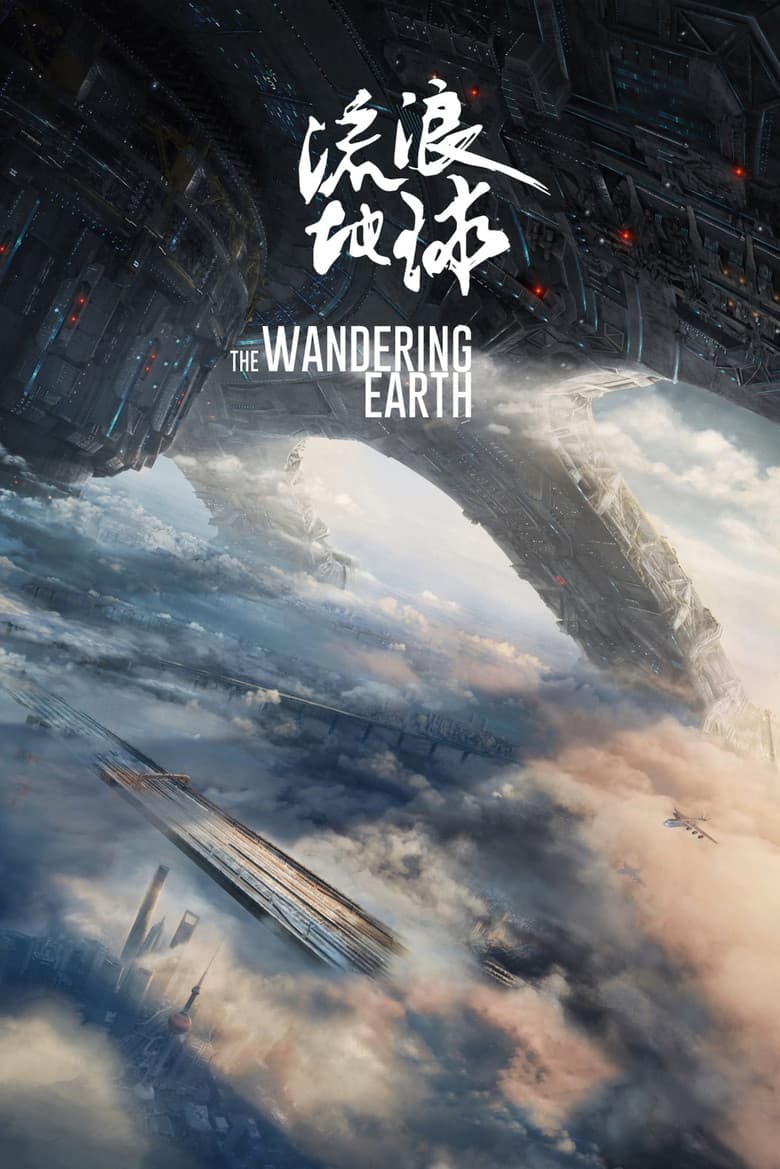
Movie review
February 5, 2019 · 126 min · PG-13 · Chinese · Sci-Fi · Action · Drama
Teenager Liu Qi lives in an underground city beneath a frozen Beijing. He resents his astronaut father, Liu Peiqiang, who left him with his grandfather when Earth began its long journey through space. When Jupiter pulls the planet off course, Liu Qi, his adopted sister Han Duoduo, and a rescue crew must restart a giant engine. The film mixes disaster scenes with family drama, jokes, fear, and sacrifice.
The story puts family duty, home, science, and teamwork at its center. Chinese workers and soldiers lead the main rescue while crews from other countries help save Earth. Han Duoduo gives a short speech about hope that brings rescue teams back into action, but she is not part of a gender or identity campaign. Men remain the main leaders and heroes, while women have smaller roles. The strongest message is that people survive by protecting home and working together.
Community feedback
Was our 5% Woke rating accurate?
Breakdown
These are the editorial factors and ratings behind our score for The Wandering Earth.
Woke representation / casting
Not present. The main cast is mostly Chinese because the story follows Chinese families and rescue workers. The film also shows Russian, French, Indian, and Indonesian teams in a shared world. It does not present race, gender, or identity as a special casting message.
0%
Woke political dialogue
Not present. The film has speeches about hope, duty, home, and saving everyone. None of these speeches argues for modern identity politics, DEI, or activist causes.
0%
Identity-driven story themes
Not present. The story centers on family duty, survival, science, sacrifice, and cooperation between nations. Han Duoduo has an important emotional moment, but gender, race, sexuality, and representation are not the story’s focus.
0%
Western institutional / cultural critique
Not present. The United Earth Government rejects a rescue request because its computer gives the plan no chance of success. That conflict is a fictional emergency choice, not a modern attack on Western culture, capitalism, Christianity, patriarchy, or family life.
0%
Woke character or canon changes
Not relevant. The film expands Liu Cixin’s short story into a family and rescue adventure. It does not make a race, gender, sexuality, or hero-role change to an established character for identity messaging.
0%
Anti-woke backlash and complaints
A few reports and reviews called the film Chinese state propaganda or a “sci-fi Wolf Warrior.” Some audience posts treated its group-first message as a contrast to Western individualism or said it showed what communism could achieve. Those complaints target nationalism, communism, or propaganda, not DEI, race, gender, or LGBT themes. The separate X pass found no serious anti-woke campaign, so the backlash remains small.
16%
Creator track record context
The director and writers are mainly known for commercial Chinese science fiction. Their public framing stresses family, home, science, teamwork, and the growth of China’s film industry. Available creator coverage shows no clear DEI campaign, identity-first agenda, or activist pattern. Liu Cixin’s work has sometimes drawn traditionalist criticism, which does not raise this woke score.
7%
Production
Movie · 2016
After being brutally murdered in a subway station, a teen boy awakens to find himself resurrected by a strange computer named Gantz, and forced to fight a large force of invading…

Movie · 2017
In the near future, Major is the first of her kind: a human saved from a terrible crash, then cyber-enhanced to be a perfect soldier devoted to stopping the world's most dangerous…
Movie · 2017
“2048: Nowhere to Run” takes place one year before the events of Blade Runner 2049. The short film focuses on Sapper, a man who is trying to make it through life day-by-day…

Movie · 2024
In the year 2898 AD, around 6000 years after Kurukshetra war, Ashwatthama gears up for his final battle of redemption at the sign of hope in a dystopian world and Bhairava, a…
Movie · 2019
Henry Brogan is an elite 51-year-old assassin who's ready to call it quits after completing his 72nd job. His plans get turned upside down when he becomes the target of a…
Movie · 2016
Robin is sent by Batman to work with the Teen Titans after his volatile behavior botches up a Justice League mission.

Movie · 2018
A family is forced to live in silence while hiding from creatures that hunt by sound.
Movie · 2019
When a hulking monster arrives on Earth and begins a mindless rampage, the Justice League is quickly called in to stop it.
