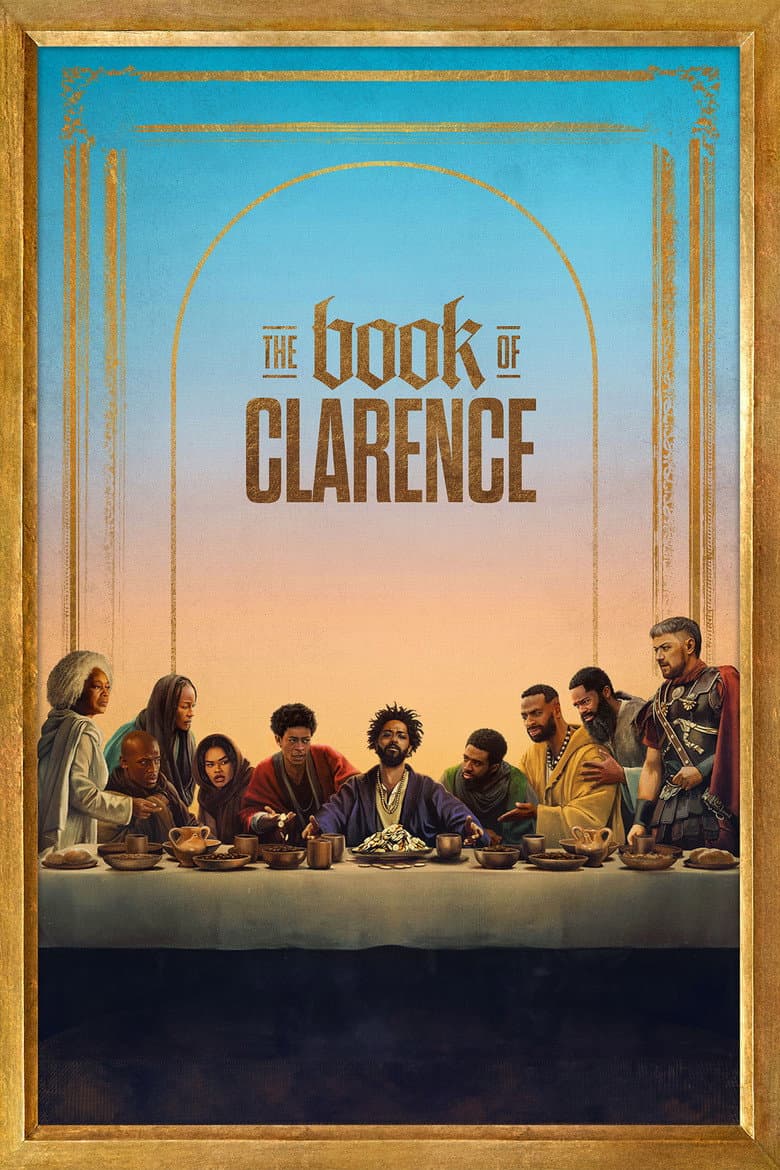
Clarence is a poor, clever hustler living in Jerusalem in the time of Jesus. He owes money after losing a chariot race, and a violent gang leader threatens his life. Clarence first tries to join Jesus's followers, then pretends to be a messiah so he can get rich and protect his family. The film mixes jokes, songs, strange visions, romance, brutal violence, and a serious story about faith.
The film places a mostly Black Jewish community at the center of a Bible-era story and makes Jesus and his followers Black while the Roman rulers are white. Roman soldiers stop Clarence and Elijah because they fit a crime report, and the film links that scene to racist police stops today. Clarence also frees a gladiator slave and slowly moves from selfish tricks toward helping people under Roman rule. These ideas matter throughout the world of the film, but the main ending focuses on faith, forgiveness, and Clarence's change.
Community feedback
Was our 92% Woke rating accurate?
Breakdown
These are the editorial factors and ratings behind our score for The Book of Clarence.
Woke representation / casting
The film puts a mostly black cast in a Bible-era Jerusalem and makes Jesus, the apostles, Mary Magdalene, John the Baptist, and Mary Black. It makes the Roman soldiers and rulers white, creating a clear race-based pattern across the whole world. The cast choice is part of the film's public message, not a small background detail. Samuel and David Oyelowo openly described the film as giving black viewers a needed point of view in biblical movies.
90%
Woke political dialogue
Clarence and Elijah joke when Roman soldiers stop them for fitting a description. The scene points to racial profiling, and the film repeats Roman checks on Black locals. The dialogue contains little direct modern political speech, so the factor stays moderate.
30%
Identity-driven story themes
The film makes black identity central to its Bible-era world. The white Romans control land, law, and violence over the Black Jewish community. Clarence's fake messiah act grows into freeing a gladiator slave and standing with people under Roman power. The story links that setting to current ideas about racism and who gets to see himself in sacred stories.
58%
Western institutional / cultural critique
The film casts the Romans as white rulers who use police stops, land seizure, slavery, and public killing to control the people. Clarence's jokes about different descriptions point to modern racial profiling. The story treats Roman power as racist and cruel, not just as a normal ancient enemy. The film does not attack Christianity itself because Jesus is shown as real and good by the ending.
46%
Woke character or canon changes
The film recasts familiar Bible figures through a new black-centered story. Jesus, the apostles, Mary Magdalene, John the Baptist, Mary, Judas, and Barabbas receive new racial and story versions. Clarence becomes Thomas's fictional twin and a rival messiah who changes the shape of the Bible story. The film also uses a white beggar as a joke about the usual white image of Jesus.
96%
Anti-woke backlash and complaints
Movieguide called the mostly Black Jewish cast and white Romans a politically correct message and changed history. Christian Research Institute said the film promotes victimhood and ethnic division while rewriting the Bible. Some Reddit and Christian forum posts called the movie woke, blasphemous, or a mockery of Jesus. The reaction was scattered and mixed, so the anti-woke backlash was real but not broad.
34%
Creator track record context
Jeymes Samuel has a cached score of 62/100 because his past work centers black characters and identity themes. Jay-Z has a cached score of 67/100 because of race and justice work. Victoria Thomas and Dixie Chassay have cached scores of 44/100 and 48/100 for inclusive casting work. The other listed crew have low or modest scores, so the overall context is strong but mixed.
52%
Production
