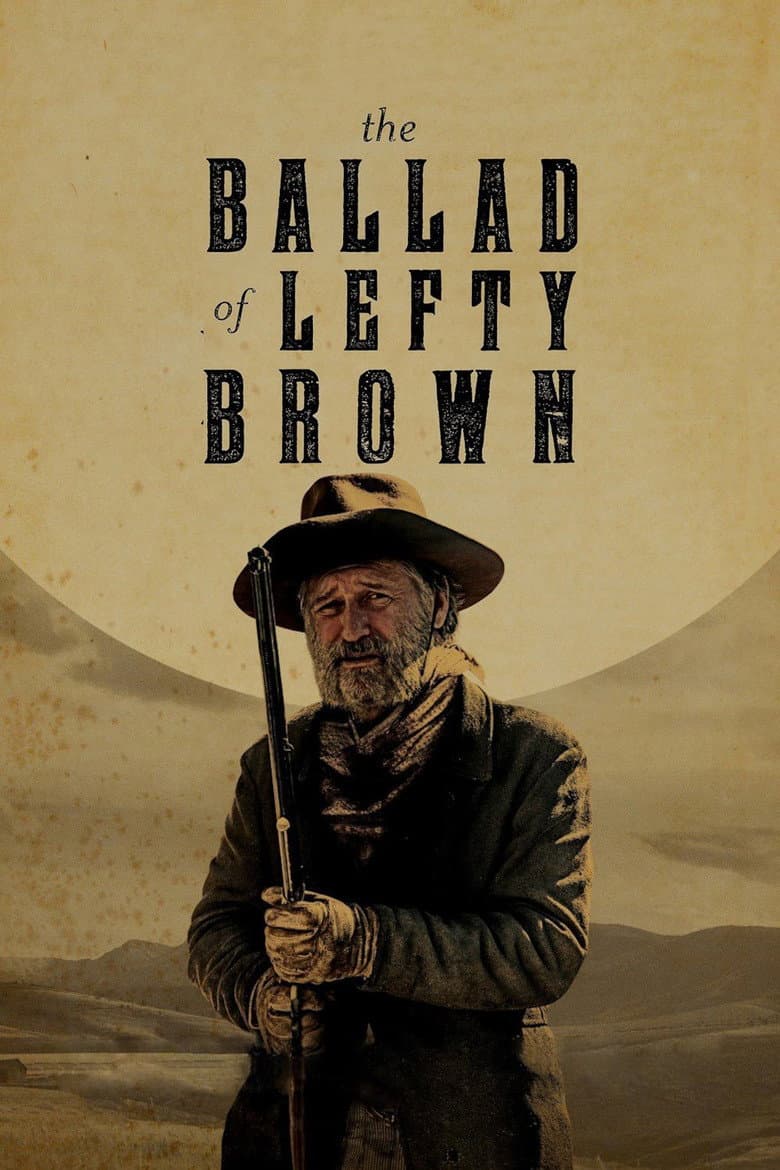
Movie review
December 15, 2017 · 105 min · R
In 1889 Montana, Lefty Brown has spent his life as the loyal helper of lawman Edward Johnson. When a gunman kills Edward, Lefty rides across the rough frontier to find the killer and clear his own name. A young gunman named Jeremiah and a drunken marshal join him while a governor and a railroad deal hide a larger crime. The film uses bleak landscapes, sudden violence, dark humor, and a serious story about loyalty, betrayal, courage, and justice.
The film gives the usual Western sidekick the main heroic journey, so an aging man who looks foolish must learn to make hard choices. Laura Johnson is a tough ranch wife who doubts Lefty, fights for her claim to the ranch, and helps decide the final punishment. The story also lets a young outsider become Lefty’s helper and gives women more power than many old Westerns usually allow. These ideas are visible, but they stay close to Lefty’s personal fight. The movie does not turn them into a broad modern identity message.
Community feedback
Was our 25% Woke rating accurate?
Breakdown
These are the editorial factors and ratings behind our score for The Ballad of Lefty Brown.
Woke representation / casting
Not present. The main cast is mostly white, while a few nonwhite supporting actors have ordinary story roles. The film does not make race, ethnicity, or diversity a story point.
0%
Woke political dialogue
Laura says the law gives the ranch to a closest male heir after her husband dies. Laura calls that law wrong and says the ranch also belongs to her because of her work and blood. The rest of the political talk concerns a governor, a railroad contract, and a murder plot. This is a brief but clear gender-role message.
28%
Identity-driven story themes
The film makes an aging sidekick the hero instead of the strong cowboy who normally leads a Western. The story treats Lefty’s gentle, unsure nature as a real strength and makes him learn to choose for himself. Laura is also shown as a tough ranch owner whose rights are limited by a male-heir law. These ideas matter to the character arcs, but they stay inside a personal revenge story.
30%
Western institutional / cultural critique
Not present. The governor’s railroad deal and murder scheme show period corruption. The film does not connect that plot to a modern activist attack on capitalism, patriarchy, Christianity, or Western culture.
0%
Woke character or canon changes
Not relevant. The movie is an original Western with no established character or source material that it changes.
0%
Anti-woke backlash and complaints
Not present. The X research pass found no anti-woke complaints. Wider reviews and audience posts discuss the cast, plot, pace, and Western style instead of woke, DEI, or identity politics.
0%
Creator track record context
The director has a stored score of 0 and a work history centered on Westerns, grief, and personal responsibility. The producers have stored scores from 0 to 12 and no strong activist record. The casting directors have stored scores of 30 and 33 because their past work includes inclusive stories and career programs. This gives mild background context.
15%
Production
