Movie review
October 27, 2017 · 22 min · G · Kids · Fantasy · Animation · Comedy · Adventure · Family
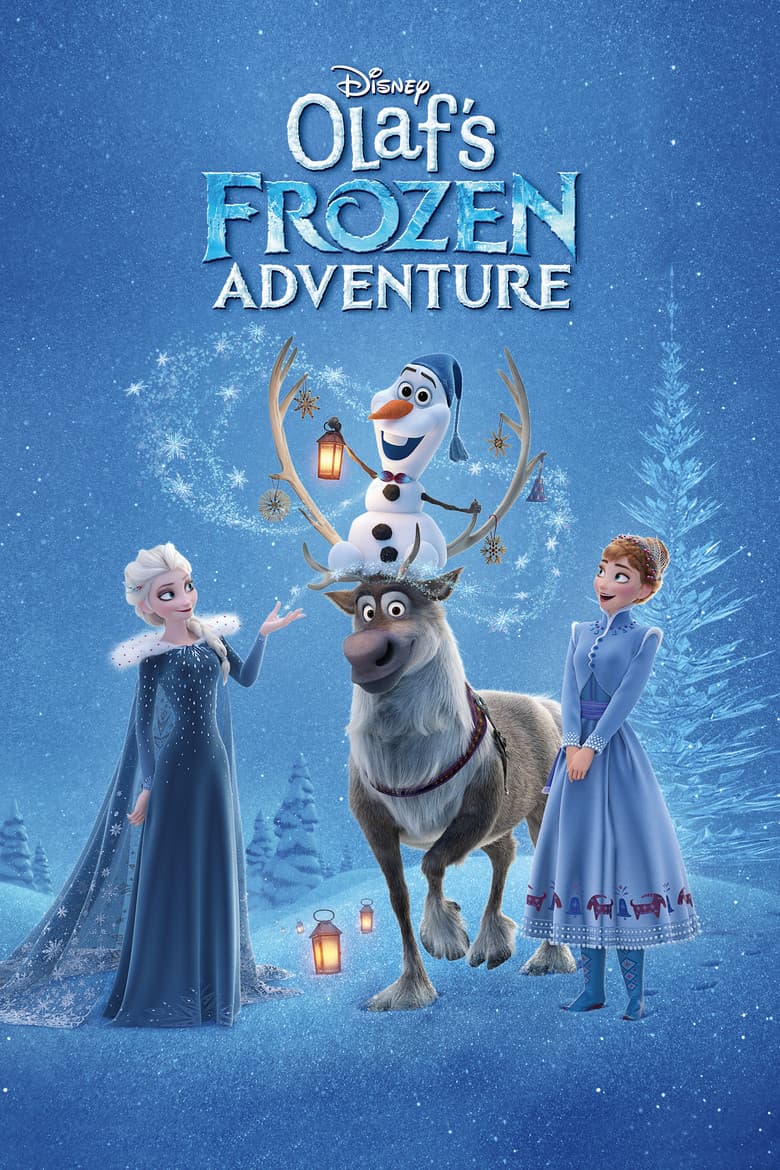
Olaf's Frozen Adventure follows Olaf, a cheerful snowman who wants to help Anna and Elsa enjoy their first holiday season after Arendelle's gates reopen. The sisters welcome the kingdom to a party, but the guests leave early to return to their own family customs. Olaf and Sven travel through the snowy kingdom to find a tradition that Anna and Elsa can share. The short uses jokes, songs, small dangers, and a warm family ending.
The holiday tour shows several customs, including Christmas activities, a Jewish family's dreidel, and a winter solstice greeting. This is the clearest audience-visible identity element because the story gives different traditions a friendly place in Arendelle. The message stays focused on family memory and time together, not on political change or a fight over social power. Anna and Elsa learn that Olaf and their shared childhood already form their real tradition, so the identity material remains mild and secondary.
Community feedback
Was our 18% Woke rating accurate?
Breakdown
These are the editorial factors and ratings behind our score for Olaf's Frozen Adventure.
Woke representation / casting
The holiday tour briefly includes a Jewish family using a dreidel, and Olaf greets them with “Shalom.” This is a small audience-visible religious minority role in the town. The main characters are the returning Frozen cast, and the short does not build a broad representation-first cast.
12%
Woke political dialogue
Not present. The dialogue is about holiday customs, family, and helping friends. The short contains no political speech, activist slogan, or debate about public policy.
0%
Identity-driven story themes
Olaf's mission is to collect traditions from different families, including a Jewish family's dreidel and a winter solstice greeting. The short gives each custom a friendly place in the holiday world. The story resolves with Anna and Elsa valuing their family bond, not with a political lesson about identity. This makes the identity element visible but mild.
18%
Western institutional / cultural critique
Not present. The short does not attack family life, religion, marriage, men, the monarchy, or another Western institution. The castle and the town work together to help Olaf return home.
0%
Woke character or canon changes
Not relevant. The short keeps Anna, Elsa, Olaf, Kristoff, and Sven in their established roles. It adds a holiday event after Frozen without an identity-based rewrite.
0%
Anti-woke backlash and complaints
Not present. Reports show that viewers mainly objected to the 21-minute length, the surprise placement before Coco, and Disney self-promotion. Those complaints did not say that the short pushed woke, DEI, or identity politics.
0%
Creator track record context
Jac Schaeffer has a stronger cached history of representation-focused work in later projects. Roy Conli has publicly supported LGBTQ representation and diverse casting. Jennifer Lee has a milder cached link to female-focused stories and diverse voices. The directors and other writers have low or minimal cached activist context, so the full team gives a mixed signal.
30%
Production
Movie · 2020
The previously untold origins of Olaf, the innocent and insightful, summer-loving snowman are revealed as we follow Olaf’s first steps as he comes to life and searches for his…
Movie · 2020
When his best friend Gary is suddenly snatched away, SpongeBob takes Patrick on a madcap mission far beyond Bikini Bottom to save their pink-shelled pal.
Movie · 2024
Teenager Riley's mind headquarters is undergoing a sudden demolition to make room for something entirely unexpected: new Emotions!
Movie · 2019
A pampered dog named Trouble must learn to live in the real world while trying to escape from his former owner's greedy children and must learn how to survive on the big-city…
Movie · 2018
After he’s grounded by an injury, a high-flying bachelor is saddled with two wide-eyed orphans as they come face-to-face with the dangers and beauty of the outside world.
Movie · 2023
Created for Disney's 100th anniversary, the short features Mickey Mouse corralling a gallery of legendary Disney characters for a group photo.
Movie · 2021
Set before the events of ‘Soul’, 22 refuses to go to Earth, enlisting a gang of 5 new souls in attempt of rebellion.
Movie · 2023
A magical meteor crash lands in Adventure City and gives the PAW Patrol pups superpowers, transforming them into The Mighty Pups.
