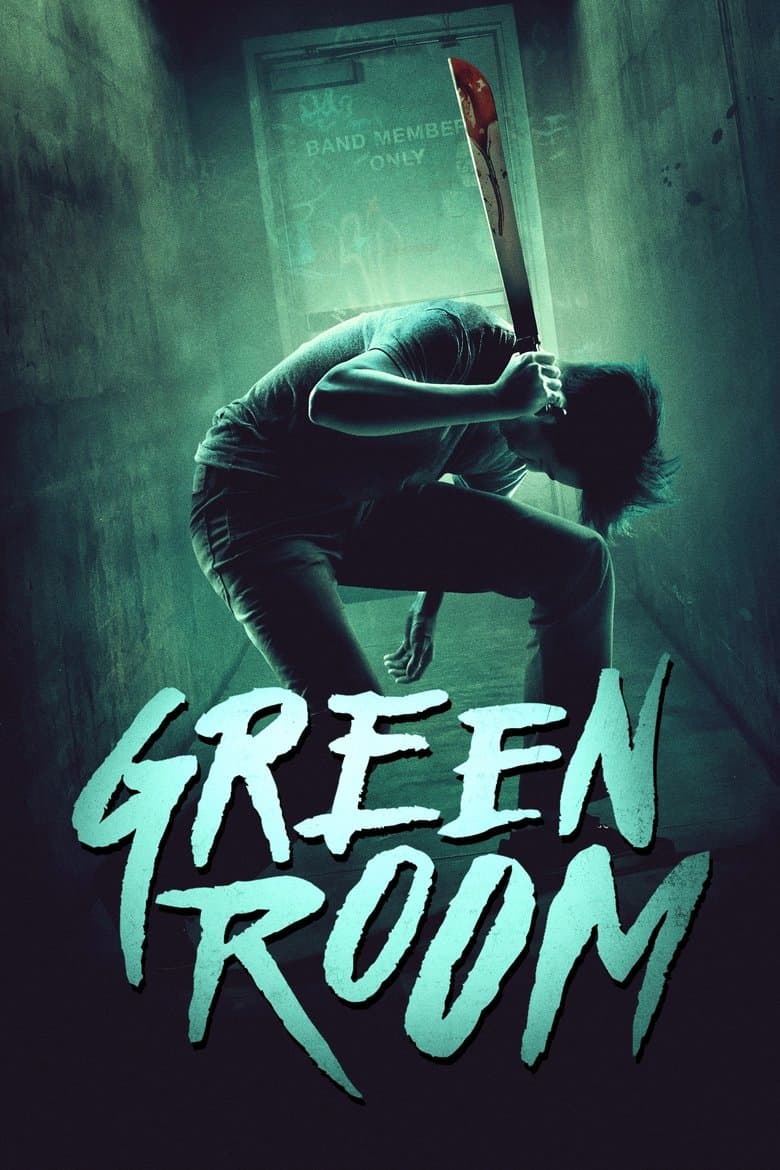
A broke punk band called the Ain’t Rights takes a last-minute gig at a remote Pacific Northwest neo-Nazi skinhead bar. Bassist Pat walks in on a murder in the backstage green room. The club’s calm leader Darcy and his crew seal them in with local Amber and try to erase the witnesses. What follows is a brutal, claustrophobic fight for survival with improvised weapons, attack dogs, and almost no lectures about ideology. The story works first as a siege and survival thriller, not as a project built around identity politics.
Neo-Nazis appear as organized and dangerous antagonists rather than cartoon props for a speech. The film spends little time on white supremacy ideology beyond symbols, hierarchy, and a brief line that the group is a movement, not a party. Most talk is negotiation, panic, and logistics, not modern social-justice monologues. Punk-versus-skinhead energy is texture for the setting and threat, not an empowerment or representation campaign. A woman in the band and a capable female co-survivor appear, but the ensemble otherwise matches that punk and skinhead world and is not built as a diversity showcase.
Community feedback
Was our 15% Woke rating accurate?
Breakdown
These are the editorial factors and ratings behind our score for Green Room.
Woke representation / casting
The band has one woman guitarist whose part was first written for a man, and Amber becomes a capable co-survivor with Pat. The rest of the cast fits a Pacific Northwest punk and skinhead world. The film is not built as a diversity showcase.
15%
Woke political dialogue
The band covers “Nazi Punks Fuck Off,” and Darcy has a short line about a movement, not a party. Almost all other talk is about deals, fear, and what to do next. There are no modern social-justice speeches.
8%
Identity-driven story themes
The main story is a murder-witness siege and escape. Neo-Nazi images set the threat and place rather than push a modern identity-politics thesis. Punk-versus-skin energy is flavor, not an empowerment campaign.
12%
Western institutional / cultural critique
The villains are a remote criminal skinhead group and drug front. The conflict is about power, cleanup, and their enterprise. It does not attack mainstream Western institutions, churches, or patriarchy as activist targets.
8%
Woke character or canon changes
Not relevant. Original screenplay with no prior public canon or source characters to rewrite on identity grounds.
0%
Anti-woke backlash and complaints
Not present. No meaningful right-leaning or anti-woke campaign treated the film as DEI or identity propaganda. Coverage frames it as smart, brutal genre cinema.
0%
Creator track record context
Saulnier’s record is non-activist genre craft and a stated wish to avoid overt political messaging. Most producers and cinematographer Sean Porter score low. Casting director Avy Kaufman has a higher cached LGBTQ and identity-project history, but that pattern is not the face of this title.
10%
Production

Movie · 2024
Stranded in the open sea after a fatal accident, a young woman and her two friends are rescued by a fishing vessel's captain, unaware that the ship harbors a chilling secret.

Movie · 2018
A thief makes a disturbing discovery in the house where he breaks in. Later, when he returns to the same house with his partner in crime, things are no longer how he expected.

Movie · 2016
A group of teens break into a blind man's home thinking they'll get away with the perfect crime. They're wrong.
Movie · 2017
A young nurse is kidnapped by a group of violent teens who escape from a mental hospital and take her on the road trip from hell.
Movie · 2020
A family vacation takes a terrifying turn when parents Paul and Wendy discover their young daughter has vanished without a trace.

Movie · 2019
When a huge hurricane hits her hometown in Florida, Haley ignores evacuation orders to look for her father. After finding him badly wounded, both are trapped by the flood.
Movie · 2016
In the town of Cutter, most people keep to themselves. But when John comes home to find his girlfriend missing, he sneaks into his neighbor's house, finding his girlfriend and…

Movie · 2023
During a stormy night in the Scottish Highlands, two criminal brothers on the run seek refuge in a desolate farmhouse.
