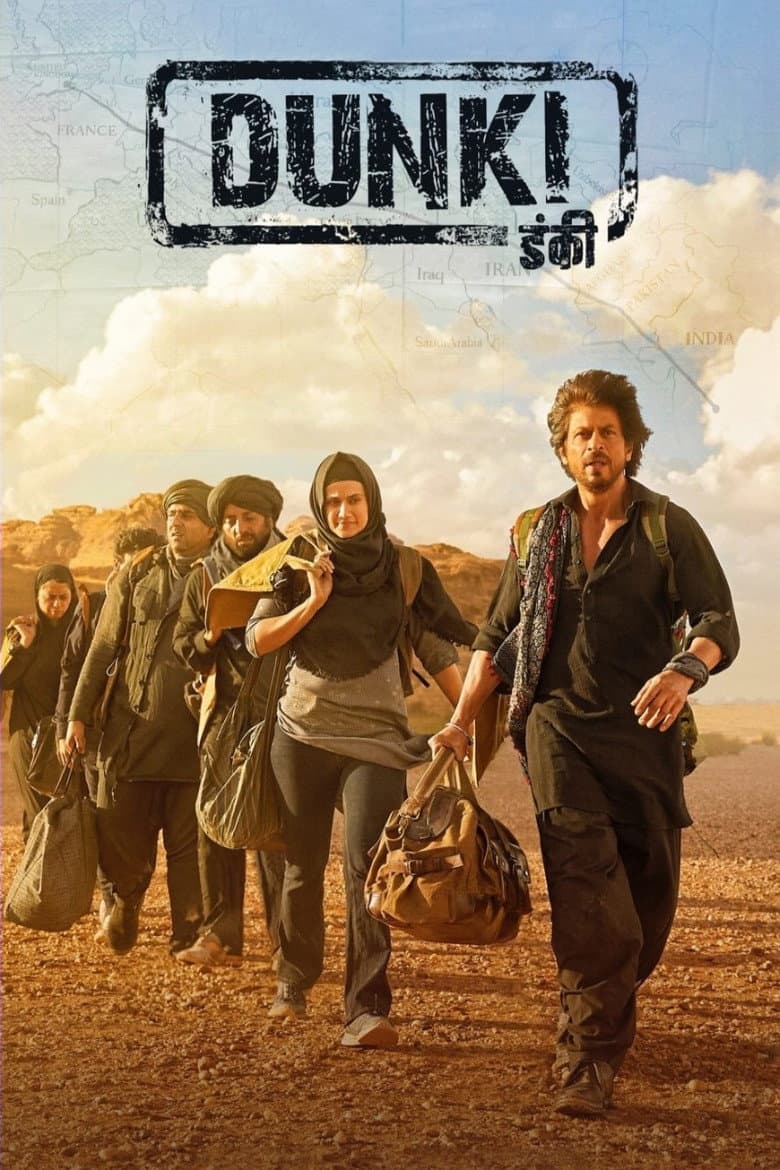
Hardayal “Hardy” Singh Dhillon is an ex-army man who returns to a small village in Punjab. He joins Manu, Balli, Buggu, and Sukhi, who dream of reaching England but cannot get legal visas. After agents and language tests fail them, Hardy leads Manu and Buggu through the dangerous dunki route across several countries. The film moves between broad comedy, romance, patriotism, and grief as the friends chase a better life.
The film makes poor Indian migrants the center of its message. It says that money, English skills, and strict visa rules keep ordinary people from moving, while it asks viewers to see migrants as people rather than criminals. Hardy gives a long court argument against unequal borders, British language rules, and the idea that migrants take jobs. The story also shows fraud, deaths, homesickness, and the pain of living far from family, so its open-border message sits beside warnings about illegal travel.
Community feedback
Was our 68% Woke rating accurate?
Breakdown
These are the editorial factors and ratings behind our score for Dunki.
Woke representation / casting
Not present. The main characters are Indian Punjabis in a Punjab story, and the cast matches the setting. No diversity-first or identity-framed casting is visible in the film.
0%
Woke political dialogue
The film criticizes visa barriers and English tests that block poor migrants. Hardy argues in court that migrants are workers and not terrorists, and he says borders keep out the poor. The speech connects the issue with British rule and compares human travel with birds that cross without visas. The judge rejects Hardy’s reasoning and orders his deportation, but the political argument is a major part of the climax.
55%
Identity-driven story themes
Dunki makes poor Indian migrants the emotional center of its story. The film asks why money and English skills decide who can cross a border legally. The film treats migrants as ordinary people rather than criminals and asks viewers to judge the system through their pain. The story also shows scams, deaths, fear, and homesickness, so it warns about illegal travel while still favoring more open movement.
60%
Western institutional / cultural critique
The film presents British visa rules and English tests as barriers that hurt poor Indians. The story links those rules to Britain’s colonial past and questions why goods can cross borders more easily than people. The British court says it must follow asylum law, but the film still frames the law as unfair to people fleeing poverty. The judge is not shown as a monster, and the film does not attack Christianity or all Western life.
48%
Woke character or canon changes
Not relevant. Dunki is an original story about Punjabi migrants and does not adapt a known book, franchise, or named real historical figure. The film does not change an established character, canon, or historical person.
0%
Anti-woke backlash and complaints
Several X accounts called the film open-border, leftist, or woke propaganda. Similar complaints appeared in online reviews and film discussion threads. The complaints had some reach, but no organized boycott, review-bombing campaign, or large mainstream news cycle was found. The complaints are opinions about the film’s message, not proof that every claim about it is correct.
45%
Creator track record context
Rajkumar Hirani and Abhijat Joshi have a repeated pattern of social reform stories about unfair institutions. Kanika Dhillon has a more openly feminist and representation-aware record. Shah Rukh Khan and Jyoti Deshpande add moderate support for women and wider access to stories. The team gives Dunki a moderate context score rather than a strongly activist one.
38%
Production
