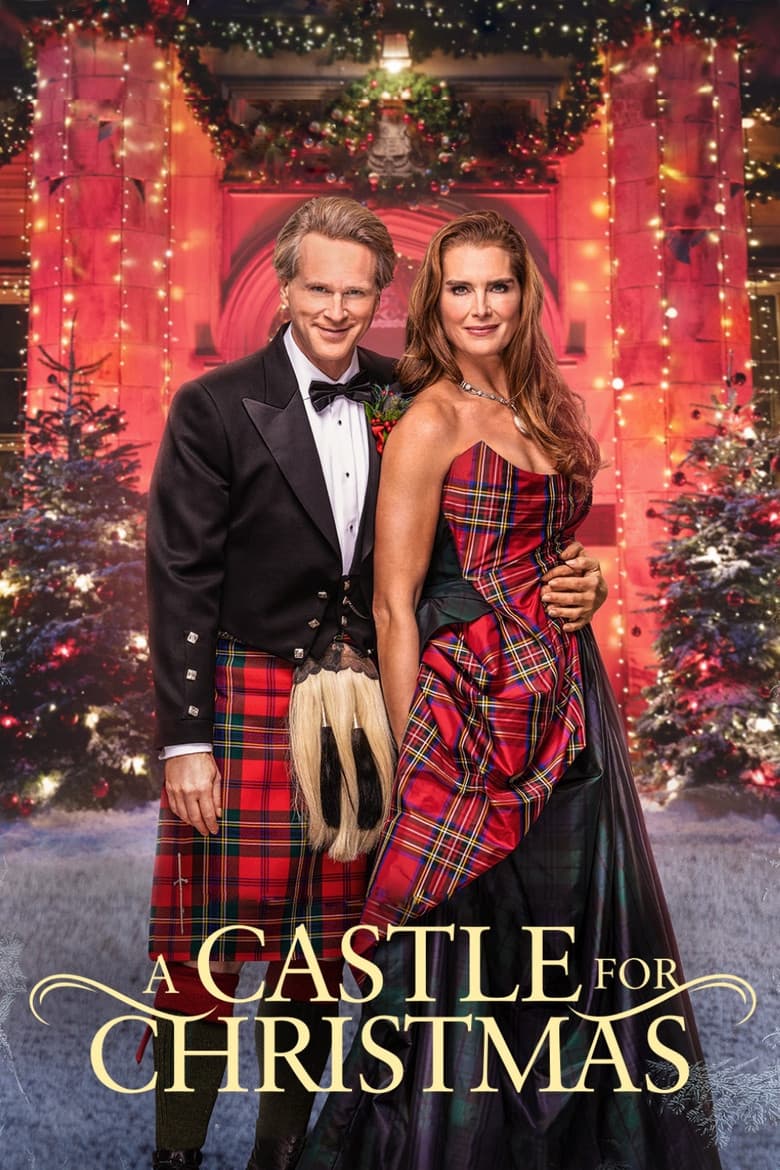
Sophie Brown is a famous American romance writer whose fans turn against her after she kills a beloved male character. She travels to a small Scottish village tied to her family and finds Dun Dunbar, a huge old castle with money problems. The castle belongs to Myles, a proud and grumpy duke who must sell it to avoid losing his land. Sophie buys the castle, but she and Myles must live there together until Christmas, which turns their fight into a warm and silly romance.
The film gives Sophie the power to make the biggest choice in the story, and she uses her money and fame to claim a home and help the village. The knitting group gives her a strong circle of friends, while Angus is a gay widower whose late husband is part of his story. The film also toasts women buying castles and shows a divorced woman over fifty finding love, work, and a new start. These ideas support female independence and ordinary LGBTQ+ inclusion, but the movie stays focused on romance, family roots, Christmas, and community.
Community feedback
Was our 30% Woke rating accurate?
Breakdown
These are the editorial factors and ratings behind our score for A Castle for Christmas.
Woke representation / casting
The film puts black actor Andi Osho in the visible role of Maisie, the local pub owner. The film also uses black actor Desiree Burch as Sophie’s editor in the American scenes. The knitting group includes Angus, a gay widower with a late male partner. These roles add visible diversity around the white leads, but they remain supporting parts and casting is not the film’s main message.
22%
Woke political dialogue
The knitting group raises a toast to women buying castles. The toast treats female ownership and independence as something to celebrate. The film also mentions a community-owned wind farm and sustainable farming, but those lines are background details. The movie has no repeated speeches about identity, DEI, or party politics.
22%
Identity-driven story themes
Sophie is a successful divorced woman over fifty who makes the largest purchase in the story by herself. She chooses a new home, keeps her career, helps the village, and starts a romance on her own terms. The women in the knitting group give her a strong support circle, and the film treats a later-in-life romance as fully normal. The story presents female independence and ordinary LGBTQ+ inclusion in a positive way, but it does not build the plot around activist politics.
34%
Western institutional / cultural critique
Not present. The duke’s old family history and his debt create class tension, but the film does not turn that conflict into modern activist criticism. The story does not attack Christianity, men, family life, or Western institutions.
0%
Woke character or canon changes
Not relevant. The film is an original Christmas romance with no established character or real historical figure being recast or rewritten.
0%
Anti-woke backlash and complaints
Not present. No anti-woke backlash or complaints were found in the reviewed coverage. Social posts and reviews mainly discussed the film’s quality, accents, clichés, and limited use of side characters.
0%
Creator track record context
Brooke Shields has a public record of LGBTQ ally work and criticism of misogyny. Mary Lambert has made a women-focused documentary, and the writers often center resourceful female characters. The other producers and the casting director have little public evidence of activist or DEI work. These mixed signals support a low creator track record score.
20%
Production

Movie · 2019
A pampered dog named Trouble must learn to live in the real world while trying to escape from his former owner's greedy children and must learn how to survive on the big-city…

Movie · 2025
Plankton's tangled love story with his sentient computer wife goes sideways when she takes a stand — and decides to destroy the world without him.

Movie · 2020
The previously untold origins of Olaf, the innocent and insightful, summer-loving snowman are revealed as we follow Olaf’s first steps as he comes to life and searches for his…
Movie · 2021
Ryder and the pups are called to Adventure City to stop Mayor Humdinger from turning the bustling metropolis into a state of chaos.

Movie · 2023
A magical meteor crash lands in Adventure City and gives the PAW Patrol pups superpowers, transforming them into The Mighty Pups.

Movie · 2022
After settling in Green Hills, Sonic is eager to prove he has what it takes to be a true hero. His test comes when Dr.

Movie · 2016
The quiet life of a terrier named Max is upended when his owner takes in Duke, a stray whom Max instantly dislikes.

Movie · 2025
Dora, Diego, and their new friends trek through the perilous dangers of the Amazonian jungle in search of the ancient and powerful treasure of Sol Dorado to keep it out of enemy…
